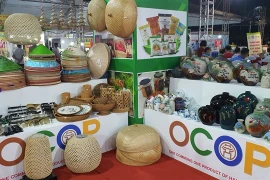
Vietnam ready to share OCOP development experience with global partners

Deputy PM Tran Hong Ha called on FAO and participating countries to join Vietnam in building a joint initiative endorsed by high-ranking leaders to ensure that the benefits of international agricultural cooperation directly reach all people, especially farmers.

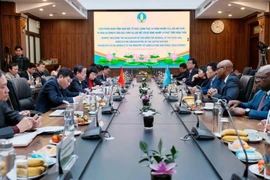
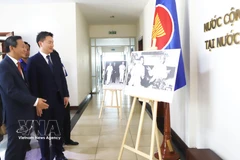
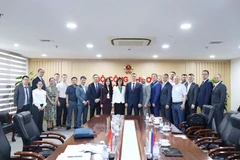
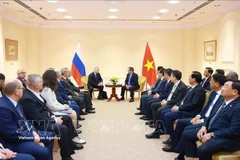
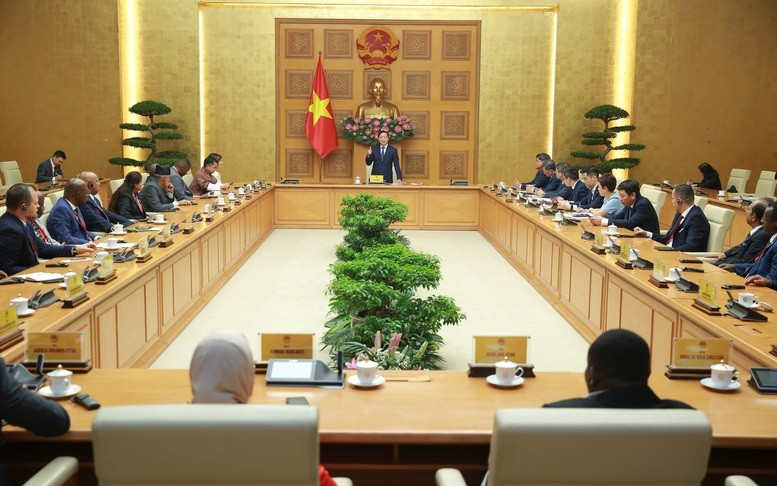
The meeting between Deputy Prime Minister Tran Hong Ha and the delegation of international agriculture ministers and senior officials on July 15 (Photo: VNA)

Hanoi (VNA) – Vietnam is willing to share its resources, human capital, and sci-tech expertise with countries that have similar climatic and soil conditions, supporting them in developing OCOP products and advancing sustainable agriculture, stated Deputy Prime Minister Tran Hong Ha.

Ha made the remark on July 15 while hosting a courtesy reception for a delegation of agriculture ministers and senior officials attending a high‑level inter‑regional forum on the One Commune – One Product (OCOP) model, jointly organised by Vietnam’s Ministry of Agriculture and Environment and the Food and Agriculture Organisation of the United Nations (FAO).

The Deputy PM said Vietnam hopes that the forum would become a platform for sharing both successful and unsuccessful experiences, as well as for reaching a shared understanding in the context of over 800 million people around the world facing hunger.

He highlighted that one of the key strengths of Vietnam’s OCOP programme is its close alignment with the goals of building new-style rural areas and eliminating poverty. The programme benefits from state budget support and focuses on improving knowledge and promoting rural modernisation.

Vietnam has so far developed more than 16,000 OCOP products, rated from one to four stars. Deputy PM Ha noted that the Government is working to enhance product branding and standardisation so that these products can reach five-star quality and access international markets, thereby contributing to sustainable poverty reduction efforts.

The official underlined the importance of establishing a post-forum coordination mechanism among Vietnam, FAO, and participating countries to ensure that the forum’s outcomes translate into concrete actions. He proposed that FAO take the lead in facilitating this collaboration, helping countries identify high-quality agricultural products, promoting mutual support, and supplying those products for regional markets.

He also called on FAO and participating countries to join Vietnam in building a joint initiative endorsed by high-ranking leaders to ensure that the benefits of international agricultural cooperation directly reach all people, especially farmers.

Beth Bechdol, FAO Deputy Director-General, praised Vietnam’s remarkable achievements in agricultural development, especially its OCOP programme. She said Vietnam not only focuses on agricultural production and trade but also integrates OCOP with cultural values and local knowledge, delivering broad social benefits to communities.

This success, she noted, is a source of inspiration for many countries grappling with food security, climate change, and rural development challenges. Drawing from Vietnam’s experience, FAO is committed to continuing its support, deepening cooperation, and promoting OCOP as a global initiative to contribute to an innovative, humanistic, and sustainable agricultural future.

Delegates at the meeting also voiced strong support for open cooperation and experience sharing among countries in agricultural production and food-nutrition security, particularly as many face serious challenges such as shrinking arable land, wildlife conflict, climate change, and economic insecurity.

The forum, taking place on July 15 and 16, saw the participation of officials from Bhutan, Cameroon, Côte d’Ivoire, the Democratic Republic of the Congo, Gabon, Ghana, Ethiopia, Lesotho, Malawi, Mozambique, Nepal, Sierra Leone, South Sudan, Tunisia, Vietnam, Zambia, and Zimbabwe./.

VNA
See more

Delegates at the 14th National Party Congress vote on the list of candidates to the 14th Party Central Committee. (Photo: VNA)

14th National Party Congress: Enduring strength of people-centred path

Kyril Whittaker, a UK-based Vietnam specialist, that Vietnam’s 40-year Renewal (Doi Moi) process has succeeded thanks to three closely intertwined factors - a scientific and practical approach to reform, the Communist Party of Vietnam’s leadership role, and the principle of placing the people at the heart of all policies.

Party General Secretary To Lam speaks at an international press conference announcing the results of the 14th National Party Congress on the afternoon of January 23. (Photo: VNA)

Renewing mindset, setting development vision through 2045: Party General Secretary To Lam

The political report integrates three previously separate documents - the political report, the socio-economic report and the review of Party building - into a single, unified and comprehensive one, with clearer priorities. Designed to be concise, easy to understand, remember and implement, this integration stands out as a key hallmark of the Congress.

Communist Party of Vietnam General Secretary To Lam (right) and General Secretary of the Central Committee of the Lao People’s Revolutionary Party and President of Laos Thongloun Sisoulith during his visit to Vietnam on September 10, 2024 (Photo: VNA)

Top Lao leader to pay state visit to Vietnam

General Secretary of the Central Committee of the Lao People’s Revolutionary Party and President of Laos Thongloun Sisoulith and his spouse will pay a state visit to Vietnam from January 26 to 27.

The article titled “The 14th National Congress of the Communist Party of Vietnam and the Advance toward a New Era,” published on aladaainternacional.com, the website of the Latin American Center for Studies on Asia and Africa. (Photo: VNA)

14th National Party Congress: Vietnam’s strategic shift in new era

Vietnam now stands at the threshold of a new development era, driven by strong aspirations and substantial potential. The 14th Party Congress is, therefore, of decisive importance for the country’s future transformations, particularly amid an international environment marked by uncertainty and volatility. While this phase may be among the most complex of the renewal process, it also presents a critical opportunity for Vietnam to break through and evolve from an “Asian tiger” into a regional “dragon.”

Delegates vote to approve the Resolution of the 14th National Party Congress (Photo: VNA)

14th National Party Congress adopts Resolution

For the 2026–2030 period, key targets for Vietnam include average annual GDP growth of at least 10%; per-capita GDP of about 8,500 USD by 2030; manufacturing and processing accounting for roughly 28% of GDP; the digital economy contributing around 30% of GDP.

☕ Afternoon briefing on January 23

☕ Afternoon briefing on January 23

General Secretary of the 13th Party Central Committee To Lam re-elected as the Party chief for the 2026 – 2031 term, Vietnam's attendance at a signing ceremony for the founding charter of the Board of Peace aimed at ending the conflict in the Gaza Strip, and Fitch Ratings' upgrade of Vietnam’s senior secured long-term debt instruments to BBB- are among news highlights on January 23.

General Secretary of the 14th Party Central Committee To Lam addresses the closing session of the 14th National Party Congress on January 23 afternoon. (Photo: VNA)

14th National Party Congress wraps up with success

Addressing the congress on behalf of the 14th Party Central Committee, General Secretary To Lam expressed profound gratitude for the trust and confidence placed in him, describing it as a great honour and a heavy responsibility before the Party, the people and the nation.