HCM City (VNA) – Although Vietnam’s agro-forestry-fishery exports posted strong growth in the first seven months of 2025, industry experts warned of increasing challenges for the remainder of the year, especially with the upcoming implementation of the US’s reciprocal tax measures.
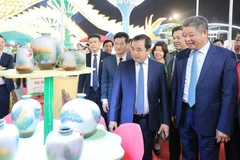
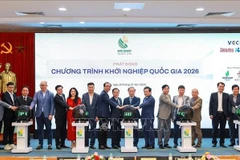
Speaking at a conference in Ho Chi Minh City on August 12 to seek ways to promote the products’ exports in 2025, Deputy Minister of Agriculture and Environment Tran Thanh Nam noted that despite global political instability and a slowdown in economic growth, Vietnam’s agro-forestry-fishery export has shown notable resilience.
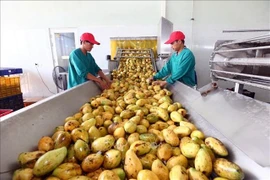
Between January and July, the sector generated over 39.7 billion USD in export value, a year-on-year rise of 14.7%. Agricultural exports rose 17% to 21.5 billion USD, while forestry products increased 8.6% to 10.4 billion USD, and revenue from aquatic products hit 6.1 billion USD, up 13.8%. Livestock exports grew 22.1%, totalling 339.2 million USD.
The US, China, and Japan remained Vietnam’s top export markets, all showing continued growth despite uncertainty. Meanwhile, exports to Europe surged 49% to 4.3 billion USD, with the Middle East and Africa also growing by 10.9% and 8.9%, respectively.
Nam attributed this success stems to the proactive strategies of industry associations and exporters, who have preserved and expanded shipments across product lines.
He commended businesses for expediting fulfilment of signed US contracts during the reciprocal tariff extension period, while also diversifying exports to underutilised but traditional markets such as China and the EU. This two-pronged approach is expected to cushion the impact of upcoming tariffs and unlock new growth avenues, he added.
In the rice sector, Do Ha Nam, Chairman of the Vietnam Food Association, reported that 5.5 million tonnes were exported in the first seven months, earning 2.8 billion USD. Although average prices fell 19% due to global market declines, export volume rose by 3.1%. Vietnam is projected to export around 8.8 million tonnes in 2025, maintaining its position as the world’s second-largest rice exporter after India.
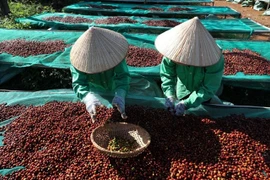
The coffee industry also performed strongly. The Vietnam Coffee and Cocoa Association reported record prices in the 2024–2025 season, at times exceeding 5,850 USD per tonne. From January to July, Vietnam exported 1.1 million tonnes of coffee, a 66% year-on-year increase.
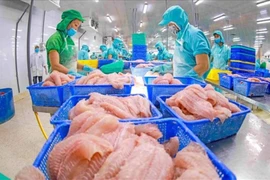
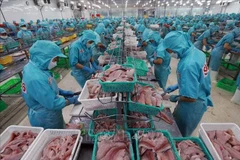
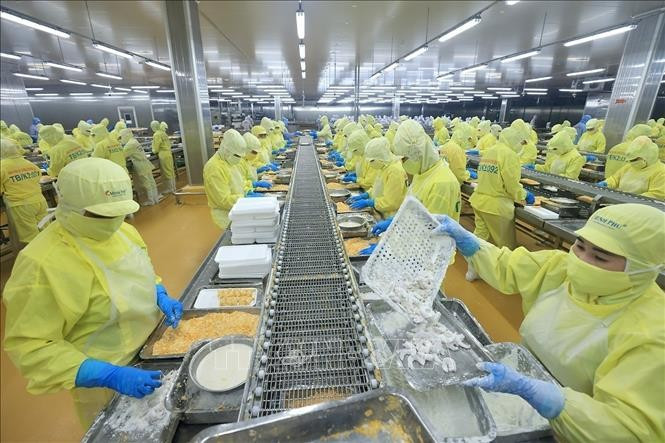
In fisheries, To Thi Tuong Lan, Deputy Secretary General of the Vietnam Association of Seafood Exporters and Producers (VASEP), said seafood exports hit 6.22 billion USD during the same period, up 17.2%.
Despite this momentum, exporters face headwinds, especially in the US. Nguyen Thanh Binh, Chairman of the Vietnam Fruit and Vegetable Association, noted that the US, now accounting for 8.42% of Vietnam’s fruit and vegetable exports, is a fast-growing market. However, most products currently cater to Asian communities, with minimal penetration into the mainstream US market. The upcoming 20% reciprocal tax will severely limit further growth.
Binh proposed negotiating reduced or zero tariffs for Vietnamese fruit and vegetables, citing their exclusive Vietnamese origin and lack of competition with US-grown produce. Vietnam still runs a trade deficit in this segment, importing 560 million USD worth in 2024 and exporting only 360 million USD.
To improve competitiveness, the sector must invest in developing convenient, health-focused processed products tailored to local tastes, he held.
Acting Minister of Agriculture and Environment Tran Duc Thang said that despite global headwinds, the ministry remains committed to achieving over 4% annual sector growth and surpassing 65 billion USD in export turnover in 2025, with the goal of reaching 70 billion USD.
Thang described the current period as both a challenge and an opportunity. He emphasised the need for joint efforts among ministries, local authorities, and businesses to maintain export momentum. The ministry, in coordination with the Ministries of Industry and Trade and Foreign Affairs, will roll out targeted trade promotion campaigns tailored to each market, he said.
He emphasised the need for a distinct strategy for each export destination, as well as the establishment of internationally certified raw material zones, focus on quality, integrate high-tech processes, and improve packaging, along with stronger investment in deep processing and innovation./.
See more
Legal profession reshaped in age of artificial intelligence
In Ho Chi Minh City, digital transformation in the legal profession is not simply about introducing more technology into professional practice. It must also create ways of working that ensure technology serves people, while lawyers retain control and responsibility for the quality of legal services. This is particularly important in a metropolis with a large-scale economy and diverse legal needs.
Farm produce goes online, opening wider market access
With abundant agricultural resources, localities across Vietnam have favourable conditions to expand markets through e-commerce.
Vietnam–Israel agricultural cooperation suggested to move beyond technology transfer to co-development
Success ten years from now should not simply be measured by how many Israeli technologies have been sold in Vietnam. Success would mean seeing technologies that were tested here, adapted with Vietnamese partners, supported locally, scaled commercially, and potentially further developed or manufactured in Vietnam for other Southeast Asian markets.
Hue steps up investment drive in Chan May–Lang Co Economic Zone
Covering more than 27,000ha, the Chan May–Lang Co Economic Zone is emerging as a key economic, urban, industrial and eco-tourism centre in southeastern Hue, with functional areas dedicated to seaports, industry, non-tariff activities, urban development and tourism.
Hai Phong builds modern port system to support national aspirations
With strong foundations in infrastructure and human resources, Hai Phong is expected to continue serving as a strategic driver in Vietnam’s journey towards becoming a strong maritime nation.
Lam Dong's IUU fishing prevention efforts inspected
According to the Lam Dong provincial IUU Fishing Prevention Steering Committee, all 8,177 fishing vessels measuring at least 6 metres in length have been registered and updated in the national fisheries database VNFishbase.
Vietnam aims to link half of farm cooperatives with enterprises by 2030
The Ministry of Agriculture and Environment will promote links between cooperatives, enterprises, science and technology organisations and other economic entities along with carrying out programmes to develop concentrated agricultural, forestry and fisheries raw material areas and enhance value chain production.
Revitalising growth momentum for night-time economy
The night-time economy has moved beyond being merely an add-on service to become a new growth driver for tourism. Night-time activities can “awaken” familiar heritage spaces and breathe new life into them. Art, light and music experiences after dark can create distinctive attractions while meeting the desire of middle- and high-end visitors to explore cultural depth.
E-commerce reshapes rules of game
Once fixed fees, payment fees, infrastructure charges and service packages are included, sellers may have to spend around 24.5-27.6% of their revenue on platforms. The figure shows that the era of easy selling and low costs in e-commerce has officially come to an end.
An Giang completes three key power projects for APEC 2027
The projects mark an important step in completing Phu Quoc’s power transmission network, supporting its socio-economic development and ensuring a safe, stable and reliable power supply for APEC 2027.
Deputy PM orders monthly price checks as CPI buffer narrows
There is virtually no room for further consumer price index (CPI) increases in the remaining months of the year, and ministries, sectors and localities must focus on effective price management, said Deputy PM Nguyen Van Thang.
Hanoi accelerates construction of seven Red River bridges for APEC 2027
The projects comprise Tu Lien, Ngoc Hoi, Tran Hung Dao, Thuong Cat, Van Phuc, Hong Ha and Me So bridges. They are among the city’s key transport projects being constructed simultaneously.
Vietnam’s garment-textile sector embraces transformation to sustain export momentum
In response to market changes, many Vietnamese garment and textile companies have proactively shifted their strategies, treating green transition and innovation as integral to business development rather than merely export requirements.
Ho Chi Minh City targets third-quarter growth of over 11%
Ho Chi Minh City will continue to implement drastic measures to achieve double-digit growth, targeting GRDP growth of at least 11.07% in the third quarter of 2026, 9.43% in the first nine months and 12.3% in the fourth quarter, with a view to completing the full-year goal of 10% or more.
Domestic consumption up over 13%, tourism continues strong growth
The total retail sales of goods and consumer service revenues in August were estimated at 679.8 trillion VND (26 billion USD), up 1.6% from the previous month and 14.9% year-on-year. In the January-August period, the figure reached 5.24 quadrillion VND, representing a 13.3% increase year-on-year.
Hanoi moves to maintain appeal to FDI inflows
In the first eight months of 2026, the capital city attracted more than 3.7 billion USD in FDI, equivalent to 83% of the plan set for the year. Newly registered FDI exceeded 572 million USD across 450 projects, up 175.78% in project numbers and 209.46% in capital compared to the same period last year. Additional registered capital topped 492 million USD, while capital contributions and share purchases exceeded 2.6 billion USD.
Resolution 79: Expectations of significant changes in state-owned enterprise sector
Previously regarded as the primary material force of the state sector, with a leading role across a broad range of areas, SOEs are now defined as an important material force, with their activities focused on a number of key and strategic industries and sectors, ensuring a pioneering, enabling and leading role in development.
VIFC offers various opportunities to attract forein investment
Turning the VIFC into an effective channel for international capital will require clear rules, quality projects and strong connections between investors and domestic businesses. Meeting these requirements will be key to transforming investor interest into concrete capital flows and investment projects in Vietnam.
Development model for new era – An inevitable trend
International organisations broadly agree that shifting the growth model from reliance on traditional factors toward technology and innovation is no longer an option for Vietnam, but an imperative of the times.
Online agricultural wholesale market launched to connect Vietnamese produce with Singapore
An online agricultural wholesale market aimed at expanding trade links between Vietnamese agricultural producers and buyers in Singapore is expected to become operational by the end of September 2026, offering flexible wholesale purchasing options.