Tokyo (VNA) - As Vietnam implements the Politburo's Resolution No. 57-NQ/TW on breakthroughs in science, technology, innovation and national digital transformation, the development of a domestic semiconductor industry has become an important strategic priority.
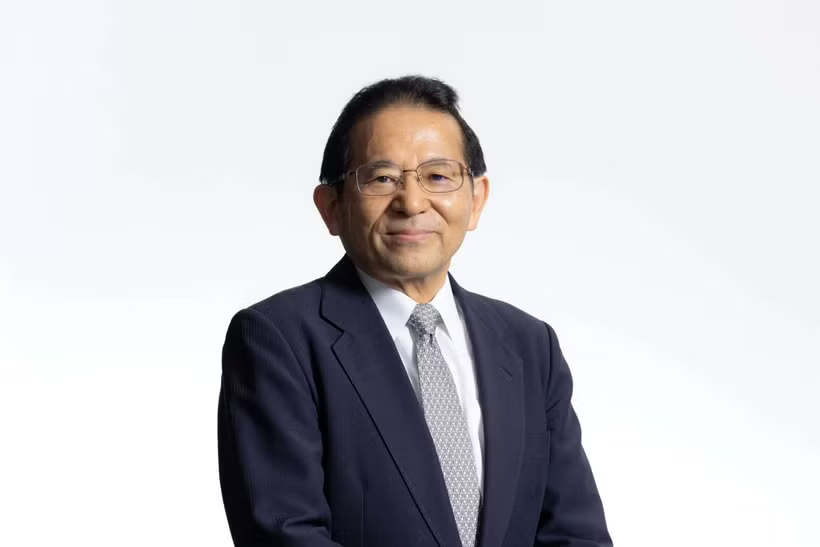
In an interview with the Vietnam News Agency (VNA)'s resident reporter in Tokyo, Mr Kenji Tsuda, a veteran Japanese technology journalist, shared his assessment of Japan’s semiconductor strategy and offered recommendations on how Vietnam could effectively enter the global semiconductor value chain.
Reporter: Japan is pursuing an ambitious strategy to regain leadership in semiconductors through Rapidus and the development of 2nm and 1.4nm process technologies. What do you believe is the most important factor that gives Japan the confidence to pursue this strategy despite having fallen behind in the semiconductor industry for many years?
Mr Kenji Tsuda: It is people’s passion to success. Today, the manufacturing line of the Rapidus is on schedule of a production start in 2027. Rapidus pursues the advanced technologies of 2nm or less. In the Japanese golden times of 1985 to 1993, Japanese chipmakers were very good at chip manufacturing, rather than chip design. But their management teams did not think that semiconductor technologies were important for Japanese manufacturing industries, because they are people from facility infrastructure departments not care of the time-to-market concept which is a key importance for semiconductors and ITs.
Reporter: While supporting Rapidus, the Japanese government has also actively attracted TSMC’s investment. In your opinion, what role should the government play in strengthening Japan’s semiconductor competitiveness? How should public investment and private-sector initiatives be balanced?
Mr Kenji Tsuda: In the recent 5 or 6 years, Japanese government had reached to recognize the importance of semiconductor industries, and changed their strategies on semiconductors. They are pursuing advanced semiconductor technologies to catch up the leading technologies. A quarter century ago, Japanese semiconductor makers discarded advanced technologies in the 40nm process technology around 2002~2004, due to announcement from their management teams of their conglomerate companies
Today, the changing Japanese government has lured the most advanced chipmaker of TSMC and established a domestic advanced semiconductor company called Rapidus. Now the investment from government is much more than from private sectors, but the government will stop invest by 2027 and promote investments from private sectors.
Reporter: As AI continues to drive demand for advanced semiconductors, Japan is working to build a domestic AI semiconductor ecosystem. Among chip design, manufacturing, materials, semiconductor equipment, and talent development, which areas should Japan prioritize most?
Mr Kenji Tsuda: Today Japan focuses on manufacturing. Traditionally Japan is very competitive at materials and semiconductor equipment sectors, but very poor at chip designs and chip talented people. In my personal opinion, Rapidus will be successful in manufacturing line, because many elder experienced engineers moved from Renesas, Kioxia, Toshiba, Sony Semiconductor Solutions and others joined to Rapidus. These talented people are teaching their engineering knowledges to younger engineers now.
But in whole Japan. Chip engineers of design and manufacturing are short now, and it is requiring to nurture chip engineers in universities and professional engineering schools.
Reporter: Developing 2nm and 1.4nm technologies requires enormous investment and highly skilled talent. What are the biggest challenges and risks Japan currently faces, and how is the government addressing them?
Mr Kenji Tsuda: The biggest issues are the chip business; very short of marketing and engineering sales people who will catch customers. The best people are having knowledges of chip design, but very short in Japan now. The Government do not know an importance of chip design very well, and not focusing on chip design. This is quite different from the Taiwanese administration.
Reporter: Finally, Vietnam is also promoting semiconductor development as a national strategic industry. Based on Japan’s experience, what advice would you offer Vietnam in developing its semiconductor industry and AI semiconductor ecosystem?
Mr Kenji Tsuda: The chip industry consists of design, process manufacturing, packaging and test. When I visited Vietnam in 1995, I thought the people love cleanness of factories and streets, different form Chinese. The culture mind is suitable for manufacturing semiconductors which need cleanness. This is my opinion, but Vietnam should prioritise manufacturing and packaging, and next design and test expertise. In stages of manufacturing and packaging, you should promote to start manufacturing equipment business and materials.
Reporter:Thank you very much for your insights!