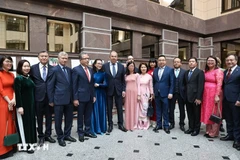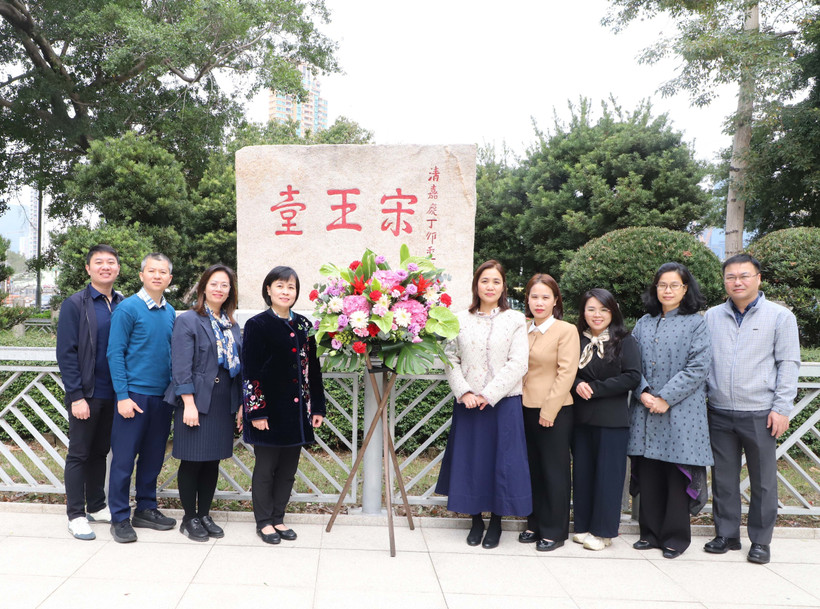
Hong Kong (VNA) – The Consulate General of Vietnam in Hong Kong (China) organised a visit to the Sung Wong Toi historical site in Kowloon City district, a landmark closely associated with the historic conference that led to the establishment of the Communist Party of Vietnam.
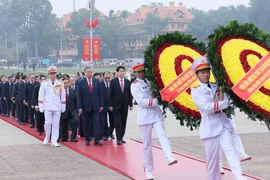
Officials and staff of the Consulate General, led by Consul General Le Duc Hanh, together with representatives of some Vietnamese agencies and businesses operating in Hong Kong, laid flowers at the Sung Wong Toi monument. The site houses a commemorative stone bearing the name of Sung Wong Toi, brought from the original structure, which no longer exists, where the Party’s founding conference was secretly held on February 3, 1930.
Participants revisited the historical background and significance of the Party’s establishment. Historical records describe the event as a major turning point that unified predecessor communist organisations into a single, cohesive party tasked with leading the Vietnamese revolution to overthrow colonial rule and achieve national independence, freedom and happiness. Nguyen Ai Quoc, representing the Communist International at the time, played a decisive role in the success of the conference.
Hanh said the visit provided an opportunity for today’s generation to reflect on and pay tribute to the contributions of veteran revolutionaries, while nurturing pride in Vietnam’s revolutionary traditions. For the Consulate General’s staff in Hong Kong, the activity also helped deepen understanding of the historical, cultural and traditional ties between Vietnam and Hong Kong, serving as motivation to further promote bilateral relations.
She noted that Vietnam–Hong Kong trade recorded strong growth in 2025, with Vietnam’s exports to Hong Kong surging by 97.1% year on year to 41.5 billion USD.
Located in Sung Wong Toi Park, the site is linked to many activities of President Ho Chi Minh in the early 1930s. Nearby is Tam Kung Street, where house No. 186 once stood – a place where President Ho Chi Minh worked before being arrested by British colonial authorities in Hong Kong and detained at Victoria Prison during the well-known “Nguyen Ai Quoc case”. While Tam Kung Street still exists today, house No. 186 no longer remains, as part of the street was demolished to make way for Olympic Avenue./.