Hanoi (VNA) – Nguyen Hoang Giang’s promotion to Vice President of Samsung Electronics Vietnam Thai Nguyen (SEVT) on December 1, 2025 marks a milestone as he is the first Vietnamese to land such a senior position in Samsung’s global smartphone production network.
In a recent interview with VietnamPlus, Giang discussed the three must-have qualities needed to climb the ladder at a global tech giant, no matter where one is from.
First is deep professional expertise paired with big-picture thinking: not just technical know-how, but a rock-solid understanding of the entire value chain, management processes, and strict global standards.
Second is leadership prowess and cross-cultural fluency, including the ability to thrive in multicultural settings, communicate clearly, drive decisions with hard data, and shoulder responsibility on a worldwide stage.
Third is resilience, ironclad discipline, and nonstop hunger for learning. At elite tech companies, he said, promotions aren’t handed out for short-term wins, but go to those with long-haul dedication, grit, and the skill to groom the next generation of leaders.
In fact, Vietnamese engineers and managers now boast solid technical skills and adapt quickly to cutting-edge technologies, while making steady progress in management, production coordination, and quality controls up to international standards.
More importantly, Vietnamese workers are steadily moving up the ladder, shifting from basic “execution” jobs to higher-value roles in planning, process optimisation, and leadership, especially in smart manufacturing, quality management, and research and development. Samsung sees this as a long-term competitive edge for Vietnam in the global tech supply chain, he said.
According to him, Samsung Vietnam invests heavily in workforce upskilling, partnering with universities and colleges in Bac Ninh and Thai Nguyen to offer work-and-study courses that let employees earn formal college and university qualifications. Staff also undergo annual professional and leadership training, with many getting hands-on experience through global projects that sharpen their skills and open new horizons.
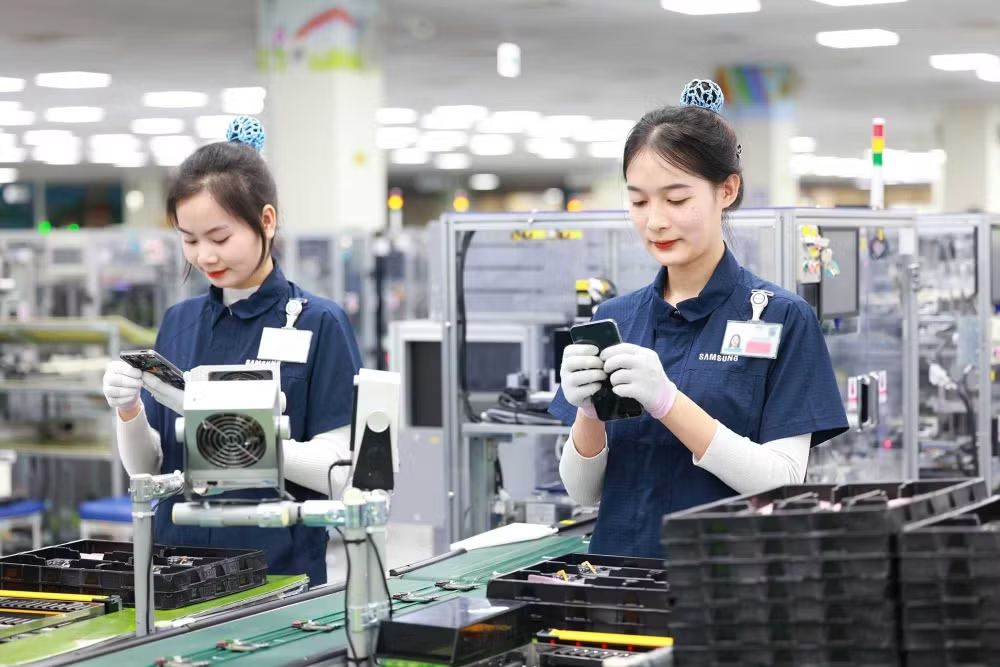
Complementing these efforts, the company has rolled out a range of welfare perks to retain workers, including a solid daily bus network that shuttles workers, enabling them to pursue careers without leaving their hometowns.
It also has extensive modern dormitories offering thousands of modern housing units. On-site medical stations at its factories provide regular health check-ups in partnership with major Vietnamese hospitals and doctors.
Through parallel investments in skills and living standards, Samsung places staff at the core of its long-term growth in Vietnam, he said.
The company is pursuing a deliberate, long-term strategy to spot, train, and elevate Vietnamese talents into key leadership roles. This is not just locally, but across its global operations, Giang said, adding that this is achieved through structured talent pipelines, leadership training, and job rotation that build management experience, technical depth, and cross-cultural fluency. Vietnamese employees are increasingly assigned to high-stakes strategic projects, allowing them to sharpen their leadership capacity.
Promotions and authority are granted strictly on merit, based on competence, performance, and commitment, not nationality. This approach is helping Vietnamese employees build lasting careers while contributing more deeply to Samsung’s worldwide value chain, a clear signal of its serious long-term bet on Vietnam’s talent pool and its broader push for global integration.
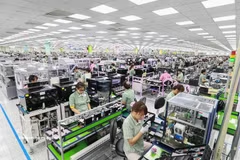
Giang now oversees operations at both Bac Ninh and Thai Nguyen complexes, which together account for more than half of Samsung’s global “Made in Vietnam” smartphone output. Giang said he is grateful for the opportunity. He pledged to keep polishing the technical skills of Samsung’s Vietnamese engineers to churn out better products, grab bigger market share, create more jobs to drive Vietnam’s economic growth in the years ahead./.