Vietnam's August Revolution contributes to colonial countries’ fight for independence: Former Cuban Ambassador

The August Revolution, also known as the August Uprising, demonstrated the boldness of the Indochinese Communist Party at that time, now the Communist Party of Vietnam, along with late President Ho Chi Minh and other leaders.

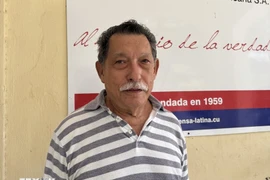
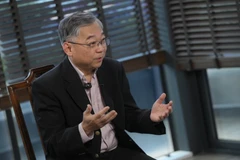
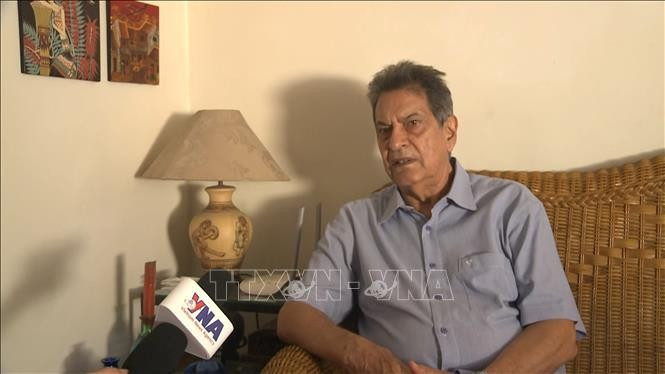
Fredesmán Turró González, former Cuban Ambassador to Vietnam and Vice President of the Cuba-Vietnam Friendship Association, talks to VNA correspondents in Havana (Photo: VNA)

Havana (VNA) - The August Revolution on August 19, 1945 was an important contribution by the Vietnamese people to colonial countries' struggles for independence as well as their victories, according to Fredesmán Turró González, former Cuban Ambassador to Vietnam, Vice President of the Cuba-Vietnam Friendship Association.

The revolution was one of the many epics created by the Vietnamese people, and it fundamentally changed the situation in Vietnam, in French Indochina at the time, as well as having a significant impact on colonial regimes around the world, the official told the Vietnam News Agency’s correspondent in Havana on the occasion of the 80th anniversary of the August Revolution and National Day (September 2, 1945-2025).

According to him, the August Revolution, also known as the August Uprising, demonstrated the boldness of the Indochinese Communist Party at that time, now the Communist Party of Vietnam, along with late President Ho Chi Minh and other leaders. The Party's National Congress, held in Tan Trao from August 14 to 15, 1945, concluded that all objective and subjective conditions were ripe to launch a general uprising to seize power from the Japanese fascists before the allied forces entered Indochina.

The Vice President of the Cuba-Vietnam Friendship Association emphasised that the revolution also highlighted the importance of unity within the Party and among the leadership, as well as the necessity of continuously studying and analysing both objective and subjective conditions in order to determine the appropriate course of action at each historical moment. In this sense, the August Revolution left behind an extremely valuable lesson.

The victory led to the birth of the Democratic Republic of Vietnam (now the Socialist Republic of Vietnam) 80 years ago. For the first time, the Vietnamese people lived in an independent, sovereign nation and enjoyed full rights. It was also the first time that a democratic and people's republic emerged in Southeast Asia.

However, the Vietnamese people had to continue their struggle, not to gain independence and sovereignty, but to defend the country against foreign aggressors.

González assessed that over the past 80 years of building, defending, and developing the country, Vietnam has achieved significant victories in all fields. It has defeated every enemy that threatened its independence and sovereignty, culminating in the historic victory of April 30, 1975, which reunified the country after years of war.

The official expressed deep admiration for Vietnam's socio-economic achievements, especially following the 6th National Party Congress.

He noted that by avoiding dogmatism and adapting to the country’s realities, Vietnam underwent significant ideological and structural transformations which not only helped it overcome severe difficulties in the mid-1980s but also led to remarkable socio-economic breakthroughs.

Vietnam’s economy is now considered one of the most dynamic in the world, with consistently high annual growth rates. In the first half of this year, its GDP grew by 7.52%, paving the way for an annual growth rate of over 8% set for this year and in the coming years.

González held that Vietnam's economic achievements and dynamic growth, its active integration into the global economy, diplomacy of peace, and partnerships, as well as its increasing participation in international forums and events have significantly enhanced the country’s international reputation, making it an important player in global politics.

He also regarded the leadership of the Communist Party of Vietnam as the key to all of the Vietnamese people's successes, both in defending the nation and in driving economic development./.

VNA
See more

Illustrative Image (Photo: Bangkokpost)

Thailand extracts bio-calcium from fish waste

Researchers at Rajamangala University of Technology, Thanyaburi (Thailand) developed a method to extract calcium from discarded parts of blackchin tilapia, including heads, bones, scales and tails - materials typically treated as waste and a source of pollution.

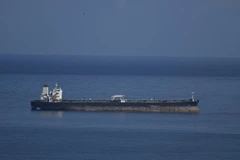
Philippines receives first Russian oil shipment in five years

Philippines receives first Russian oil shipment in five years

On March 24, Philippine President Ferdinand Marcos Jr. declared a national energy emergency through an executive order, allowing the government to fast-track fuel procurement, make advance payments for fuel contracts, and ensure the availability of fuel and other essential goods amid rising prices.

Philippines declares energy emergency over Middle East tension (Photo: BBC)

Philippines declares energy emergency

The Philippine Government on March 24 announced an "imminent danger of a critically low energy supply" as tensions in the Middle East threaten fuel supplies and the stability of the country’s power system.

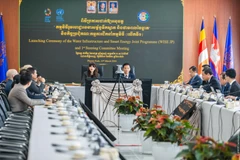
Delegates at the event (Photo: cambodia.un.org)

Cambodia accelerates access to climate-resilient water services

Funded by the UN Joint Sustainable Development Goals (SDG) Fund, the Water Infrastructure & Smart Energy Joint Programme (WISE JP) introduces a pioneering financial model that combines commercial and low-interest capital - a revolving blended‑finance facility - dedicated to ensuring climate‑smart water systems.

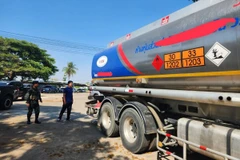
Officials inspect the 10-wheel tanker found smuggling fuel to Myanmar in Mae Sot border district on Sunday. (Photo:bangkokpost.com)

Thailand seizes 20,000 litres of diesel bound for Myanmar

Authorities of Thailand's Tak province have ordered intensified patrols and stricter inspections to prevent fuel stockpiling and illegal cross-border exports. They also called on local residents to report any suspicious signs related to fuel hoarding or smuggling.

Illustrative image (Photo: Internet)

Wildfires surge to 96 hotspots in Thailand

According to the provincial forest fire and haze prevention centre, satellite data from the Suomi NPP VIIRS system recorded the hotspots at 02:13. The fires were spread across multiple districts though firefighting teams have been working around the clock to contain the blazes.

In major cities such as Hanoi and Ho Chi Minh City, demand for pet-related services is surging. (Photo: VNA)

Vietnamese pet market attractive to RoK businesses

RoK pet food companies are increasingly targeting Vietnam as a key growth market, leveraging the country’s rapidly developing pet economy and rising demand for premium pet care products in Southeast Asia.

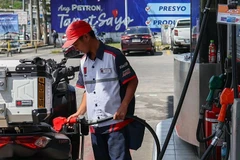
Residents refuel at a petrol station in Stung Treng province, north-eastern Cambodia. (Photo: VNA)

Cambodia introduces energy-saving measures amid Middle East conflict

Despite these challenges, the government noted that Cambodia’s fuel and electricity supply remains stable, supporting economic activities and public service delivery, based on assessments conducted with the Ministry of Mines and Energy, Electricité du Cambodge (EDC), and fuel import companies.

Coordinating Minister for Economic Affairs Airlangga Hartarto in a press statement at the Presidential Palace Complex, Jakarta on March 19. (Photo: ANTARA)

Indonesia pushes sustainable energy transition

Diesel plants remain widely used but should gradually be replaced by renewable energy sources, particularly solar power, due to their economic and environmental advantages, said an Indonesian minister.