Vietnam’s aviation sector soars with double-digit growth over 8 months

In the first eight months of 2025, Vietnam’s aviation sector recorded double-digit growth in both passenger and cargo volumes compared to the same period last year, mainly driven by the expansion of international routes and increased frequency of domestic flights.

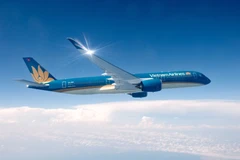
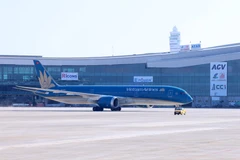
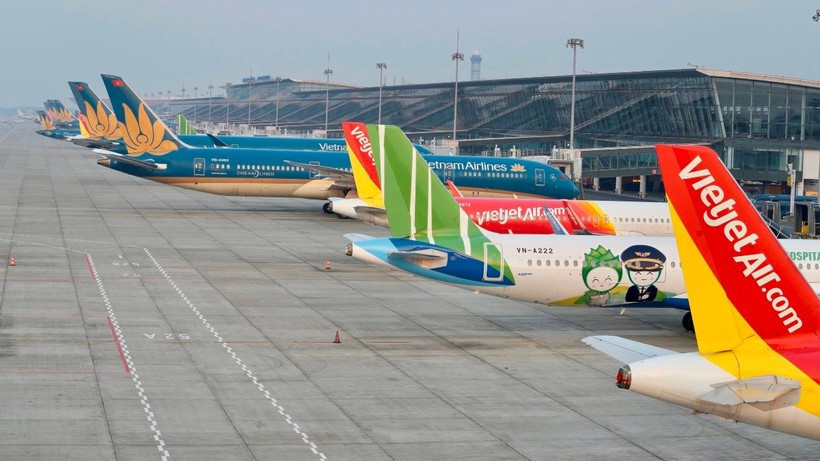
Aircraft of Vietnamese airlines at Noi Bai International Airport. (Photo: VietnamPlus)

Hanoi (VNA) - In the first eight months of 2025, Vietnam’s aviation sector recorded double-digit growth in both passenger and cargo volumes compared to the same period last year, mainly driven by the expansion of international routes and increased frequency of domestic flights.

Apart from launching new international routes, Vietnam’s aviation market is expected to see the entry of new carriers later this year, along with fleet expansions as airlines compete to capture greater market share.
air2.jpg
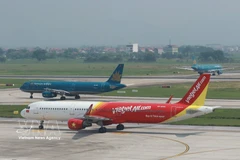
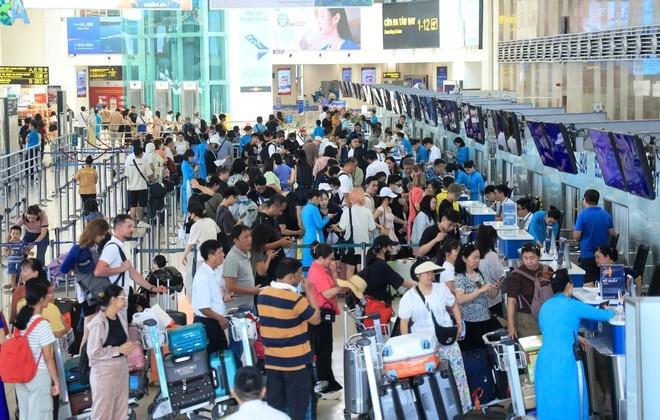
Aviation industry's transport activities record high growth in the first 8 months of 2025 (Photo: VIetnamPlus)

Double-digit growth

According to the Civil Aviation Authority of Vietnam (CAAV), airlines operating in Vietnam carried 7.7 million passengers and 135,100 tonnes of cargo in August alone, up 10.9% and 17.5% year-on-year, respectively. Of this total, Vietnamese airlines transported 5.4 million passengers and nearly 39,100 tonnes of cargo, marking respective increases of 8.8% and 6.4% compared to August 2024.

In the first eight months, Vietnam’s aviation market recorded a total of 56.9 million passengers and 972,900 tonnes of cargo, representing yearly increases of 10.9% and 17.5%, respectively. Of the total, 39 million passengers flew with Vietnamese airlines, up 8.8% year-on-year, with 26 million travelling domestically, and 13 million internationally.

Vietnam currently has 14 commercial and specialised airlines operating a total of 254 aircraft, with the fleet expected to expand to around 400 modern planes by 2030. The country’s air network is also expanding rapidly, comprising 52 domestic routes and 211 international routes.

Vietnam Airlines, whose international routes generate the majority of its revenue, has recently launched new services to Beijing, Bengaluru, Hyderabad, Busan, and Milan, while resuming routes to Bali, Osaka, and Moscow. In December this year, the carrier is set to inaugurate its first direct flight between Vietnam and Denmark. All of these routes hold strategic economic and political importance.
air3.jpg
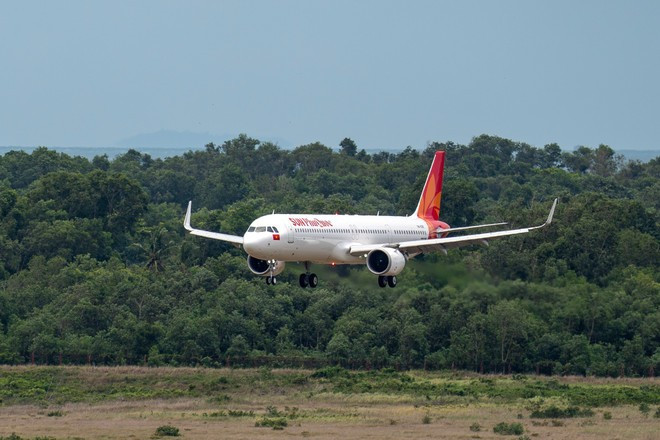
Sun PhuQuoc Airways welcomes its first Airbus A321NX, marking the start of an eight-aircraft fleet launch in 2025. (Photo: VietnamPlus)

Vietnam Airlines has made a strong recovery in its international network, both in route numbers and operational performance. The national flag carrier has added 13 new international routes, bringing the total to 69 routes connecting 37 destinations in 21 countries — the fastest expansion since before the COVID-19 pandemic. International services now account for 60% of the airline’s total transport revenue.

Dang Anh Tuan, Deputy General Director of Vietnam Airlines, stressed that the continuous expansion of international routes is a strategic move by the airline, contributing directly to Vietnam’s goal of welcoming 22–23 million international visitors in 2025.

Following its restructuring phase, Bamboo Airways has focused on short-haul routes with flexible frequencies, such as Bangkok, Taipei (China), and Seoul.

Meanwhile, Vietravel Airlines is expanding its charter flight partnerships to serve premium tour packages to the Republic of Korea (RoK), Japan, and Thailand. Vietjet Air continues to strengthen its presence in the Indian market, operating multiple routes connecting Vietnam with major cities such as Mumbai, Ahmedabad, Hyderabad, and Chengdu (China).

Conversely, popular Vietnamese tourist destinations such as Da Nang, Nha Trang, and Phu Quoc remain highly favoured by international travelers. Airlines plan to increase flight frequencies and launch new international routes to these destinations to enhance two-way operations, improve fleet efficiency, and stimulate tourism demand.

Competition to expand market share

To attract more international travelers, Vietnam Airlines has been actively working with local authorities and the tourism sector to promote Vietnam’s image in key global markets. The carrier is also expanding its partnerships with other airlines to increase market share and improve its competitiveness in the international aviation market.

At the same time, the national flag carrier has launched various international fare promotions for both inbound and outbound flights.

The airline’s flexible pricing policy tailored to each market and travel period allows passengers to easily choose journeys that fit their plans and budgets, Tuan said.

In addition, Vietnam’s aviation market is expected to see new entrants such as Sun PhuQuoc Airways later this year, along with Vietravel Airlines expanding its fleet to capture a larger share of both passenger and cargo transport markets.

In early August, Vietravel Airlines welcomed an additional Airbus A320 aircraft. By the end of the year, the airline aims to expand its fleet to at least 10 aircraft, focusing on a unified Airbus A321/A320 fleet, activating strategic routes, and preparing to expand into international markets. By 2030, the carrier targets a fleet of 30 to 50 aircraft, covering destinations across Southeast Asia, Northeast Asia, and the Middle East.

On August 10, Sun Phu Quoc Airways received its first Airbus A321NX aircraft — the first of eight planes the airline plans to operate in 2025. Ticket sales are expected to begin in October 2025, with the first commercial flight scheduled for November 2025.

Sun PhuQuoc Airways will connect Phu Quoc island – the “pearl island” of Vietnam with major domestic economic and tourism hubs such as Hanoi, Ho Chi Minh City, Da Nang, and other key cities.

For the international market, the airline aims to link Phu Quoc with major cities and tourism centres across Asia, including destinations in Japan, the RoK, China, and other potential markets in the region. It also plans to explore promising yet underserved markets with no direct routes, such as Eastern Europe, Central Asia, and the Middle East./.
VNA

See more

An Phát Complex Industrial Park in Hai Phong City is one of the eco-friendly industrial parks. (Photo: VNA)

Green industrial parks become new magnet for FDI

Statistics show that about 80% of FDI enterprises prioritise investing in industrial parks with green energy infrastructure, reflecting a growing shift in investment preferences amid tightening global environmental standards.

Wood panel production at the Thuan An Wood JSC in Ho Chi Minh City (Photo: VNA)

Vietnamese businesses ride wave of investment in green manufacturing

Recent developments in private investment show that as confidence in the private sector has grown and is a key driver of economic development, investors are strengthening support for enterprises not only through capital but also management expertise and market connectivity.

Officers and soldiers of Son Tra Border Guard Station, Da Nang City Border Guard Command tell local fishermen about IUU fishing. (Photo: VNA)

Fishing solidarity groups help Vietnam with IUU “yellow card” warning removal

Over the years, coastal authorities in Da Nang have intensified efforts to educate fishermen about regulations, particularly the need to avoid illegal fishing in foreign waters. Local administrations and competent forces have also strengthened vessel registration and inspection procedures, installed vessel monitoring systems and ensured transparent declarations of catches at ports.

Representatives of Central Retail Vietnam and Lotte Plaza Market sign a distribution cooperation agreement at the networking event in Ho Chi Minh City on March 13. (Photo: VNA)

Vietnamese firms step up cooperation with international distribution chains

Connecting Vietnamese businesses with international distribution networks has been a key component of government-led trade promotion programmes for many years, which are designed to help domestic companies place goods directly into global retail systems rather than exporting solely through intermediaries.

Direct Hanoi–Amsterdam flights by Vietnam Airlines to begin on June 16. (Photo: Vietnam Airlines)

Vietnam Airlines to launch direct Hanoi–Amsterdam service on June 16

Under the plan, the Hanoi–Amsterdam route will commence operations on June 16, 2026, with an expected frequency of three return flights per week using modern wide-body Airbus A350 aircraft. This will be the first direct air link between Vietnam and the Netherlands, helping to shorten travel time and enhance connectivity between Vietnam and one of Europe’s key economic, logistics and aviation transit hubs.

Farmers harvest the 2025 Winter–Spring rice crop in An Giang province. (Photo: VNA)

An Giang accelerates export shift to meet green consumption trends

To enhance competitiveness, authorities are assisting businesses in obtaining globally recognised certifications such as GlobalG.A.P., Organic and HACCP, enabling key exports including rice, seafood and clean agricultural products to strengthen their position in global markets, according to Quang Xuan Lua, Director of the An Giang Centre for Trade and Investment Promotion.

Motorcycle riders refill their vehicles at a petrol station in Hanoi (Photo: VNA)

E5 RON92 biofuel price falls in latest adjustment

Since the beginning of this year, domestic fuel prices have undergone 14 adjustments, including five decreases and nine increases for RON95 and six declines and eight hikes for E5 RON92. Meanwhile, diesel price has fallen three times and risen 11 times.

A French customer is tasting Vietnamese lychee. (Photo: VNA)

Vietnamese agricultural products boost global brand recognition

Vietnam aims to achieve about 74 billion USD in agro-forestry-fishery export turnover this year. Expanding value-added products, improving quality standards and strengthening brand building, especially through international supermarket systems, will be key to enhancing the competitiveness and global recognition of Vietnamese agricultural products.

An apartment building developed by BCONS in Binh Duong (Photo: VNA)

Resolution 68 boosts businesses entering market

By the end of 2025, Vietnam had more than one million active enterprises. In the first two months of 2026, about 64,500 enterprises entered or re-entered the market, up 29.4% year-on-year, averaging 32,200 newly established or returning businesses per month.

A Vinh Long official introduces signature local products to Korean guests. (Photo: VNA)

Vinh Long courts Korean investment in key sectors

Vice Chairman of the provincial People’s Committee Nguyen Truc Son vowed to accompany investors and provide them with optimal conditions, while building a transparent and stable business environment to secure long-term engagement from foreign enterprises, particularly those from Daejeon.

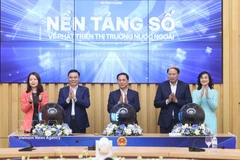
Delegates at the launching ceremony (Photo: VNA)

Digital platform on overseas market development launched

With Vietnam’s network of 64 trade offices overseas, Deputy PM Son noted that connecting them through a modern digital platform could help establish a unified national trade information system that operates efficiently, transparently and with strong forecasting capacity.