Vietnam’s economic scale sees spectacular growth over 8 decades

From independence in 1945, national reunification in 1975, to Doi Moi 1986, Vietnam’s journey has been extraordinary. Today, it stands as a regional leader with a long-term vision: to become a high-income, developed nation by 2045.

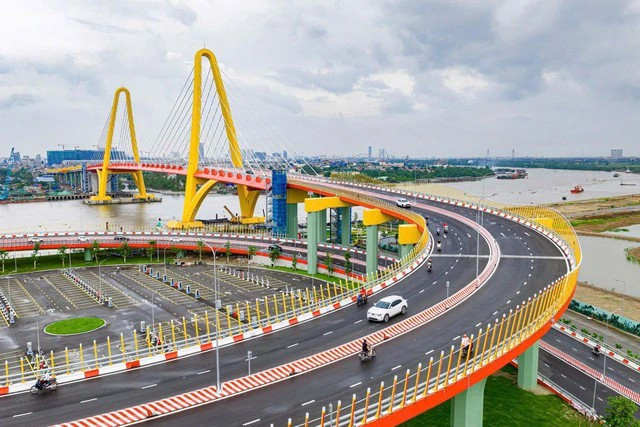
Nearly four decades into its reform journey, Vietnam has achieved remarkable success on multiple fronts, with milestones that many consider miraculous (Photo: thanhnien.vn)

Hanoi (VNA) - Nearly four decades into its reform journey, Vietnam has achieved remarkable success on multiple fronts, with milestones that many consider miraculous. One of the most striking achievements has been the significant narrowing of the income gap between Vietnam and many countries around the world.

Reform and results: A transformational journey

Since initiating its shift from a centrally planned, subsidy-based economy to a socialist-oriented market economy in 1986, Vietnam has overcome immense challenges. The Doi Moi (Renewal) reforms were launched at a time when the nation was economically exhausted from the war against US imperialism, struggles for border protection, and a prolonged harsh embargo.

One of the most severe challenges came in the first year of reform, with hyperinflation peaking at 774%. The government battled inflation for years, finally reducing it to single digits by 1993 and maintaining it around 5% through 2000. Since then, except for a few years of double-digit inflation, it has remained largely under control.

This success required a comprehensive strategy - liberalising market activities, implementing sound monetary policies, reforming the legal framework to support market mechanisms, and safeguarding economic freedoms. Although initial reforms led to improvements in agriculture, industry, and goods distribution, the country’s situation in 1990 was still dire.

Per capita income was under 100 USD, and 70% of the population lived in poverty, which dropped to 58 % by 1993. Among Doi Moi’s most significant accomplishments has been poverty reduction, with the rate falling from over 70% to under 1.9 % today, under the multidimensional poverty standard.

According to the International Monetary Fund (IMF), Vietnam’s economy is forecast to reach 491 billion USD in 2025, placing it 34th globally and 5th in Southeast Asia. This is built on a strong 2024 result, when GDP reached 476.3 billion USD, ranking fourth in ASEAN, above the Philippines at 462 billion USD and Malaysia 422 billion USD.

Looking further ahead, the IMF projects Vietnam’s GDP to reach 627 billion USD by 2029, surpassing Thailand at 616 billion USD to become the 32nd largest economy globally and 4th in the region. By 2030, the figure is expected to climb to 666.5 billion USD.

In August, the Government issued Resolution No. 226, setting ambitious growth targets for sectors and localities, aiming for national GDP growth of 8.3-8.5% in 2025 while keeping average consumer price index growth below 4.5%. Total investment is expected to increase by 11-12 %, with 2.8 quadrillion VND to be mobilised and disbursed in the second half of the year.

To achieve these goals, ministries and local authorities have been directed to prioritise investment, consumption, and exports, develop new growth engines, ensure effective governance, and prepare detailed economic scenarios for the remainder of the year.

In the early 2000s, some experts predicted Vietnam’s income levels would never catch up to regional peers. However, the opposite has occurred. From 2000 to 2024, Vietnam has significantly narrowed its income gap, measured by GDP per capita, with most countries in the region—excluding China.
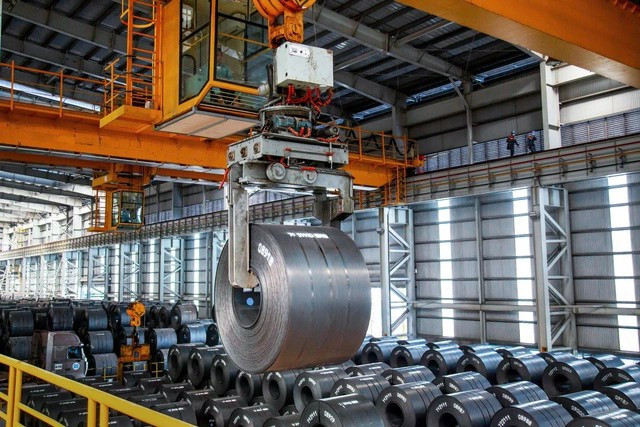
national-growth-2.jpg
The IMF projects Vietnam’s GDP to reach 627 billion USD by 2029 (Photo: thanhnien.vn)

In 2000, Singapore’s per capita GDP was 55.8 times higher than Vietnam’s; by 2024, that figure had dropped to 19.7 times. The gap with Thailand shrank from 5.2 times to 1.6 times, while that with Malaysia narrowed from 9.6 times to 2.7 times. Indonesia, once 2.1 times higher, is now on par with Vietnam. The Philippines, once 2.8 times higher, has been overtaken. India, once surpassing Vietnam, now trails it, with Vietnam’s per capita GDP being 1.6 times higher.

These numbers are not just impressive, they serve as clear evidence of Doi Moi’s transformative impact and Vietnam’s extraordinary success in reducing poverty.

Staying the course: The socialist-oriented market economy

These advances affirm the success of Vietnam’s socialist-oriented market economy. Critics have called for abandoning the socialist element, but this perspective ignores its role in maintaining social welfare, political stability, and effective crisis management.

Vietnam has built a fully functional market economy while using socialist principles to guide inclusive development. More than 75 countries, including Japan, the Republic of Korea, and the UK, recognise Vietnam as a market economy. The US and the European Union have yet to do so, primarily due to political pressures.

Vietnam’s GDP per capita reached 4,717 USD in 2024, and GNI per capita was 4,490 USD, still short of the World Bank’s upper-middle-income threshold of 4,516 USD. It is expected to cross that mark in 2025. While GDP and GNI measure economic performance, they don’t fully reflect real living standards. On a purchasing power parity basis, one US dollar in Vietnam has the buying power of 3.33 USD in the US, suggesting Vietnam would already qualify as high income by that measure.

Vietnam’s sizable informal economy also distorts official statistics. Legal but unrecorded sectors such as betting and crypto remain outside GDP calculations. With 17 million cryptocurrency holders, Vietnam ranks among the world’s top seven nations in crypto adoption. Including these sectors would significantly raise per capita income and further reduce the perceived income gap.

From independence in 1945, national reunification in 1975, to Doi Moi 1986, Vietnam’s journey has been extraordinary. Today, it stands as a regional leader with a long-term vision: to become a high-income, developed nation by 2045./.
VNA

See more

Representatives of the Vietnamese Embassy and agencies in Laos pay tribute war heroes and martyrs at the Lao – Vietnam Combatant Alliance relic site in Keun village of Thulakhom district, Vientiane province, on December 21. (Photo: VNA)

Vietnamese Embassy in Laos pays tribute to fallen combatants

The activity aimed to recall the glorious history and heroic traditions of the Vietnam People’s Army, pay tribute to previous generations for their immense sacrifices and contributions to national independence and freedom, and reaffirm the sense of responsibility and determination in the cause of national construction and defence.

Visit Vietnam is designed as a unified data backbone for government authorities, businesses and travelers (Photo: Sun Group)

Launch of Visit Vietnam – breakthrough digital leap for Vietnam’s tourism industry

On December 20 in Phu Quoc special zone, Visit Vietnam was officially unveiled at the conference “Visit Vietnam – Connecting Data, Shaping the Future of Tourism”, co-organized by the National Data Association (NDA), the Vietnam National Authority of Tourism (VNAT), Sun Group – Asia’s leading tourism developer – and Visa, the world’s leading digital payments technology company.

Production activities at the Lien Ha Thai Industrial Park in Hung Yen province. (Photo: qdnd.vn)

Upgrading supporting industries in Vietnam

The capacity of Vietnam’s supporting industries directly reflects the economy’s level of autonomy. In recent years, the sector has made notable progress, yet challenges remain, particularly technological bottlenecks.

President of the Vietnam Fatherland Front (VFF) Central Committee Bui Thi Minh Hoai (L) extends Christmas greetings to Archbishop of Hanoi and Vice President of the Catholic Bishops’ Conference of Vietnam Vu Van Thien (Photo: VNA)

VFF leader extends Christmas greetings to Catholic community

Despite global uncertainties and domestic challenges in 2025, under the Party’s leadership and with the unity of the people, including religious communities, Vietnam maintained economic growth among the highest in the world, said President of the Vietnam Fatherland Front (VFF) Central Committee Bui Thi Minh Hoai.

Deputy Prime Minister Pham Thị Thanh Tra (left) presents flowers to Bac Ninh Diocese during her pre-Christmas visit on December 19. (Photo: VNA)

Deputy PM pays pre-Christmas visit to Bac Ninh Diocese

Bac Ninh Diocese is committed to encouraging Catholic followers to strictly follow the Party guidelines, State policies and laws, as well as local regulations, while working alongside authorities and people from all walks of life to build a stronger and more prosperous homeland

The launching ceremony of Sun Group’s 724-hectare An Tay integrated project complex (Photo: Sun Group)

Sun Group launches An Tay integrated project complex in HCM City

Spanning a total area of 724 hectares, the complex carries an investment value of 51.16 trillion VND, equivalent to approximately 2 billion USD, and comprises three modern urban areas – East An Tay, North An Tay and West An Tay – alongside the An Tay General Port.

The groundbreaking, inauguration and technical opening ceremony for projects in An Giang on December 19, 2025. (Photo: Sun Group)

Phu Quoc breaks ground on nearly-342-million-USD urban light rail line

Connecting Phu Quoc International Airport with the APEC Convention Centre, the LRT project is expected not only to strengthen the island’s capacity to host APEC 2027, but also to usher in a new phase of infrastructure development and urban spatial planning for the special administrative zone.

The delegates at the workshop on promoting gender equality in the public sector (Photo: VNA)

Pilot gender equality index for public sector unveiled in Hanoi

The event organised by the Ho Chi Minh National Academy of Politics (HCMA), in coordination with the Australian Embassy in Vietnam through the Vietnam–Australia Centre (VAC) aimed to introduce and discuss the findings of a study developing a specialised assessment tool to measure gender equality in the public sector, covering both central agencies and local authorities.

The Golden City social housing project in Long Xuyen ward, An Giang province, was handed over in July 2025. (Photo: VNA)

Vietnam exceeds social housing target, completing 102,633 units

In the coming period, the Ministry of Construction will accelerate the development of social housing for the 2026–2030 period in accordance with the Government's new resolution, aiming to achieve the goal of at least one million social housing units for low-income individuals and workers in industrial zones.

Forces relocate MK81 bomb from residential garden in Khanh Hoa (Photo: qdnd.vn)

Khanh Hoa safely disposes 150kg MK81 bomb

An over-150-kg bomb left over from war was discovered after recent historic flooding in Khanh Hoa province eroded layers of sand, exposing the ordnance on the premises of a household in Khanh Vinh commune. Upon discovery, local residents promptly reported it to local authorities and military units.

The K53 Team of the Quang Ngai provincial military command carries out search and recovery operations for the remains of fallen soldiers in Laos. (Photo: VNA)

Five sets of Vietnamese martyr remains recovered in Laos, Cambodia

The remains of five Vietnamese volunteer soldiers and experts who sacrificed their lives in Laos and Cambodia during wartime have been recovered by Team K53 of the Quang Ngai provincial Military Command after more than a month of search and recovery operations under the 2025-2026 dry-season mission.