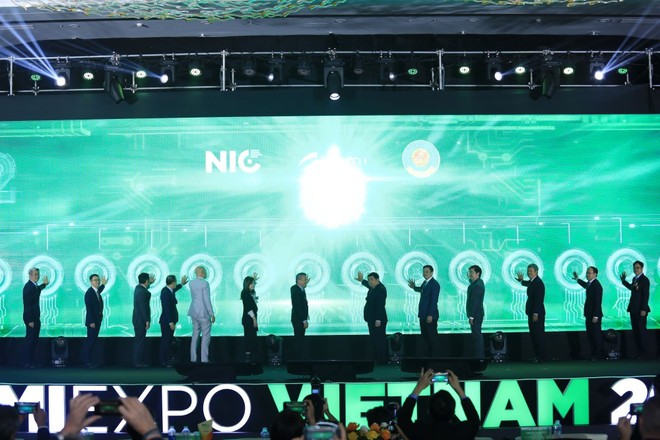
Hanoi (VNA) - Deputy Prime Minister Nguyen Chi Dung, Head of the National Steering Committee for Semiconductor Industry Development, noted at the opening ceremony of SemiExpo Vietnam 2025 on November 7 that we are living in the era of the Fourth Industrial Revolution and that, in line with global trends, Vietnam is entering a strategically important phase of economic restructuring in which science, technology and innovation serve as the key driving forces.
According to the Deputy Prime Minister, Vietnam is not merely setting directions – a series of concrete and decisive actions have already been implemented. The country has established the National Steering Committee, issued the Development Strategy for the sector to 2050, and is rolling out a programme to train 100,000 engineers by 2030. A major milestone has also been the completion of the legal framework through the recently adopted Law on Digital Technology Industry.
In parallel, Vietnam continues to refine its legal environment and foster favourable conditions for a robust semiconductor ecosystem including strengthening intellectual property regulations and introducing exceptional investment incentives. These policies reaffirm Vietnam’s long-term vision and determination to elevate the semiconductor industry as one of the pillars of its digital, knowledge-based and green economy.
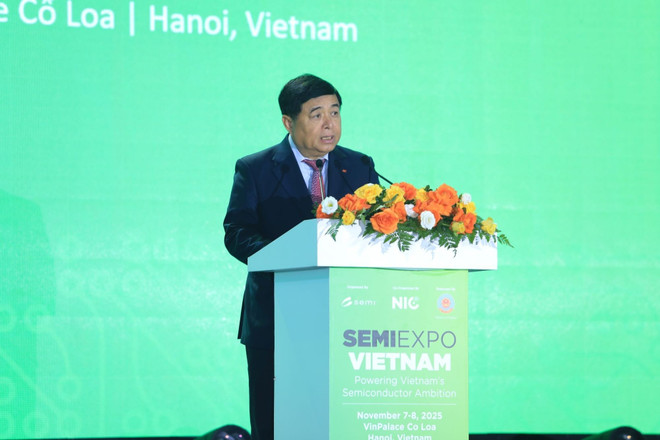
To turn its aspirations into reality, Vietnam is developing an ecosystem built on strong foundations and breakthrough policy mechanisms. Deputy Minister of Science and Technology Bui Hoang Phuong noted that Vietnam possesses multiple advantages – from shifts in global supply chains and a solid electronics manufacturing base to a young, abundant workforce, including around 7,000 IC design engineers. Notably, the new legal framework has introduced unprecedented incentive mechanisms.
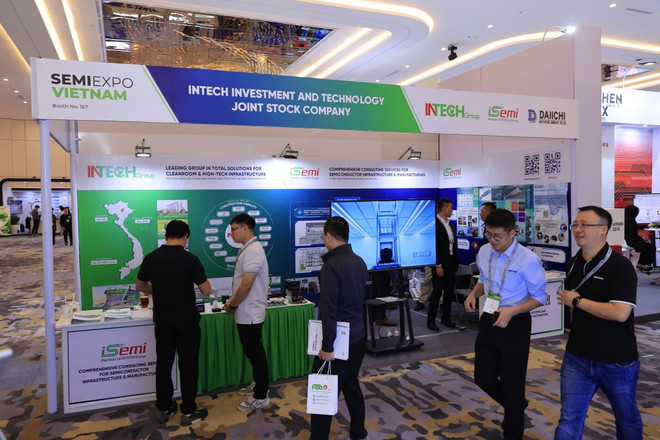
Vietnam is also prioritising the development of domestic capabilities. According to Deputy Minister of Finance Nguyen Duc Tam, the country is undergoing a significant transformation from a traditional assembly hub to deeper participation in high-value segments of the chain such as design and advanced packaging.
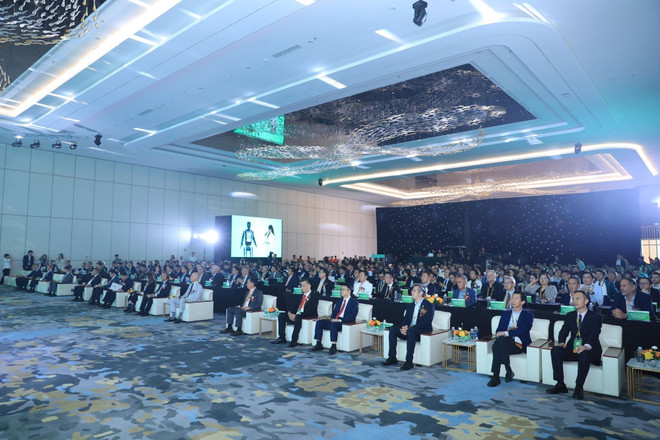
Semiconductor production projects with an investment starting from 6,000 billion VND will be eligible for a 5% corporate income tax rate for 37 years, six years of tax exemption, a 50% tax reduction for the following 13 years, along with generous incentives on land and high-quality human resources. These opportunities have been clearly recognised by international partners.
Linda Tan, President of SEMI Southeast Asia (SEMI SEA), said that, looking back on the journey since 2014, she believes Viet Nam has made significant progress, adding that her organisation is deeply impressed by the openness, sincerity and willingness to listen demonstrated by the Vietnamese Government—qualities she considers a strong foundation for the country’s continued progress.
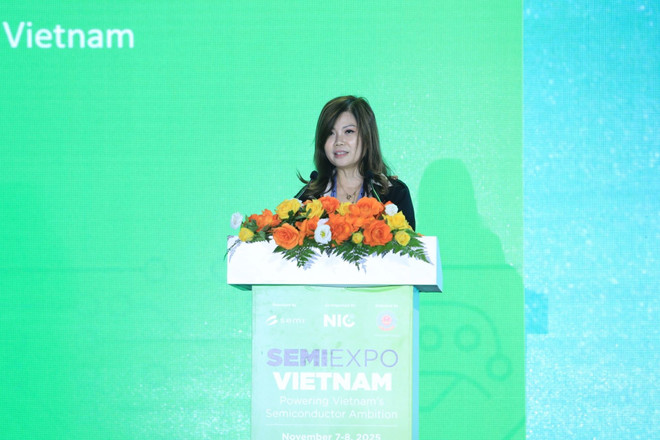
Echoing this view, Ajit Manocha, President and CEO of SEMI, welcomed Vietnam’s emergence as a rising semiconductor hub contributing to a more resilient and adaptable global supply chain.
Affirming SEMI’s role as a key partner ready to support Vietnam, Manocha also outlined the major challenges facing the global semiconductor industry. He described them as “headwinds” – from supply chain disruptions and difficulties in accessing raw materials, to the rise of breakthrough technologies such as AI and quantum computing, as well as complex geopolitical shifts.
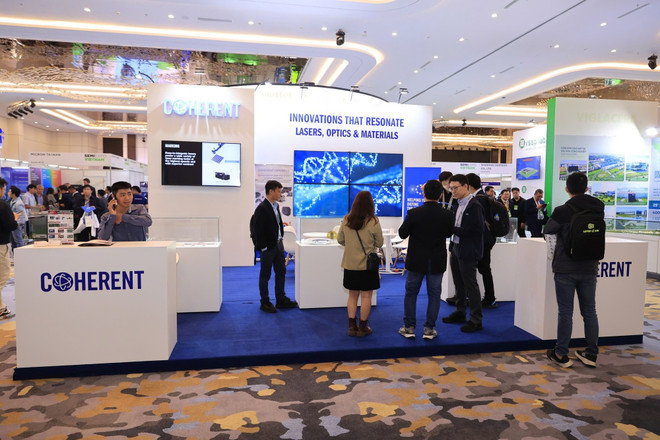
To address these challenges, SEMI is proactively implementing a series of strategic initiatives focusing on global policy advocacy, workforce development, sustainable growth, supply chain governance, and deep engagement in key areas such as smart data, AI and advanced packaging technology./.