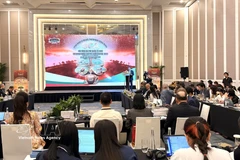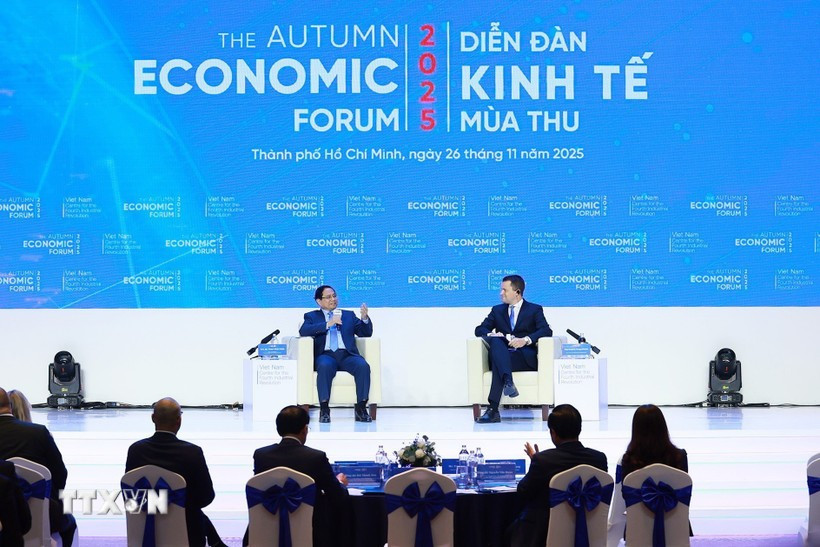
Hanoi (VNA) – International experts at the ongoing Autumn Economic Forum 2025 have acknowledged Vietnam’s strong commitment to the global shift toward a green transition in the digital era, with leaders at all levels outlining clear strategies and demonstrating firm, results-driven action toward sustainable development.
Clear opportunities
At the CEO 500 Tea Connect session, Alec Saltikoff, Chief Strategy Officer and CEO of DeepGreenX (DXG), a global climate-tech corporation specialising in carbon data, green transition and low-carbon supply chain digitalisation, stressed that the green transition is not only an environmental obligation but also a historic economic opportunity. Countries that act swiftly and businesses that embrace bold innovation, he noted, will take the lead. Companies at the forefront of green transition are already seeing faster, more sustainable growth and stronger investment inflows.
With its robust economic performance and firm government commitment to net-zero emissions, Vietnam is emerging as a key player in the global green transition, he said, adding that sectors from manufacturing, logistics and finance to smart urban development and renewable energy are undergoing deep restructuring towards a low-carbon model.
Saltikoff added that global technology firms are seeking stronger partnerships with Vietnamese companies known for their big visions, rapid implementation and innovative capacity. Vietnam could become Asia’s leading hub for green technology and low-carbon logistics by combining global technological expertise, international green finance and the creativity of Vietnamese enterprises, he noted.
Experts at the forum emphasised that shared data, standards, technologies and common objectives are essential to building a sustainable ecosystem that delivers long-term benefits for the economy, society and the planet.
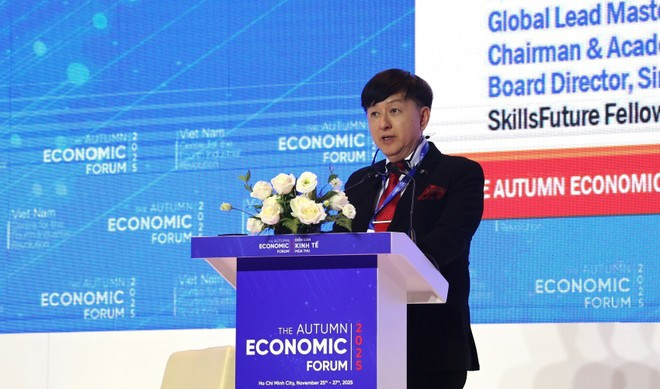
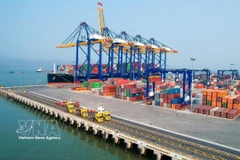
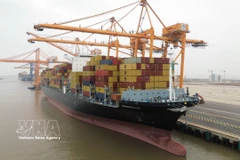
In a separate session, Thomas Sim, President of the International Federation of Freight Forwarders Associations (FIATA), said today’s most competitive economies share two critical pillars: digitalisation to enhance transparency, speed and data-driven decision-making, and green transition to cut emissions, meet global standards and attract sustainable capital. Countries that align their logistics ecosystems with green objectives not only strengthen resilience but also gain new advantages in global trade, he said.
Sim highlighted Vietnam’s ambition to become a regional hub for green logistics, alongside strengthened links with ASEAN partners such as Indonesia, Singapore, Thailand, Malaysia and the Philippines, as a clear signal of strategic direction. Green transition only brings real value when it delivers substantive changes in supply chain operations and connectivity, changes that must be guided by coherent, long-term commitments. The future will favour economies that are faster, greener and smarter, and Vietnam is well positioned to be among the pioneers, he stressed.
Bold actions
One of the central challenges in development is balancing energy demand with emission reduction. At a high-level dialogue with ministries and agencies, Deputy Minister of Industry and Trade Phan Thi Thang said Vietnam is entering a crucial phase of its energy transition to match global shifts toward green production and consumption. The revised Power Development Plan No. 8 accelerates the adoption of renewable energy, particularly wind and solar power, to harness Vietnam’s natural strengths while mitigating climate risks.
However, she acknowledged major challenges in scaling up intermittent renewable energy while ensuring grid stability and maintaining affordable electricity prices. To address these issues, the Government has tasked the Ministry of Industry and Trade with formulating strategic orientations, policies and a legal framework for sustainable renewable energy development.
The amended Electricity Law has helped address longstanding bottlenecks, safeguard energy security and support the net-zero target, while promoting renewable and new energy sources. In the long term, the ministry is prioritising renewable energy pricing mechanisms, land and site clearance, grid investment, energy storage infrastructure and the development of supporting industries, Thang said.
The ministry is also encouraging Vietnamese firms to join renewable energy supply chains and to develop dedicated renewable energy industrial zones in high-potential regions. These measures aim to build a sustainable, secure and internationally competitive energy sector.
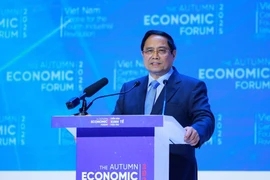
Addressing the Autumn Economic Forum, Prime Minister Pham Minh Chinh reaffirmed Vietnam’s three consistent principles for green transition and digital transformation. First, people and businesses remain at the heart of all development policies, as both beneficiaries and drivers of growth. Second, Vietnam maintains its foreign policy of independence, self-reliance, multilateralisation and diversification, acting as a good friend, reliable partner and responsible member of the international community. The PM reiterated Vietnam’s strong commitment to achieving net-zero emissions by 2050 and its readiness to open the market and strengthen the legal framework to attract green capital and advanced technologies.
He stressed that resources stem from mindset and vision, innovation creates momentum, and true strength lies in the people and enterprises. Therefore, domestic and international resources, as well as public-private partnerships, must be effectively mobilised.
At the local level, Chairman of the Ho Chi Minh City People’s Committee Nguyen Van Duoc outlined three strategic priorities for the city’s next phase of development: building an innovation ecosystem centred on people and businesses; promoting both green transition and digital transformation across all urban and socio-economic sectors; and expanding international cooperation to attract global talents.
Duoc affirmed the city’s readiness to pilot new mechanisms and policies, including unprecedented ones, and its commitment to building a proactive, transparent and efficient administration. HCM City will continue to improve its investment environment, reinforce business confidence and translate government policies and the PM’s directions into rapid, bold and effective actions, he said./.