Building safer future for Vietnam and ASEAN region: Official

The disaster risk reduction partnership is a unique forum where the Vietnamese Government, UN agencies, international donors, and civil society organisations come together to apply a unified approach to disaster risk reduction.

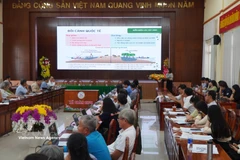
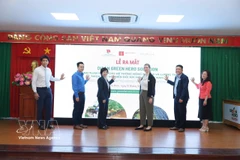
Deputy Minister of Agriculture and Environment Nguyen Hoang Hiep and Pauline Tamesis, UN Resident Coordinator in Vietnam present flowers to welcome WHO and IOM as new members of the disaster risk reduction partnership. (Photo: VNA)

Hanoi (VNA) – A ceremony in response to the International Day for Disaster Risk Reduction, themed “Fund Resilience, Not Disasters,” and ASEAN Day for Disaster Management 2025 took place in Hanoi on October 13 evening.

Hosted by the Ministry of Agriculture and Environment, in coordination with the United Nations Children's Fund Vietnam and Hanoi National University of Education (HNUE) under the support by the Japanese government, the event was livestreamed on the Facebook pages of the ministry’s Department of Dyke Management and Natural Disaster Prevention and Control, and the university.

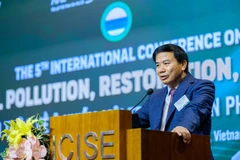
Speaking at the ceremony, Deputy Minister of Agriculture and Environment Nguyen Hoang Hiep expressed confidence that with the spirit of solidarity – creativity – pioneering, a safer future, not only for Vietnam but also for the ASEAN community, will be built.

Holding the event at Hanoi National University of Education strongly underscores that education is a core foundation for building a disaster-resilient future.

Many northern provinces of Vietnam are grappling with severe flooding following recent storms, yet these challenges have taught valuable lessons about the power of preparedness, the strength of solidarity, and the limitless potential of human creativity, the official said.

He underscored the role of young people, especially students, in disaster prevention and response, portraying them as a source of inspiration and the key holders of the future.

Highlighting the complexity of disasters and the severe funding shortfall for prevention efforts, Pauline Tamesis, UN Resident Coordinator in Vietnam, noted that Vietnam should adopt the strategic approach advocated by UN Secretary-General António Guterres, committing its own resources to build resilience rather than merely responding to disasters.

This strategic approach provides a foundation for addressing the increasingly severe threats posed by climate change, she said, stressing the need to turn this global priority into decisive national action.

Regarding three key actions in disaster risk management and prevention, Tamesis said it is necessary to enhance cooperation with stakeholders to improve disaster response and strengthen community resilience. She noted that building a resilient future also means engaging young people right now.

According to the UN official, the disaster risk reduction partnership is a unique forum where the Vietnamese Government, UN agencies, international donors, and civil society organisations come together to apply a unified approach to disaster risk reduction. For Vietnam, the partnership needs to be strengthened, governance mechanisms enhanced, and youth and community empowerment advanced to foster a more resilient and prosperous nation.

At the event, representatives from international organisations shared information on disaster prevention and response, while young people contributed ideas through technological solutions and by integrating disaster risk reduction into educational activities.

On the same day afternoon, representatives of the Department of Dyke Management and Natural Disaster Prevention and Control received the first batch of emergency aid from the Japan International Cooperation Agency (JICA) for flood-affected residents in Bac Ninh province. In addition to the shipment from Japan, further aid is expected from the governments of Australia and Russia, the ASEAN Coordinating Centre for Humanitarian Assistance, and several other international organisations./.

VNA

See more

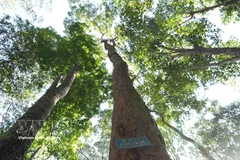
Official heritage plaque i sinstalled on the 12 recognised Shan Tuyet tea trees in Dong Phuc commune. (Photo: VNA)

Thai Nguyen: 12 ancient Shan Tuyet tea trees win national heritage status

The recognition honours the biological, cultural and historical values of these centuries-old Shan Tuyet tea trees – natural treasures deeply woven into the livelihoods, traditions and identity of local ethnic communities. The title affirms the community’s commitment to preserving and promoting the value of this iconic local tea variety.

Sarus cranes at Tram Chim National Park (Photo: VNA)

Return of sarus cranes: Hope takes wing in Dong Thap wetland

Beneath the wide Mekong Delta sky, Tram Chim National Park is racing against time, pouring heart and science into a decade-long (2022–2032) plan to rescue the Eastern sarus crane – an elegant, scarlet-headed bird listed as endangered on the International Union for the Conservation of Nature (IUCN) Red List and a living emblem of both the park and all of Dong Thap province

French Ambassador Olivier Brochet speaks at the press conference in Hanoi on December 11 to mark the 10th anniversary of the Paris Agreement on climate change and highlighting the COP30 outcomes. (Photo: VNA)

International community ready to support Vietnam in energy transition, climate response

In a video message to the press conference, UN Resident Coordinator in Vietnam Pauline Tamesis said the UN is ready to support Vietnam in building a pipeline of projects capable of absorbing financing mobilised under the Political Declaration on establishing the Just Energy Transition Partnership (JETP), as well as from global climate finance sources, including the Green Climate Fund and the Loss and Damage Fund.

Forest rangers in Son La province apply technological devices and software to forest management, monitoring, and protection. (Photo: nhandan.vn)

Digital technology application enhances forest management, protection

With a total forest area of over 14 million hectares, including more than 10 million hectares of natural forests, forests exist in all 34 provinces and cities across the country. Given the large area and limited workforce, applying digital solutions in forest management and protection has become a top priority for the forestry sector.

Sunda pangolins (Manis javanica), also known as the Javan pangolin, are listed in Group IB – critically endangered and strictly protected from all commercial exploitation (Photo: VNA)

Quang Ngai releases rare pangolin back into nature

Initial verification showed that the animal weighed 3.7kg and measured over 60cm. It was identified as a Sunda pangolin (Manis javanica), also known as the Javan pangolin, listed in Group IB – critically endangered and strictly protected from all commercial exploitation.

Residents of Tuyen Quang province take part in the One Billion Trees Programme. (Photo: VNA)

Tree-planting programme exceeds one-billion-tree goal

The total comprises 573.9 million scattered trees and 865.2 million trees grown in concentrated plantations, equivalent to 429,125 hectares of forest. Provinces posting the strongest results include Phu Tho with 177.9 million trees, Lao Cai with 108.8 million, and An Giang with 98.5 million.

Construction activity is one of the causes of air pollution in Hanoi. (Photo: VNA)

Hanoi takes urgent measures to curb air pollution

The city requires the enhanced application of advanced technologies and remote monitoring systems, including satellite remote sensing, drones, and AI-integrated traffic cameras, to monitor, detect, and strictly address the illegal burning of garbage, straw, and agricultural by-products.