Capital region's second airport expected by 2050

A second airport in the capital region is expected to take shape by 2050 to ease the burden on the Noi Bai International Airport, according to the Ministry of Transport.
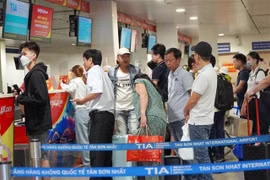
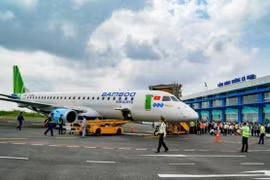
Capital region's second airport expected by 2050 ảnh 1The second airport is expected to ease the burden on the Noi Bai International Airport. (Photo: VNA)
Hanoi (VNA) – A second airport in the capital region is expectedto take shape by 2050 to ease the burden on the Noi BaiInternational Airport, according to the Ministry of Transport.

Responding to the Hanoi People’s Committee’sproposal on the building of the airport, the ministry said theconstruction matches Hanoi’s development orientations by 2030 with a visiontowards 2045, and the national master plan for 2021-2030 with a vision towards2050.

The ministry said it will instruct relevant agenciesto work on the location and planning criteria for the second airport, andreport results to the Prime Minister for decision.

The proposal on the airport’s function will be madebased on study results on airspace, and air routes and flight methods, theministry said, citing the approved  nationalairport system planning as saying that domestic airports are allowed to serve irregularinternational flights.

The ministry may propose the Prime Minister to convertdomestic airports into international ones if air carriers desire to operateregular international flights and the infrastructure is qualified, he said,noting that the move aims to utilise the airport system, serve socio-economicdevelopment and ensure the flexibility and openness of the planning.

In the document, the ministry also asked the People’sCommittee to soon specify the location for the second airport planning.  
Capital region's second airport expected by 2050 ảnh 2Vietnam is set to have 30 airports by 2030, including 14 serving international flights and 16 serving domestic flights. (Photo: VNA)
The planning scheme should be sketched out with theengagement of foreign consultants experienced in optimising the airspace andensuring flight safety, the ministry said.  

Earlier, the committee proposed potential locationsfor the capital region's second airport, which include the Ly Nhan district area in Ha Namprovince, approximately 60-65km from the city centre; the southern area of thecity in Ung Hoa district, 35-40km from the city centre; Thanh Mien and BinhGiang districts in Hai Duong province, some 45-50km from the city centre; and TienLang district in Hai Phong city, 120km from the city centre.

According to the national airport system planning inthe 2021-2030 period with a vision until 2050, Vietnam is set to have 30airports by 2030, including 14 serving international flights and 16 servingdomestic flights.

The investment is estimated at about 420 trillionVND (18 billion USD), mobilised from the State budget, non-budget capital andother legal capital sources.

Noi Bai International Airport is set to handle about100 million passengers each year, equivalent to the capacity of Long ThanhInternational Airport in the southern region and some big airports in theworld./.
VNA

See more

Unloading imported containers from China, transported by the vessel BBG Nan Ning Bo Run, at Can Tho Port (Photo: VNA)

New market opportunities for businesses to make breakthroughs

The Politburo’s Resolution No. 27-NQ/TW, dated August 28, 2026, on regional development and the organisation of national development space in the new period is seen as a fundamental solution to this problem. By reorganising economic space around functional areas and development corridors, the resolution opens up opportunities to restructure supply chains, ease logistics costs and create fresh momentum for substantive breakthroughs across the business community.

Vinh Long Business Association and HKBAV sign a MoU on cooperation (Photo: VNA)

Tay Ninh, Vinh Long court stronger partnerships with China's Hong Kong

Tay Ninh and Vinh Long each have distinct strengths and opportunities, while Hong Kong offers international connectivity, financial capacity, logistics capabilities and professional services. Pairing them would open practical opportunities in trade, investment, food processing, infrastructure and supply chains.

The EVFTA offers major opportunities for Vietnam’s footwear and leather goods industry to expand exports to the EU market. (Photo: VNA)

Vietnam–EU trade expands amid new challenges

The EVFTA reached another milestone in August 2026, its seventh year of implementation, with the EU completing its tariff elimination schedule, making 99% of Vietnamese exports eligible for duty-free access. Vietnam will continue cutting tariffs on EU goods through 2030.

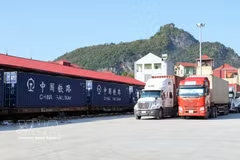
At Dong Dang international railway station in Lang Son province (Photo: VNA)

Lang Son, Pingxiang officials push smart border gate pilot

Vietnam's Lang Son province and China's Pingxiang city focused on solutions to easing export-import bottlenecks, raising goods clearance capacity and speeding up the rollout of smart border gate model - priorities for smoother cross-border trade, transport and people-to-people exchanges.

Remittances to Ho Chi Minh City reaches more than 2.83 billion USD in the third quarter of 2026 (Photo: VNA)

Remittances to Ho Chi Minh City rise nearly 40% in Q3

According to the State Bank of Vietnam (SBV)’s Regional Branch 2, remittances transferred to Ho Chi Minh City through credit institutions and economic organisations totalled 2.835 billion USD in Q3, an increase of more than 802 million USD from Q2.

Vietnam continues to attract strong interest from foreign investors in the first nine months of 2026, with registered FDI reaching 50.36 billion USD, up 76.4% year on year. (Illustrative Photo: VNA)

FDI inflows boost Vietnam’s economic growth

Vietnam continued to attract strong interest from foreign investors in the first nine months of 2026, with registered FDI reaching 50.36 billion USD, up 76.4% year on year. Disbursed capital rose 12.1% to 21.07 billion USD, the highest level in five years.

At the Vietnamese pavilion (Photo: MOIT)

Vietnamese businesses promote agricultural, food products at SIAL Paris 2026

Vietnam’s participation in SIAL Paris 2026 highlights efforts to diversify products, expand processing and strengthen distribution networks. To improve competitiveness and sustain exports to Europe, businesses are advised to maintain strict quality control, ensure food safety, build brands and secure reliable supplies.

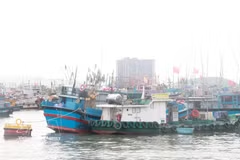
Fishing boats anchored at Hon Ro fishing port in Khanh Hoa province. (Photo: VNA)

Coastal localities ordered to tighten fishing fleet control, seafood tracing

Local authorities must review their vessel records and cross-check them against the national fisheries database, known as VNFishbase. Information on vessel registration, technical inspections, fishing licenses, vessel monitoring systems (VMS), and each boat’s operating status must be updated fully, promptly and accurately.

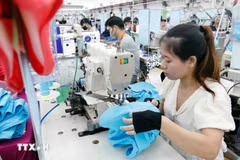
Garment exports (Photo: VNA)

Stronger farmer-business links key to boosting Vietnam’s export value

Achieving double-digit export growth requires Vietnamese firms to promote substantive connections with international buyers and deeper participation in global value chains. They must also improve product quality, ensure stable supplies, strengthen branding and meet market-specific standards to retain customers and increase export value.

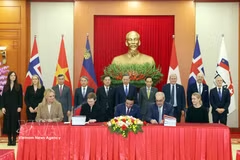
Dien Bien province presents investment approval decisions and memoranda of understanding on cooperation between the province and investors. (Photo: VNA)

Dien Bien province promotes cross-border investment with China, Laos

At the conference, investment approval decisions were granted to 20 investors for projects totaling over 7.5 trillion VND in capital. Additionally, memoranda of understanding were exchanged between Dien Bien and six investors, representing nearly 12 trillion VND in registered capital.

Governor of the State Bank of Vietnam (SBV) Pham Duc An speaks at the meeting between the central bank and 46 commercial banks in Hanoi on October 19. (Photo: VNA)

Governor calls for targeted interest rate cuts to support businesses

Governor of the State Bank of Vietnam (SBV) Pham Duc An said the SBV will continue supporting credit institutions in addressing difficulties but not sacrifice system safety. Interest rate management should therefore combine lower funding costs with reduced operating expenses, profit-sharing and measures to curb unhealthy competition for deposits.