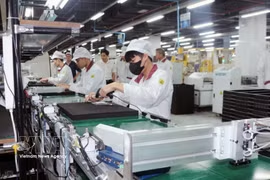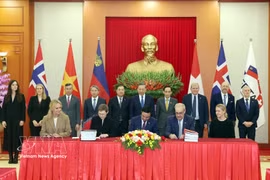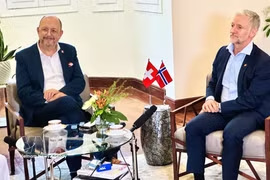
Geneva (VNA) – The Free Trade Agreement between Vietnam and the European Free Trade Association (EFTA), which comprises Switzerland, Norway, Iceland and Liechtenstein, does more than ease Vietnamese exports into EFTA markets. It sets a stable framework for investment, services, technological innovation, knowledge exchange, technical standards, sustainable development and capacity building.
Dr. Luu Vinh Toan, an information technology expert based in Switzerland, told the Vietnam News Agency that he welcomes the push to open a new chapter in ties with the bloc. The four EFTA states have small populations, but they are highly developed, with high incomes, strong purchasing power, advanced technology and world-class governance standards.
The fit with Switzerland is clear. Switzerland offers technology, standards, capital and management expertise. Vietnam brings manufacturing capacity, a skilled workforce, fast rollout, a large market and a strategic position as a gateway to the Association of Southeast Asian Nations, he said.
Toan identified several areas ripe for deeper cooperation, including precision manufacturing and automation; pharmaceuticals, medical devices and biotechnology; high-value agri-food models; green transition, water management and urban planning; and finance, capital and risk management.
He also wants workforce training and exchanges to become a pillar of the relationship, citing Switzerland’s global standing in innovation and the success of its dual vocational education and training system.
Switzerland’s experience in getting companies directly involved in vocational training suits Vietnam’s needs in precision engineering, electronics, food technology, logistics and environmental technology. The payoff could be tangible: EFTA companies investing in Vietnam would gain a suitably trained workforce, while young, adaptable Vietnamese workers would acquire skills, higher incomes and access to high-value industries, helping the country move beyond its image as a low-cost processing and manufacturing base, he said.
According to him, the Association of Vietnamese Intellectuals and Experts in Switzerland aims to help convert the FTA’s commitments into concrete projects. It plans to link experts, universities, companies and localities, and identify practical challenges in Vietnam for pilot projects and to broker partnerships. That would ensure the deal delivers tangible benefits to both Vietnam and EFTA members, he said.
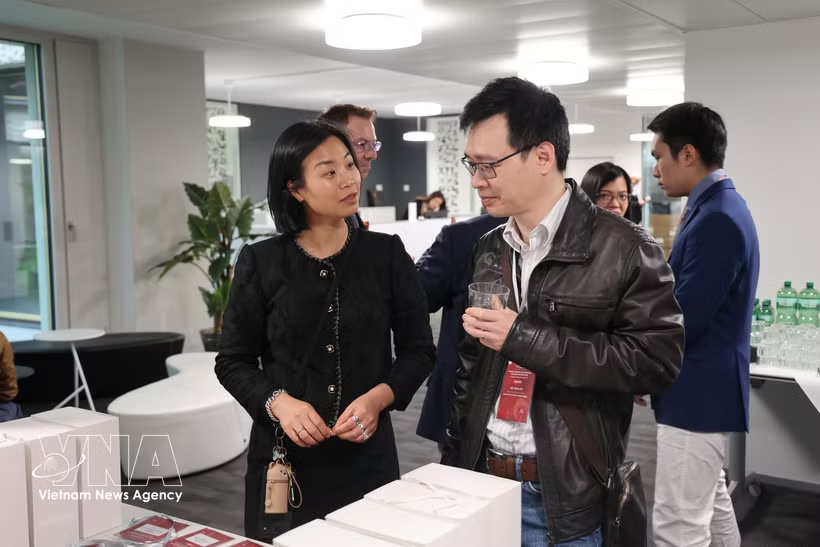
Ly Pham, a business development specialist at JANZZ.technology, said the agreement marks a turning point for businesses on both sides.
Her top expectation is a new wave of Swiss foreign direct investment into Vietnam, particularly in projects with high technological content, high value added and a strong focus on sustainability.
Pham welcomed the shift in the relationship from development aid to economic cooperation. She also expects much from “soft” channels of connectivity, particularly networks of Vietnamese experts and businesspeople in Switzerland who understand its stringent standards.
She affirmed the readiness to work with companies from both countries to help them find partners and cut the time needed to enter each other’s markets.
Pham pointed to several sectors where the two countries could achieve major breakthroughs in the coming period. The first is high technology. Switzerland has strengths in innovation, advanced technology and specialised data, and is keeping pace with the AI trend, while Vietnam offers a skilled workforce and a fast-growing digital market.
The second is fintech, which she called “green finance”. Switzerland is one of the world’s leading financial hubs, an asset for Vietnam as Hanoi works to build international financial centres and tap sources of green financing.
Biotechnology and quality healthcare are other areas for expansion. Vocational education and training also deserves more attention in Vietnam, she said.
Switzerland’s dual model, renowned worldwide, could help Vietnam raise its workforce skill standards. Swiss expertise in hospitality and tourism management, paired with Vietnam’s tourism potential, could also create new opportunities and value for both sides, she added.
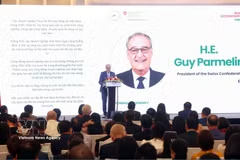
Pham believed that the signing of the FTA, together with the Swiss President’s visit, offers a golden opportunity to turn strategic commitments into concrete projects, and move bilateral ties into a more substantive and sustainable era than ever before./.