Cao Bang (VNA) – Since the Non Nuoc Cao Bang UNESCO Global Geopark was recognised in 2018, the northern mountainous province of Cao Bang has transformed its geological, natural and cultural heritage into a driver of tourism growth and sustainable livelihoods.
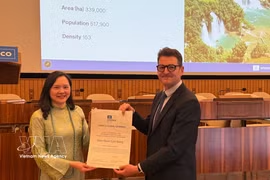
Retaining its Green Card in two consecutive revalidations, the geopark has strengthened its international standing and connected with 241 geoparks across 51 countries.
To Vu Ninh, Director of the provincial Department of Culture, Sports and Tourism, said the UNESCO designation had helped Cao Bang balance heritage conservation with economic development, raising its profile as an international destination for nature, culture and heritage tourism.
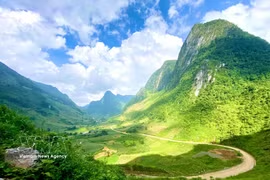
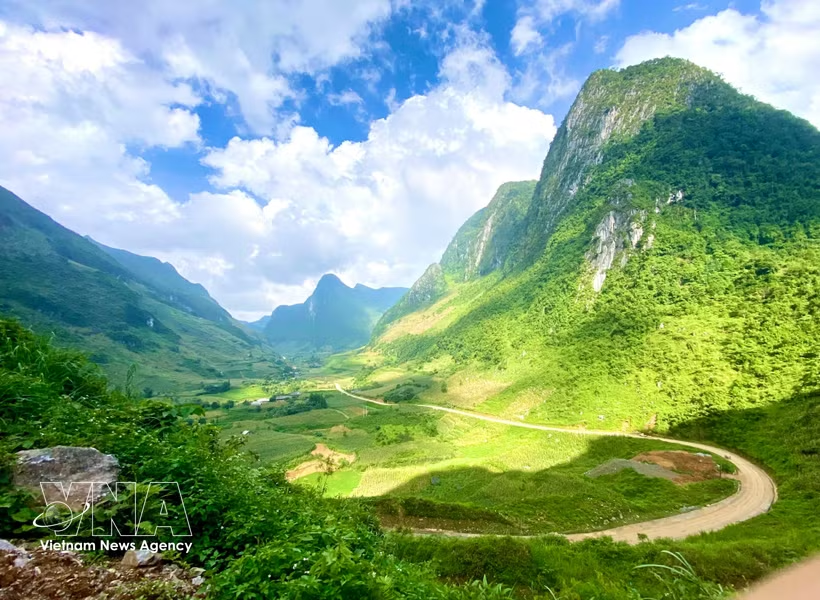
According to Associate Professor Dr. Tran Tan Van, former Director of the Vietnam Institute of Geosciences and Mineral Resources, the geopark preserves nearly 500 million years of Earth’s evolutionary history. Its rich geological heritage, including fossils, ancient rock formations, caves, waterfalls and distinctive karst landscapes, serves as an “open book” documenting the natural history of Southeast Asia.
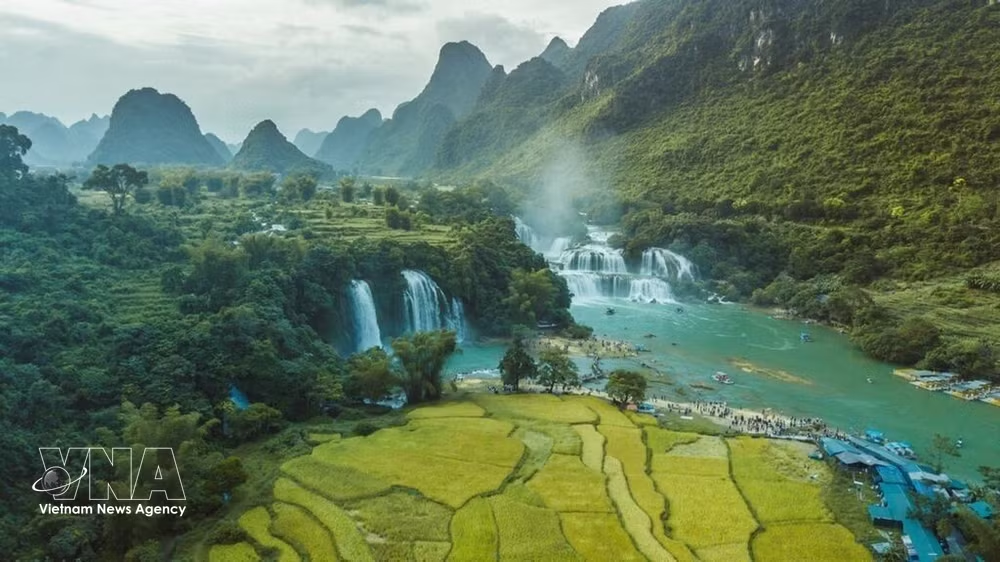
Its natural attractions include Ban Gioc Waterfall, Nguom Ngao Cave, Thang Hen Lake and Mat Than Mountain. The area's rich cultural heritage spans the traditions of the Tay, Nung, Mong and Dao ethnic groups, traditional crafts and revolutionary historical sites such as Pac Bo and Tran Hung Dao forest.
Cao Bang has developed five experiential routes, turning the geopark into an “open-air museum” where communities help protect heritage while providing tourism services. Visitor numbers have grown by an average of 20-30% annually outside the pandemic period, with tourism spreading beyond established attractions.
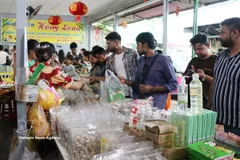
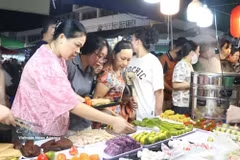
In several localities like Khuoi Ky (Trung Khanh), Pac Rang (Quang Hoa) and Khuoi Khon (Bao Lac), residents have diversified into homestays, tour guiding and food services, increasing household incomes from community-based tourism three- to five-fold. Visitor demand has also created markets for local produce and handicrafts, while generating jobs that help young people remain in their communities.
Traditional crafts have become a source of income as well as a means of preserving cultural identity.
In Phia Thap village, Quang Uyen commune, homestay owner Hoang Thi Kinh combines accommodation with incense-making experiences.
In Lung Dia Tren hamlet, Nong Thi Liem earns a stable 10-20 million VND (386-772 USD) a month from handmade-paper-making experiences developed with the geopark management board since 2020.
Local authorities and the geopark management board have supported communities through tourism training, craft revival, links with travel companies, and heritage education in schools.
Digital promotion has further expanded the geopark's reach, with its bilingual “Cao Bang Geopark” channel featuring more than 130 heritage sites.
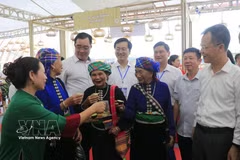
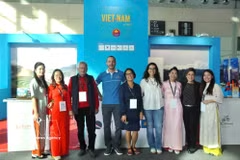
In addition, promotional booths at major events, including the 9th Asia Pacific Geoparks Network (APGN) Symposium 2026 in Malaysia, have helped bring Cao Bang’s OCOP-certified products and cultural heritage to a wider international audience.
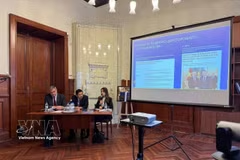
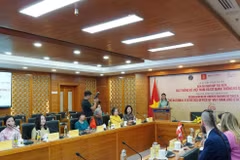
Local officials have also proactively shared their expertise in geopark management and community-based tourism development with international partners from China, Thailand, Indonesia and other countries.
These efforts have delivered tangible results. In 2025, Cao Bang welcomed more than 2.5 million visitors, up from 1.54 million in 2019. International arrivals exceeded 97,000, rising more than 121% year-on-year, while tourism revenue surpassed 2.4 trillion VND.
The province plans to develop new experiential routes, improve service quality and spread tourism benefits more widely to remote communities, reinforcing the link between heritage conservation and better livelihoods./.