Lao Cai (VNA) – Driven by his passion for Sa Pa’s ancient roses, Do Phu Chinh, born in 1978 and residing in Sa Pa ward of Lao Cai province, has built a successful agritourism model that generates high economic value and helps preserve rare local rose varieties.
His more than 30-year journey reflects the determination and dedication recognised by his selection as one of Vietnam’s Outstanding Farmers in 40 Years of Doi Moi (Renewal) in 2026.
Turning wasteland into a “goldmine”
Introduced from France to Vietnam around the 19th century, Sa Pa’s ancient roses adapted well to the local cool climate and fertile soil. Their distinctive moss-covered trunks, large flowers with 30-50 densely arranged petals, and pleasant fragrance make them particularly appealing. They can also bloom throughout the year.
Concerned that urbanisation could threaten these local varieties, Chinh began propagating the roses in 1997 from just a few plants. By 2010, his garden had grown to several hundred bushes, initially cultivated using organic methods to preserve valuable varieties.
During the ancient rose boom from 2014 to 2019, buyers paid between 20 million VND and 70 million VND (770-2,700 USD) for plants aged six to seven years, while those more than 20 years old could fetch nearly 300 million VND each. Chinh said his annual revenue from rose sales reached 2-4 billion VND, peaking at 4 billion VND in 2018 and 2019.
Today, his family’s 3-hectare garden contains more than 2,000 ancient rose bushes, including three specimens aged over 35 years. The garden has become a destination for visitors seeking to admire the flowers and learn about their cultivation.
Expanding into agritourism
Recognising growing demand for garden visits, Chinh expanded his business beyond rose cultivation and preservation to include tourism services.
In May 2020, the provincial People’s Committee recognised his family’s “Sa Pa Dreamy Rose Garden” as a tourist destination. Located along National Highway 4D, it attracts visitors travelling through O Quy Ho pass to enjoy the mountain scenery and sea of clouds.
The garden sells more than 15,000 admission tickets annually. The family has also developed a restaurant and accommodation services, while visitors can enjoy seasonal experiences in chayote, pear and peach gardens, and sample local specialities.
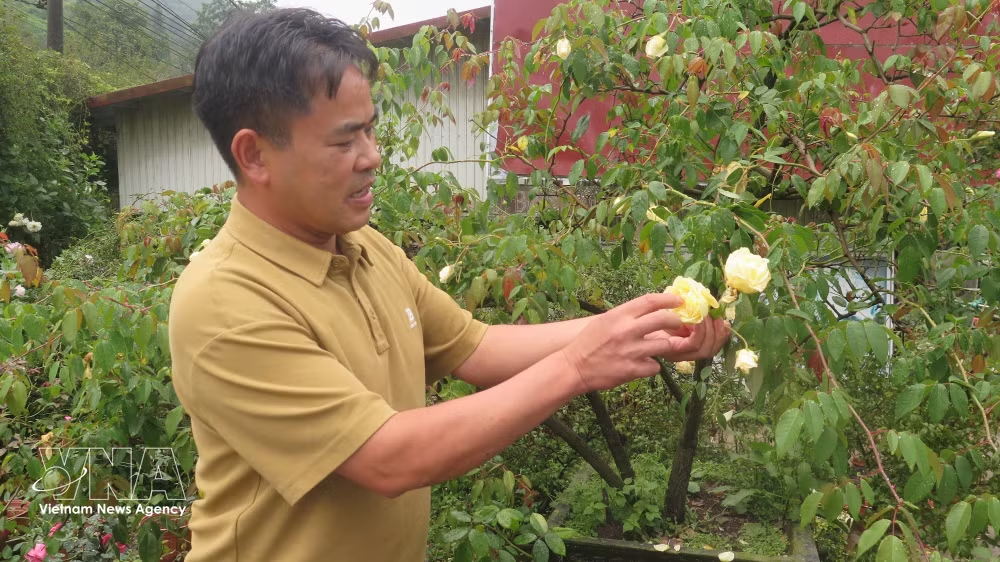
The combined annual revenue from rose cultivation, tourism and restaurant services is around 4 billion VND, with profits exceeding 2 billion VND. The model provides regular employment for about 15 labourers, each earning 8-15 million VND per month. During peak seasons, the workforce increases to 35.
Beyond his business, Chinh shares rose-growing and care techniques with more than 20 local farmers each year and participates in community activities.
Nguyen Phuoc Toan, Vice Chairman of the Sa Pa Ward People’s Committee, described the model as an example of how local agricultural products can generate greater added value when combined with tourism.
Chinh has received several awards for his efforts in preserving local rose varieties and developing agricultural production linked to tourism. His recognition in 2026 as one of Vietnam’s Outstanding Farmers in 40 Years of Doi Moi acknowledges his contribution to sustainable rural development.
He believes that gardens can serve not only as places of production but also as scenic attractions offering visitors memorable experiences. By combining agricultural products with tourism, farmers can increase economic value and promote greener, more distinctive and sustainable rural development, Chinh said./.