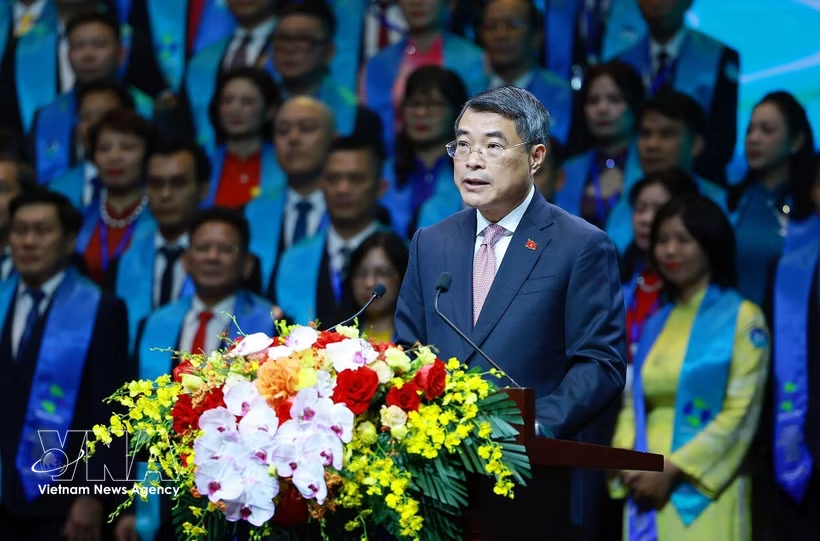
Hanoi (VNA) – Vietnamese brands must become a strategic competitive advantage for the national economy, Prime Minister Le Minh Hung said on October 16, urging businesses to shift from cost-based advantages to value creation, innovation and stronger participation in global value chains.
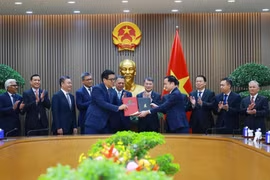
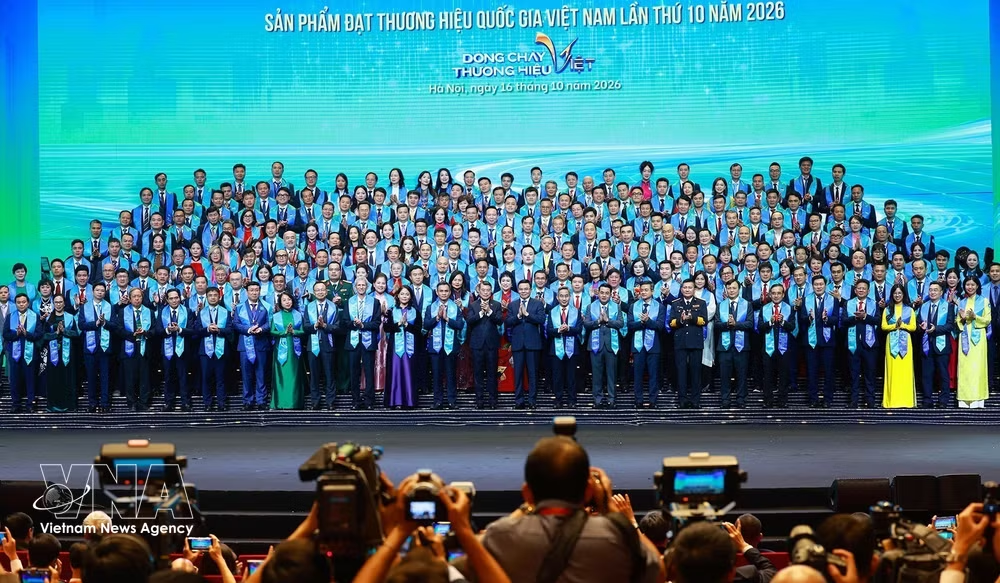
The PM made the statement at a ceremony in Hanoi announcing products awarded the Vietnam National Brand title in 2026. The event was organised by the Vietnam National Brand Council and the Ministry of Industry and Trade.
This year, 499 products from 227 businesses were recognised across a range of sectors, including processing – manufacturing, agriculture and food, pharmaceuticals and medical equipment, finance and banking, telecommunications and technology, transport and logistics, and trade and services.
Over more than two decades, the Vietnam National Brand (Vietnam Value) programme has helped establish common standards for businesses, linking brand value not only to recognition or communication but also to product quality, governance capacity, technology, innovation, market responsiveness and social responsibility.
The number of businesses with recognised products has risen more than sevenfold, from 30 in 2008 to 227 this year. Fourteen businesses have retained the title in all 10 selection rounds, while 84 have received it at least five times.
In 2026, Vietnam’s nation brand value reached 462.279 billion USD in 2026, up 45.14% from 2020, ranking 32nd among 193 countries.
Five businesses with nationally branded products are among the country’s 10 most valuable brands this year, accounting for about 69.1% of the group’s total value.
The 2026 selection process also introduced revised criteria, giving greater weight to innovation, research and development, science – technology application, intellectual property, digital transformation, green growth and workforce development. Innovation accounted for 30% of the total score.
Congratulating the honoured businesses, PM Hung said the recognition reflects their resilience, wisdom, creativity and sustained efforts, as well as the contributions of Vietnamese businesses, entrepreneurs and workers.
He stressed that the National Brand title is not only a source of pride but also an honourable commitment to consumers and a responsibility towards the country’s reputation. Every Vietnamese-branded product should strongly demonstrate quality, credibility and the ambition to compete internationally.
He noted that a brand is not merely an asset belonging to an individual enterprise; it also represents a nation’s competitiveness, reputation, and standing. Strong brands constitute strong enterprises, and robust enterprises, in turn, contribute to the autonomy and resilience of the national economy, ultimately fostering a powerful and prosperous nation.
PM Hung said Vietnam is entering a new development phase, with a target of average annual GDP growth of at least 10% during 2026–2030. Achieving this requires strong development model reform, as well as improvements in economic capacity, quality and competitiveness, driven by science, technology, innovation and digital transformation.
He cited economic results in the first nine months of 2026, when GDP grew 9.01% year on year, with third-quarter growth reaching 9.95%. Vietnam’s total import-export turnover is estimated to reach 1.1 trillion USD for the year, surpassing 1 trillion USD for the first time. The country ranked 43rd out of 139 economies in the 2026 Global Innovation Index and led the world in the shares of high-tech and creative goods exports in total merchandise trade.
These achievements, he said, reflect direct and important contributions by businesses, particularly those leading in quality, technology and brand development.
However, the PM noted that many good products still lack strong brands, while domestic value added and market control remain limited. Exports by businesses with nationally branded products accounted for only about 11% of their own total revenue, equivalent to around 2.3% of Vietnam’s overall export turnover. Investment in research, core technologies, intellectual property protection and the fight against counterfeit goods also needs to improve.
The Government leader referred to the Party’s strategic resolutions, including targets for more private businesses to join global value chains and for stronger state-owned enterprises to compete internationally. Vietnam, he said, must move from cost advantages to value creation, from processing and assembly to design and innovation, and from market participation to a leading position.
The PM called on businesses, especially those with nationally branded products, to take the lead in implementing the Party’s strategic policies, raising productivity, increasing domestic value added, expanding market share and joining global value chains more deeply.
He also urged leading businesses to treat their brands as long-term strategic assets and set examples in product quality, corporate governance and social responsibility, helping strengthen the reputation and competitiveness of Vietnamese brands worldwide./.