Brussels (VNA) – Vietnam–EU economic ties are gaining momentum, with bilateral trade growing strongly since the EU–Vietnam Free Trade Agreement (EVFTA) took effect.
According to Eurostat data, the EU imported 63.9 billion EUR (71.8 billion USD) worth of goods from Vietnam in 2025, up 16% year on year. Two-way trade reached 76 billion EUR, approximately 67% higher than in 2019, before the EVFTA took effect in August 2020.
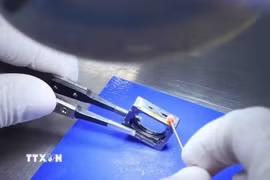
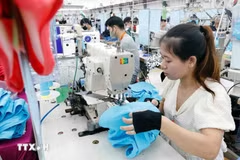
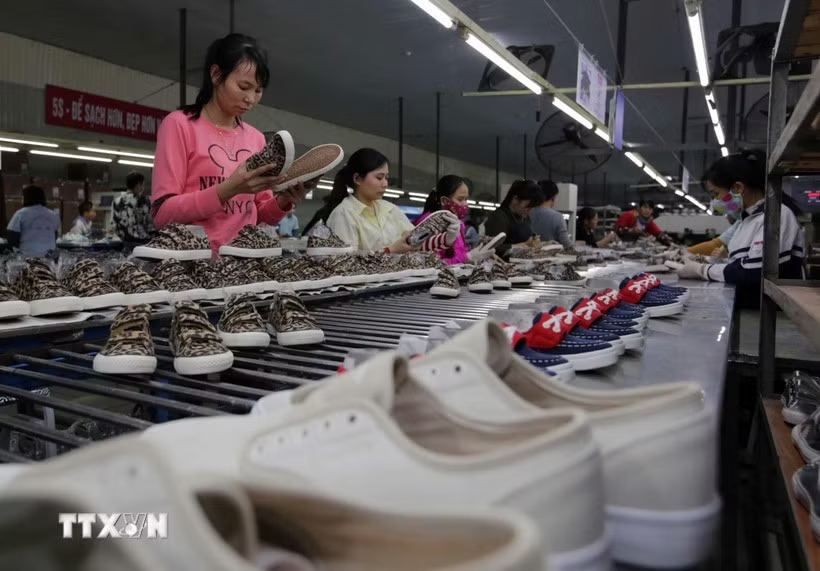
Machinery and electrical equipment accounted for 33.8 billion EUR of EU imports from Vietnam. Vietnam also supplied nearly 15% of the bloc’s extra-EU imports of telecommunications equipment, while one in every four pairs of footwear imported from outside the EU came from Vietnam. Agricultural products, including coffee, cashew nuts and pepper, generated 4.5 billion EUR, up more than 40%.
The momentum continued in 2026. Two-way trade reached 52.6 billion EUR in the first seven months, up 23.2% year on year, the Vietnam Trade Office in Belgium and the EU said, citing EU statistics. Vietnam’s exports totalled 45.6 billion EUR, while imports stood at 7 billion EUR.
In the first nine months, Vietnam recorded a trade surplus of 36.06 billion USD with the EU, up 25.3%, according to the National Statistics Office.
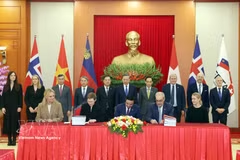
Political ties have also strengthened. In January 2026, during European Council President Antonio Costa’s visit to Vietnam, the two sides upgraded their relations to a Comprehensive Strategic Partnership, the EU’s first of its kind in Southeast Asia.
The EVFTA reached another milestone in August 2026, its seventh year of implementation, with the EU completing its tariff elimination schedule, making 99% of Vietnamese exports eligible for duty-free access. Vietnam will continue cutting tariffs on EU goods through 2030.
Belgium offers further opportunities for cooperation as a major European logistics hub. Bilateral trade reached 4.36 billion USD in 2025 and exceeded 3 billion USD in the first eight months of 2026. Belgium had 104 investment projects in Vietnam worth more than 1.1 billion USD by the end of 2025.
Vietnamese Ambassador to Belgium and Head of the Vietnamese Mission to the EU Nguyen Huong Tra said both sides should explore new cooperation in science and technology, high-quality human resource training, logistics, seaports, strategic infrastructure and green agriculture.
Nevertheless, the trade imbalance is becoming more pronounced. EU exports to Vietnam fell 1% to 12.2 billion EUR in 2025, while the bloc’s goods trade deficit with Vietnam widened to 51.7 billion EUR. EuroCham Vice Chairman Jean-Jacques Bouflet said greater Vietnamese imports of European technology, machinery and pharmaceuticals could help improve trade balance while strengthening domestic industrial competitiveness.
Businesses must also adapt to increasingly stringent EU requirements, including the European Green Deal, the Carbon Border Adjustment Mechanism (CBAM) and the EU Deforestation Regulation (EUDR). Meanwhile, the EU’s “yellow card” warning over illegal, unreported and unregulated fishing remains in place, and the EU–Vietnam Investment Protection Agreement (EVIPA) is still awaiting ratification by all member states.
Vietnam’s first-mover advantage is also narrowing as the EU concludes trade agreements with more partners, including India, Mercosur, the Philippines and Indonesia, while negotiating with Malaysia and Thailand.
As the EU diversifies its supply chains, Vietnam has an opportunity to become a trusted partner in Asia. Seizing it will require businesses to meet high standards, trade to develop more sustainably and investment to keep pace with exports./.