New market opportunities for businesses to make breakthroughs

The Politburo’s Resolution No. 27-NQ/TW, dated August 28, 2026, on regional development and the organisation of national development space in the new period is seen as a fundamental solution to this problem. By reorganising economic space around functional areas and development corridors, the resolution opens up opportunities to restructure supply chains, ease logistics costs and create fresh momentum for substantive breakthroughs across the business community.

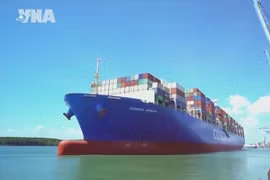
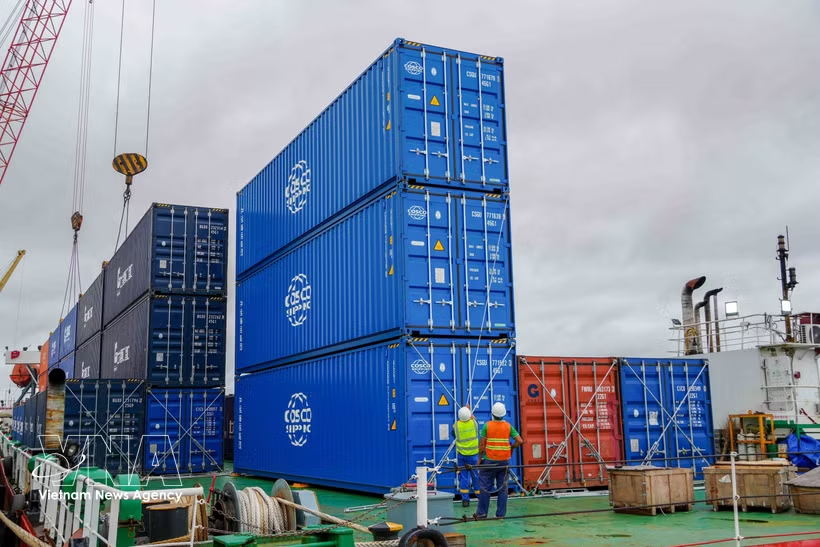
Unloading imported containers from China, transported by the vessel BBG Nan Ning Bo Run, at Can Tho Port (Photo: VNA)

Hanoi (VNA) – For years, Vietnam’s domestic economy has faced a persistent paradox, with a mindset of territorial fragmentation along administrative boundaries dividing economic space and pushed businesses’ operating costs to unreasonable levels, according to experts.

The Politburo’s Resolution No. 27-NQ/TW, dated August 28, 2026, on regional development and the organisation of national development space in the new period is seen as a fundamental solution to this problem.

By reorganising economic space around functional areas and development corridors, the resolution opens up opportunities to restructure supply chains, ease logistics costs and create fresh momentum for substantive breakthroughs across the business community.

The reality showed that the tendency of localities to independently develop seaports, airports and isolated industrial parks has led to duplication and undermined one another’s competitive advantages. As a result, Vietnam’s logistics costs remain high at 16-18% of GDP, significantly squeezing profit margins in the manufacturing sector.

At a recent conference on promoting production chain linkages in southern Vietnam, Ly Kim Chi, Chairwoman of the Ho Chi Minh City Food and Foodstuff Association (FFA), pointed out that inadequate coordination between raw material areas in the Mekong Delta and processing, irradiation and export port facilities in the southeastern region had subjected agricultural products to multiple layers of intermediary costs.

Food processing businesses also faced constant concerns over supply disruptions unless localities work together to address the need for shared logistics infrastructure.

Nguyen Hoang, Chairman of the Hanoi Supporting Industries Business Association (HANSIBA), said that mechanical engineering and supporting industry businesses largely has to fend for themselves when seeking customers and nearby subcontracting partners. Without unified planning for industrial corridors, domestic suppliers will struggle to achieve the production scale needed to join the supply chains of major foreign-invested enterprises.

Clearly, the absence of mechanisms to coordinate economic space has forced businesses to tackle localised problems on their own, rather than concentrate resources on strengthening their core competitiveness.

Resolution 27-NQ/TW marks a fundamental shift in thinking by organising national development space into a multi-tiered, multi-polar structure, with urban networks, economic corridors and growth-driving regions serving as the main connecting axes.

Administrative boundaries will no longer act as barriers to the flow of resources. For businesses, one of the resolution’s most immediate practical benefits lies in promoting shared infrastructure. When expressways, inland container depots, multimodal warehouses and digital infrastructure are developed as interconnected networks, the costs of transporting raw materials and finished products can be significantly reduced.

Le Duy Hiep, a representative of the Vietnam Logistics Business Association (VLA), said logistics infrastructure should not be developed as a trend in which every province pursues its own projects. Logistics businesses can operate efficiently only when infrastructure is connected into an open network, with regional logistics centres consolidating and distributing goods centrally, thereby improving vehicle utilisation and reducing warehousing costs.

Beyond physical infrastructure, the expansion of market space can also facilitate labour mobility. Instead of localised labour shortages and competition for workers between neighbouring industrial parks, development corridors can link training institutions, worker housing and social welfare services across provincial boundaries, creating a stable supply of skilled workers for large-scale projects.

To capitalise on opportunities created by Resolution 27-NQ/TW, experts recommended that businesses reassess their positions in value chains. They should clearly identify their core strengths and concentrate investment on them, while being more willing to form partnerships or outsource supporting activities to businesses operating along the same economic corridors to optimise costs.

They should also cooperate through industry clusters and sectoral associations, whereby participants jointly make decisions, invest in supply chain infrastructure, share data and assume responsibility.

Public-private partnerships (PPPs) to develop agricultural preservation centres and shared cold-storage facilities in raw material production areas should also be encouraged, experts said.

They also advised businesses to digitise supply chain management, and adopt digital platforms to improve transparency in raw material origins, track orders in real time and manage risks across interregional supply chains./.
VNA

See more

Vinh Long Business Association and HKBAV sign a MoU on cooperation (Photo: VNA)

Tay Ninh, Vinh Long court stronger partnerships with China's Hong Kong

Tay Ninh and Vinh Long each have distinct strengths and opportunities, while Hong Kong offers international connectivity, financial capacity, logistics capabilities and professional services. Pairing them would open practical opportunities in trade, investment, food processing, infrastructure and supply chains.

The EVFTA offers major opportunities for Vietnam’s footwear and leather goods industry to expand exports to the EU market. (Photo: VNA)

Vietnam–EU trade expands amid new challenges

The EVFTA reached another milestone in August 2026, its seventh year of implementation, with the EU completing its tariff elimination schedule, making 99% of Vietnamese exports eligible for duty-free access. Vietnam will continue cutting tariffs on EU goods through 2030.

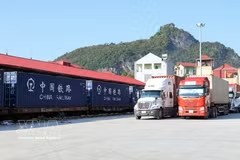
At Dong Dang international railway station in Lang Son province (Photo: VNA)

Lang Son, Pingxiang officials push smart border gate pilot

Vietnam's Lang Son province and China's Pingxiang city focused on solutions to easing export-import bottlenecks, raising goods clearance capacity and speeding up the rollout of smart border gate model - priorities for smoother cross-border trade, transport and people-to-people exchanges.

Remittances to Ho Chi Minh City reaches more than 2.83 billion USD in the third quarter of 2026 (Photo: VNA)

Remittances to Ho Chi Minh City rise nearly 40% in Q3

According to the State Bank of Vietnam (SBV)’s Regional Branch 2, remittances transferred to Ho Chi Minh City through credit institutions and economic organisations totalled 2.835 billion USD in Q3, an increase of more than 802 million USD from Q2.

Vietnam continues to attract strong interest from foreign investors in the first nine months of 2026, with registered FDI reaching 50.36 billion USD, up 76.4% year on year. (Illustrative Photo: VNA)

FDI inflows boost Vietnam’s economic growth

Vietnam continued to attract strong interest from foreign investors in the first nine months of 2026, with registered FDI reaching 50.36 billion USD, up 76.4% year on year. Disbursed capital rose 12.1% to 21.07 billion USD, the highest level in five years.

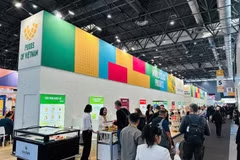
At the Vietnamese pavilion (Photo: MOIT)

Vietnamese businesses promote agricultural, food products at SIAL Paris 2026

Vietnam’s participation in SIAL Paris 2026 highlights efforts to diversify products, expand processing and strengthen distribution networks. To improve competitiveness and sustain exports to Europe, businesses are advised to maintain strict quality control, ensure food safety, build brands and secure reliable supplies.

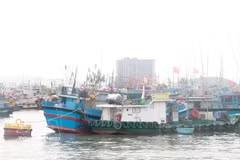
Fishing boats anchored at Hon Ro fishing port in Khanh Hoa province. (Photo: VNA)

Coastal localities ordered to tighten fishing fleet control, seafood tracing

Local authorities must review their vessel records and cross-check them against the national fisheries database, known as VNFishbase. Information on vessel registration, technical inspections, fishing licenses, vessel monitoring systems (VMS), and each boat’s operating status must be updated fully, promptly and accurately.

Garment exports (Photo: VNA)

Stronger farmer-business links key to boosting Vietnam’s export value

Achieving double-digit export growth requires Vietnamese firms to promote substantive connections with international buyers and deeper participation in global value chains. They must also improve product quality, ensure stable supplies, strengthen branding and meet market-specific standards to retain customers and increase export value.

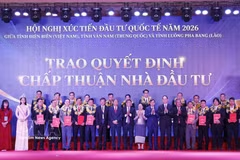
Dien Bien province presents investment approval decisions and memoranda of understanding on cooperation between the province and investors. (Photo: VNA)

Dien Bien province promotes cross-border investment with China, Laos

At the conference, investment approval decisions were granted to 20 investors for projects totaling over 7.5 trillion VND in capital. Additionally, memoranda of understanding were exchanged between Dien Bien and six investors, representing nearly 12 trillion VND in registered capital.

Governor of the State Bank of Vietnam (SBV) Pham Duc An speaks at the meeting between the central bank and 46 commercial banks in Hanoi on October 19. (Photo: VNA)

Governor calls for targeted interest rate cuts to support businesses

Governor of the State Bank of Vietnam (SBV) Pham Duc An said the SBV will continue supporting credit institutions in addressing difficulties but not sacrifice system safety. Interest rate management should therefore combine lower funding costs with reduced operating expenses, profit-sharing and measures to curb unhealthy competition for deposits.

The Vietnam pavillion showcases a wide range of traditional products to US businesses at High Point Market 2026. (Photo: VNA)

Vietnam pavilion makes strong impression at US International Furniture Fair

The exhibits feature diverse designs, from modern, minimalist furniture to handcrafted products reflecting Vietnamese identity. Businesses combine natural and engineered wood, rattan, bamboo and other materials while focusing on design, finishing and customisation to meet different market demands.