Concentrated digital technology parks to drive growth

As the nucleus of the southeastern region, Ho Chi Minh City is well positioned to lead the transition towards a growth model driven by science, technology and innovation. The city has approved a plan to develop 17 new concentrated digital technology parks covering a total area of 750-1,000 hectares.

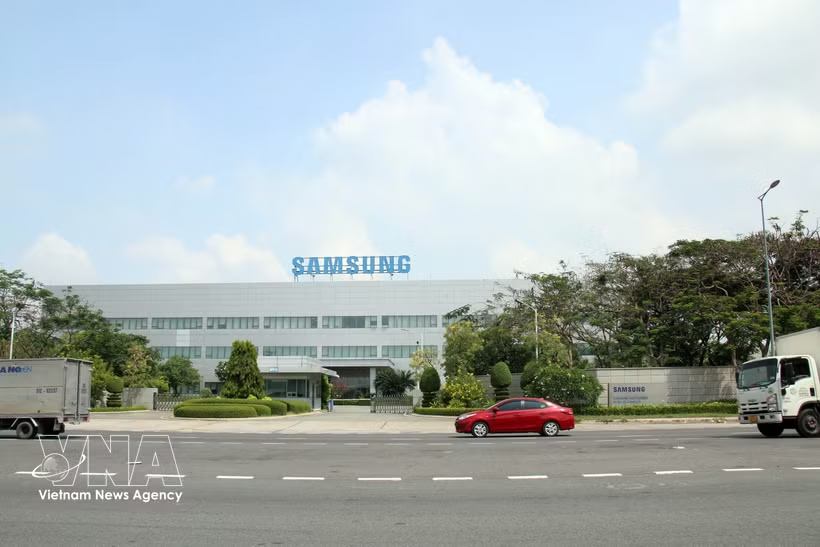
With well-developed infrastructure, the Saigon Hi-Tech Park in Ho Chi Minh City has attracted investment from numerous technology corporations. (Photo: VNA)

Hanoi (VNA) – Developing concentrated digital technology parks is a key solution for Ho Chi Minh City and the southeastern region to accelerate the digital economy, foster innovation and improve the quality of economic growth.

These parks are not merely destinations for attracting businesses but also serve as hubs linking research and training with production, while promoting the application and commercialisation of technologies across the region.

As the nucleus of the southeastern region, Ho Chi Minh City is well positioned to lead the transition towards a growth model driven by science, technology and innovation. The city has approved a plan to develop 17 new concentrated digital technology parks covering a total area of 750-1,000 hectares. The initiative aims to attract major technology enterprises, stimulate the development of the digital technology ecosystem and contribute significantly to the city's and the region's economic growth targets by 2030. According to the municipal Department of Science and Technology, Ho Chi Minh City attracts more than 56% of total investment capital in technology companies and is home to nearly 50% of the country's innovative start-ups and 40% of its incubation facilities. The city also accounts for 44% of total investment capital and 60% of investment deals nationwide. These advantages provide a solid foundation for expanding the technology ecosystem and promoting research, development and the commercialisation of new products and services.

The operations of Quang Trung Software City (QTSC), Vietnam's first concentrated information technology park, demonstrate the effectiveness of specialised technology zones. QTSC has attracted more than 110 businesses operating in software, digital content and information technology services. They have developed and supplied over 650 technology products, services and solutions to markets in more than 20 countries and territories, mainly the US, Japan and Europe.

Meanwhile, the Saigon Hi-Tech Park (SHTP) is one of Vietnam's leading technology centres and the most successful of the country's three national hi-tech parks. It also hosts the Vietnam Centre for the Fourth Industrial Revolution, the second of its kind in Southeast Asia. The centre promotes innovation and economic development through research into and the application of cutting-edge technologies, including semiconductors, biotechnology, new materials, drones, artificial intelligence (AI) and the Internet of Things (IoT).

These models provide a foundation for developing more digital technology parks. However, the city is advised to address shortcomings in institutions, support mechanisms and infrastructure. The legal framework has yet to fully meet practical requirements, particularly in emerging fields such as AI, big data, semiconductors and cloud computing. Mechanisms for commercialising research results, developing science and technology enterprises, attracting highly skilled workers and securing financial resources also need improvement. Meanwhile, inadequate and fragmented technology infrastructure has limited the city's ability to attract major technology corporations.

To make these parks a driving force for regional growth, Ho Chi Minh City needs to improve operational quality and strengthen linkages, rather than focusing solely on attracting businesses. Investment in synchronised infrastructure must go hand in hand with high-quality workforce training and support services.

Planning should align with the development orientations of both the city and neighbouring localities, while strengthening connections among technology parks, educational institutions, research organisations, manufacturers and service providers. Such integration will facilitate technology transfer and application, creating an innovation network that supports sustainable growth throughout the southeastern region./.

VNA

See more

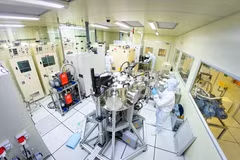
Vietnam is stepping up the development of the semiconductor industry. (Illustrative photo: VNA)

Vietnam should look to EU experience to develop national quantum technology capacity

Quang said Vietnam should first develop high-quality human resources through interdisciplinary training programmes in quantum technology, photonics, microchips and artificial intelligence at leading universities. Scholarships, internships at European quantum labs, and strategies to bring Vietnamese experts from abroad could help speed up progress.

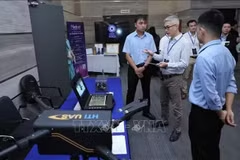
Ten Make in Vietnam and Australia digital technology products on display at the Vietnam–Australia forum on investment and development cooperation in digital technology and AI. (Photo: VNA)

Creating value through technological cooperation, digital transformation

From expanding international cooperation to develop core technologies and helping Vietnamese businesses to participate in global value chains to improving public services through digital solutions, these efforts are gradually turning technological advances into a driver of development and a source of tangible social benefits.

A business representative engages with the platform via a "tap-to-connect" feature at the event. (Photo: VNA)

AI platform launched to help businesses build brands

Addressing the event, experts and business representatives stressed that harnessing digital technologies requires businesses to adopt a new mindset, use data in decision-making, and maintain brand identity and consumer trust.

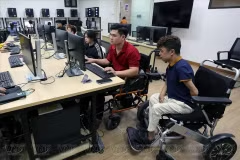
AI opens up opportunities for people with disabilities

AI opens up opportunities for people with disabilities

Amid the rapid development of the Fourth Industrial Revolution, artificial intelligence (AI) is changing the way people learn, work and communicate. For persons with disabilities (PwDs), AI is opening up new opportunities to overcome barriers once considered insurmountable, narrow the digital divide, and promote an inclusive society where no one is left behind.

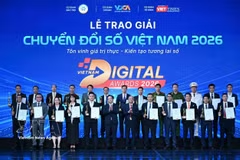
Representatives of organisations and individuals receive the 2026 Vietnam Digital Awards (Photo: VNA)

Vietnam Digital Awards 2026 honours 56 organisations, products and solutions

The 2026 awards place greater emphasis on practical effectiveness, applicability and the ability of digital transformation models to generate wider impact. They recognise not only technological innovations but also the benefits these technologies bring to people and society. Beyond acknowledging achievements, the awards also encourage initiatives capable of shaping the future.

The transformation of museums from “static repositories” into “dynamic experiential spaces” is driving the development of cultural industries. (Photo: VNA)

Digital heritage opens new avenues for cultural preservation, public access

The Southern Women’s Museum has so far digitised 1,113 artefacts, but only 113 are currently accessible to the public. According to deputy director of the museum Pham Thi Dieu, thousands of other artefacts are awaiting an exhibition system under an expansion project. The museum hopes to complete the system in 2027, enabling online visitors to explore the digitised collections.

A citizen interacts with an AI-powered robot for guidance on administrative procedures at the Public Administration Service Centre of Xuan Huong–Da Lat ward, Lam Dong province. (Photo: VNA)

Vietnam taps Vietnamese talent in Canada to advance AI cooperation

As Vietnam-Canada relations enter a new phase under their strategic partnership, mobilising this resource is consistent with the orientation of Politburo Resolution No. 23-NQ/TW on overseas Vietnamese affairs, particularly the goal of harnessing knowledge, science and technology for national development.

Prime Minister Le Minh Hung speaks at the ceremony (Photo: VNA)

VNU-HCM must become hub for national top talent: PM

VNU-HCM should become a leading national hub for education - training, scientific research, science -technology, innovation and digital transformation, striving to rank among Asia’s top 100 higher education establishments by 2030 and one of the region’s leading research university systems by 2045, with at least four disciplines in the global top 50.

A consumer scans a QR code to pay for OCOP products from Viet Ket Herbal Medicine Company Limited in Nhan Thang ward. Photo: Bac Ninh Newspaper.

Bac Ninh promotes cashless transactions in digital environment

With the digital economy accounting for a leading share of gross regional domestic product (GRDP) nationwide, the northern city of Bac Ninh is accelerating cashless payments in public services, online shopping and the marketing of products on digital platforms.

Viettel's Hoa Lac 2 Data Centre (Source: Viettel)

AI - infrastructure for next-generation digital economy

By combining its established electronics manufacturing base with growing capabilities in semiconductor design, AI research, cloud computing and data centres, Vietnam can become a strategic link in the regional AI ecosystem.

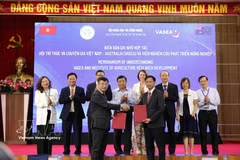
The signing of an MoU between the Department of Digital Technology and Artificial Intelligence and the Institute for Agricultural Research and Development at the forum. (Photo: VNA)

Vietnam, Australia step up digital technology, AI cooperation

An Australian diplomat said Australian businesses are keen to engage in Vietnam’s digital development, particularly in semiconductors, AI and cybersecurity. They also hope to share expertise and support Vietnamese companies in technology and investment.

A customer uses the LiveBank 24/7 service of Tien Phong Commercial Joint Stock Bank (TPBank). (Photo: TPBank)

AI adoption in banking requires strict supervision

Banks are increasingly applying AI in data analysis, personalised services, fraud detection and risk management. In August, the Joint Stock Commercial Bank for Foreign Trade of Vietnam (Vietcombank) launched its One Data Platform (ODP) project to support advanced analytics and lay the groundwork for AI and machine learning applications.