Hanoi (VNA) – The implementation of the Politburo's Resolution No. 57-NQ/TW on advancing science, technology, innovation, and national digital transformation is fueling progress by connecting resources and technological strengths with real-world needs.
From expanding international cooperation to develop core technologies and helping Vietnamese businesses to participate in global value chains to improving public services through digital solutions, these efforts are gradually turning technological advances into a driver of development and a source of tangible social benefits.
Expanding international cooperation in technological development
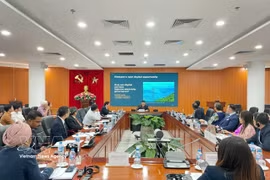
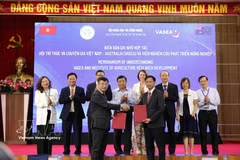
On October 12, at the Vietnam–Australia Forum on Investment and Development Cooperation in Digital Technology and Artificial Intelligence in Hanoi, the V-bridge platform, jointly developed by the Department of Digital Technology and Artificial Intelligence under the Ministry of Science and Technology, FPT Group and Vietnam-Australia Scholars & Experts Association (VASEA), was introduced to facilitate connections among businesses and organisations in the two countries’ technology ecosystems.
According to Deputy Minister of Science and Technology Le Xuan Dinh, Vietnam has extensive demand for technology applications, while its engineers and businesses are actively expanding international operations. Australia, meanwhile, has strengths in higher education, research, and its innovation ecosystem. Combining these resources will create favourable conditions for both sides to develop technologies and train human resources.
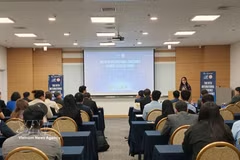
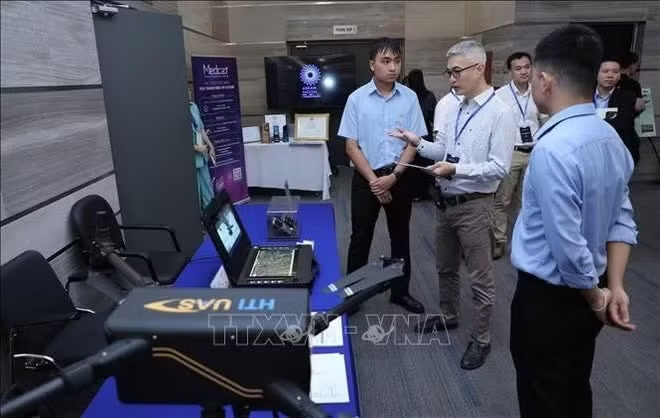
In a similar effort to master technologies and expand international cooperation, the Saigon Hi-Tech Park Incubation Centre (SHTP-IC), in collaboration with Singapore-based Silver Lion Enterprise Impact (SLEI), held Startup PitchFest 2026 – Open Innovation Day on October 16, as part of the 8th annual International Hi-Tech Park Conference in Ho Chi Minh City.
The programme brought together eight startups working in AI, robotics, the Internet of Things (IoT) and green technology. In addition to their technological capabilities, business models and potential for market expansion, the startups were assessed on their ability to absorb and utilise resources after the programme.
Following the programme, SHTP-IC and SLEI plan to select outstanding startups for an acceleration programme in 2026, helping them connect with partners and investors and access international markets, initially in Singapore. Opportunities will include participation in Singapore Week of Innovation and Technology (SWITCH 2026).
The cooperation is being pursued within the framework of the Vietnam–Singapore Comprehensive Strategic Partnership and the two countries’ efforts to strengthen technological links. It is expected to expand networks connecting businesses, universities, research institutes and investors.
Stronger cooperation among domestic and international agencies, research organisations, businesses and investors not only broadens access to resources but also enables Vietnamese enterprises to develop core technologies, refine products and participate more deeply in global value chains.
Turning technology into better public services
Digital transformation truly pays off when new technologies form practical services that simplify daily tasks and improve access to essential resources. Through flexible approaches at the grassroots level and the application of new technologies to administrative procedures, localities are gradually putting Resolution No. 57-NQ/TW into practice by changing how public services are delivered, with a view to building a modern, efficient and inclusive administration.
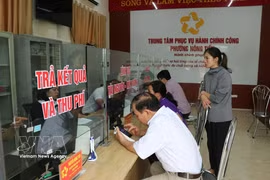
In Vinh Long province, Tieu Can is the first of the province’s 124 communes and wards to implement a mobile public administration model. Local authorities have provided residents with guidance on using online public services, making cashless payments, activating electronic identification accounts on VNeID, and installing personal digital signatures. Telecommunications businesses also helped household businesses promote products and list local specialties on e-commerce platforms, expanding their access to markets.
On Hon Chuoi island in Song Doc commune, Ca Mau province, efforts to equip residents with digital skills have been tailored to local conditions. On October 16, Hon Chuoi Border Guard Station and Song Doc commune's public security force jointly helped 24 residents register for electronic identification accounts, use VNeID, guard against online scams and access an email-based channel for reporting crimes.
The island is home to 65 households and lies about 18 nautical miles from the mainland. Difficult transport links and limited telecommunications infrastructure make online public services less accessible. Providing guidance to individual households helps residents get comfortable with digital services and boosts their ability to protect themselves from online risks.
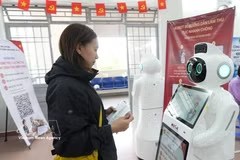
Drawing on experience in receiving and processing thousands of applications across six wards in Bac Ninh, the city is preparing to conduct a controlled pilot of the “People’s Assistant” application on a wider scale. The application can scan and recognise documents, automatically fill in forms and check application requirements, reducing the amount of information residents must enter and helping prevent errors. It also eases the workload of officials at one-stop administrative service counters.
Initial results show that 83.2% of users in Hiep Hoa ward and more than 60% in Bac Giang ward opted for the voice-assistance feature, while satisfaction rates exceeded 90%. Testing indicates that the system can handle around 300 concurrent users for lightweight tasks, with a document extraction success rate of 98.32%. Based on these results, the city plans to run a three-month pilot in successive seven-day phases across 20–30 communes and wards.
These models demonstrate that achieving tangible results from digital transformation requires coordinated efforts to improve public service delivery, strengthen residents’ digital skills and apply appropriate technologies. Technology can deliver value only when accompanied by convenient access, timely assistance and efficient operating procedures.
This approach also reflects the practical implementation of Resolution No. 57-NQ/TW, which places people and businesses at the centre and uses service effectiveness as the key measure of success. It aims to gradually narrow the digital divide and ensure that everyone can benefit from advances in science, technology, innovation and digital transformation./.
VNA