Hanoi (VNA) – Despite a comprehensive set of legal regulations for the protection of its rivers, Vietnam still faces river pollution in many regions across the country. Nguyen Minh Khuyen, Deputy Director of the Department of Water Resources Management under the Ministry of Agriculture and Environment, talked to VietnamPlus about solutions to tackle this alarming problem as well as river restoration efforts and the management of water resources.
International cooperation significant to ensure water security
Reporter: First, could you share your assessments of the significance of the theme of World Water Day 2025 (March 22), particularly for Vietnam?
Mr. Nguyen Minh Khuyen: This year’s World Water Day, with the theme "Glacier Preservation," was initiated by the United Nations to raise global awareness about the importance of glaciers, snow, and ice in Earth's climate system and hydrological cycle.
According to UN reports, glaciers and ice sheets store about 70% of the world’s fresh water, with nearly 2 billion people depending on water from melting glaciers and snow, and streams from mountains for drinking, and agricultural and energy production. Notably, the melting of glaciers has contributed to a rise in sea levels by approximately 20cm since 1900, creating water-related challenges for many communities and affecting various sectors.
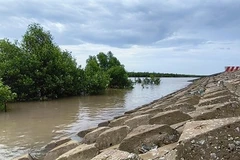
Vietnam, like many other countries, is also experiencing the impacts of climate change and rising sea levels. Melting glaciers are a factor in climate change, and their effects on Vietnam were outlined in the Ministry of Agriculture and Environment's climate change scenarios.
Among these, sea level rise is expected to significantly affect water resources, including saltwater intrusion, particularly as Vietnam’s water resources are also influenced by cross-border water flows, with around 60% of the country’s water originating from outside the country.
In response to World Water Day 2025, the Department of Water Resources Management, in collaboration with other agencies, has worked to raise awareness about the crucial role of water in economic development and sustainable resource management.
The department has also proposed policies related to water security under the 2023 Water Resources Law, which focuses on safeguarding water resources and implementing activities to promote sustainable water use.
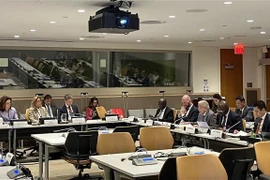
Reporter: World Water Day 2025 serves not only to advocate for water protection but also as an opportunity to demonstrate international solidarity. What international cooperation activities has the Department of Water Resources Management participated in to protect rivers?
Mr. Nguyen Minh Khuyen: International cooperation in the field of water resources is crucial, especially in the face of climate change, increasing water demand, and growing water pollution. Vietnam receives about 60% of its water from cross-border sources.
Recognising the importance of cooperation and sharing, Vietnam has made significant strides in collaborating with countries in the Mekong River basin. The 1995 Mekong Agreement, in particular, addresses water resource issues in the Lower Mekong region.
Additionally, in 2014, the State President of Vietnam signed a decision to join the Convention on the Law of Non-Navigational Uses of International Watercourses, making Vietnam the 35th member, ensuring its enforcement.
Over the years, we have carried out reviews and studies, and considered proposals regarding the participation in the Convention on the Protection and Use of Transboundary Watercourses and International Lakes (Water Convention) of the United Nations Economic Commission for Europe (ECE). The aim is to to have a unified voice and promote joint management and conservation of transboundary freshwater ecosystems.
We have also cooperated with development partners such as the World Bank, the Netherlands, Finland, Italy, the Republic of Korea, and Japan in implementing water resource projects and sharing best practices.
Furthermore, we have expanded our network by collaborating with new partners, including UNESCO and UNICEF, to improve the legal framework in water resources and promote effective water management practices, including the use of digital technologies.
Clearing blockages, ensuring thorough treatment of wastewater
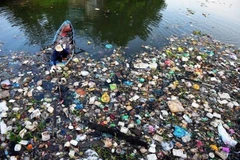
Reporter: Water is the "lifeblood of life" and must be protected. However, despite extensive efforts, many of Vietnam’s rivers have been heavily polluted. For example, in Hanoi, almost all nine rivers are severely polluted. What do you think is the main reason for this?
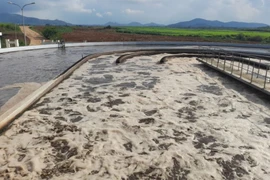
Mr. Nguyen Minh Khuyen: Hanoi has carried out numerous studies and implemented many measures to control and treat water pollution, such as wastewater collection and treatment projects and adjusting operations of major systems like Thanh Liet and Yen So pumping stations. For example, the Yen Xa wastewater treatment plant, with a capacity of 270,000 cubic metres per day, is one such project aimed at tackling the issue.
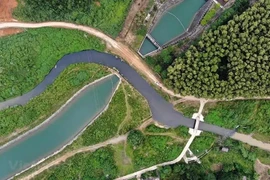
However, the primary challenge in solving pollution problems, especially in rivers like To Lich, lies in the depletion and degradation of the river’s flow. Some rivers have almost "died," losing their flow, especially during the dry season, due to climate change, increased water usage, and frequent droughts.
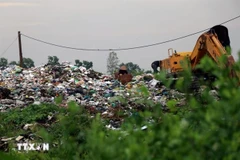
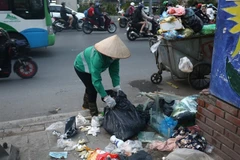
Furthermore, household and industrial wastewater in Hanoi and surrounding areas are often not adequately collected or treated before being discharged into the city’s rivers, particularly the Lu, Set, and Nhue rivers.
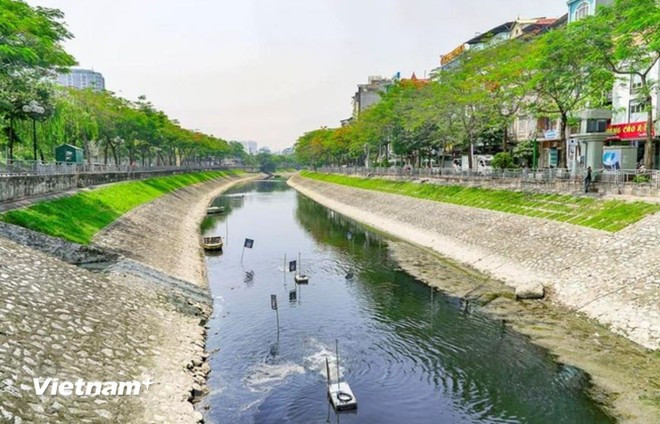
In addition, many production facilities and industrial zones have not invested in wastewater treatment systems that meet environmental standards. Some industrial sites have caused severe pollution in urban areas for nearly 20 years without relocation, further straining the city’s wastewater infrastructure.
Reporter: So, what urgent solutions are needed to restore these polluted rivers, particularly in Hanoi?
Mr. Nguyen Minh Khuyen: Vietnam already has a relatively comprehensive legal framework for protecting its rivers. Over time, several measures have been implemented, and some initial results have been seen. However, the pollution of many rivers remains a pressing issue.
The core solution to restoring polluted water resources is to focus on the collection and treatment of domestic, industrial, and urban wastewater before it is discharged into rivers. Alongside this, efforts to clear blockages and restore flow in polluted rivers, particularly those suffering from a lack of water, are essential.
Transform water resource scenarios
Reporter: At a conference held in February, Minister of Agriculture and Environment Do Duc Duy requested the Department of Water Resources Management to finalise water basin planning and water resource scenarios. How is this initiative progressing?
Mr. Nguyen Minh Khuyen: To ensure sustainable water resource management in the new era, on November 27, 2023, the National Assembly passed the 2023 Water Resources Law, marking a significant shift in the approach and management of water resources in Vietnam.
As part of the implementation of the new law, the Department of Water Resources Management has worked with the Ministry of Agriculture and Environment to organise several activities, including publishing water resource scenarios and presenting 10 water resource planning documents to the Government. These include a national water resource planning scheme, eight inter-provincial river basin planning schemes, and a master planning on water resources investigation and assessment.
In 2025, we expect to present the remaining five inter-provincial river basin planning schemes to the Prime Minister for approval.
We are also working on developing and presenting the first set of eight water resource scenarios, which will guide the management and distribution of water resources across river basins like the Red River - Thai Binh, Mekong, Bang Giang Ky Cung, Ma, Huong, Se San, Srepok, and Dong Nai.
These scenarios will help ensure water security, food security, energy security, and meet the essential needs of people while guiding provincial authorities in water exploitation and usage planning.
Thank you for your interview./.