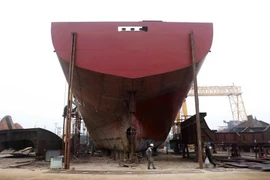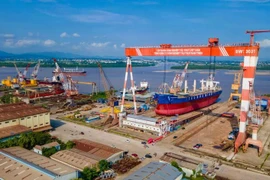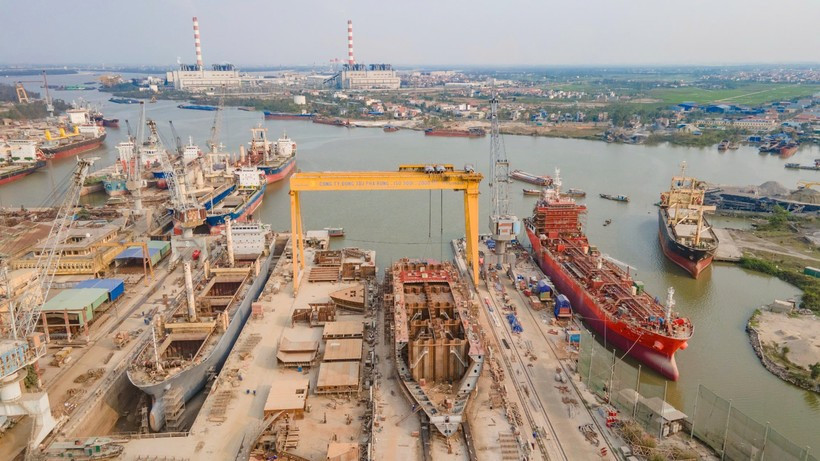
Hanoi (VNA) – The State should devise a strategy for developing the shipbuilding industry, including investing in and upgrading infrastructure, equipment, and technology, as well as devising policies to promote supporting industries, said insiders.
Amid the global maritime sector’s shift toward emission reduction and green shipping, Vietnam’s shipbuilding industry now has a significant opportunity driven by the domestic and international growing demand for fleet modernisation. In response, member shipyards of the Sai Gon Shipbuilding and Marine Industry Co., Ltd (SBIC) have been making early and active moves to stay ahead of this trend.
A green shift begins to take shape
Pointing to an automated cutting machine operated via a computerised control system, Nguyen Van Trinh, head of a welding team from the Pha Rung Shipbuilding Company, said that earlier this year, the company began training several workers to operate laser cutting machines, and applied the equipment to production in February 2025. The new machine can cut steel plates for ship hulls 4 to 5 times faster than the older CNC cutters.
The new machine helps reduce smoke and dust, protects the environment, and can cut steel plates as large as 20x3.5 metres with clean edges that are easy to weld, Trinh said, adding that looking ahead, the company plans to continue applying laser welding technology, which produces cleaner welds.
Investing in new and greener technologies and equipment is an inevitable trend, said Tran Van Rung, Deputy General Director of the Pha Rung Shipbuilding Company.
He added that the shipbuilding industry has seen the introduction of many new technologies and equipment such as laser cutting and welding, and automation systems, aimed at boosting labour productivity, improving quality and efficiency, and advancing the green transition.
According to Rung, shipyards consume large amounts of electricity and typically have expansive workshop spaces, making them well-suited for rooftop solar power systems, which can meet around 50% of their electricity demand. Additionally, high-pressure water hull-cleaning technology using robotic systems offers the same productivity as 10 workers’ while helping prevent air pollution.
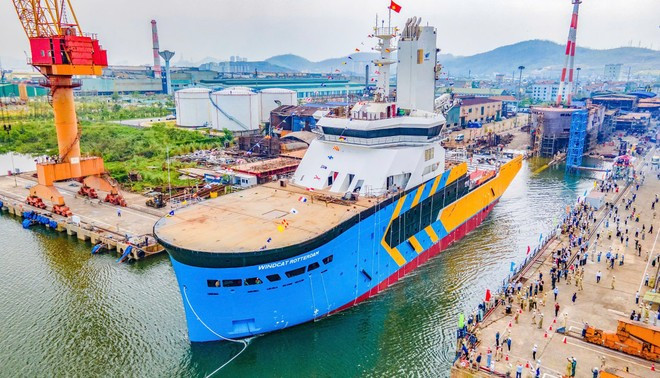
Pham Quang Tuyen, acting General Director of the Nam Trieu Shipbuilding Company, said green transition will open up opportunities to elevate Vietnam’s shipbuilding industry, enabling it to build vessels that meet international standards on emissions, environmental safety, and operational efficiency.
To meet these requirements, Nam Trieu is mobilising many resources to comprehensively upgrade its infrastructure, improve working conditions for employees and modernise production lines to ensure closed-loop processes that minimise emissions, smoke, dust, and noise pollution, Tuyen said, noting that efforts are underway to green the workplace environment for employees.
Director of the Ha Long Shipbuilding Co., Ltd Dam Quang Trung noted that with ongoing efforts to stay ahead of the green transition trend, particularly through the building of 14 wind power service vessels and 120-metre overnight cruise ships powered by environmentally friendly fuel, the firm always prioritises clients seeking eco-friendly vessels during contract negotiations.
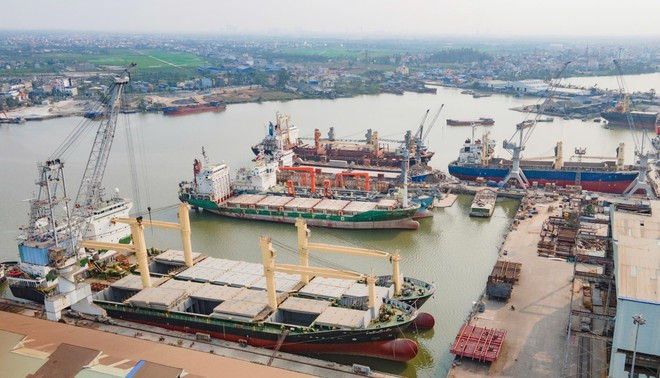
Although these products require higher technical standards, they also deliver greater added value, he went on.
Describing the green transition as a costly and challenging journey, Tuyen said that investment in green technologies still relies primarily on internally generated capital from business operations, while financial hardship remains a burden for many enterprises.
Policy support needed for growth
According to Hoang Hong Giang, Deputy Director of the Vietnam Maritime and Waterway Administration, the global shipbuilding market is projected to expand by over 22 billion USD during the 2024–2028 period, with an average annual growth rate of nearly 4%, and reach approximately 195 billion USD by 2030.
Notably, the green ship segment, featuring vessels powered by renewable energy and optimised for fuel efficiency, is being prioritised by international ship owners.
Between 2024 and 2033, over 70% of vessel replacement demand will be for bulk carriers and oil tankers. Notably, 60% of the new shipbuilding demand during this period will stem from environmental regulations and the demand to replace fleets over 20 years old.
Giang said many countries have set targets to become green shipbuilding hubs by 2030 and aim for 100% of domestic vessels to run on green energy by 2050. In this context, Vietnam has set a roadmap to encourage investment in green-powered vessels during the 2022–2030 period, and to fully transition all domestic seagoing vessels to green energy during 2031–2050. He noted that this presents a major opportunity for the shipbuilding industry.
Pham Hoai Chung, Chairman of the SBIC Council of Members, said Vietnam has successfully built most types of general cargo ships, bulk carriers, oil tankers, and car carriers. It has also established several supporting facilities to bolster the shipbuilding industry.
In line with Vietnam’s strategy for sustainable marine economic development through 2030, with a vision to 2045, Chung affirmed that SBIC’s member enterprises will continue to keep stable operations and work with other shipbuilders, towards a shared goal of developing several large-scaled shipbuilding and repair hubs that meet international standards in terms of quality and delivery, serving both domestic and export demand.
Regarding this, the Vietnam Maritime and Waterway Administration has suggested the Ministry of Construction recommend the Government to consider developing preferential policies for domestically built vessels, and assist local shipping companies to replace old vehicles with newly built ones made in Vietnam, rather than purchasing or commissioning ships from abroad./.