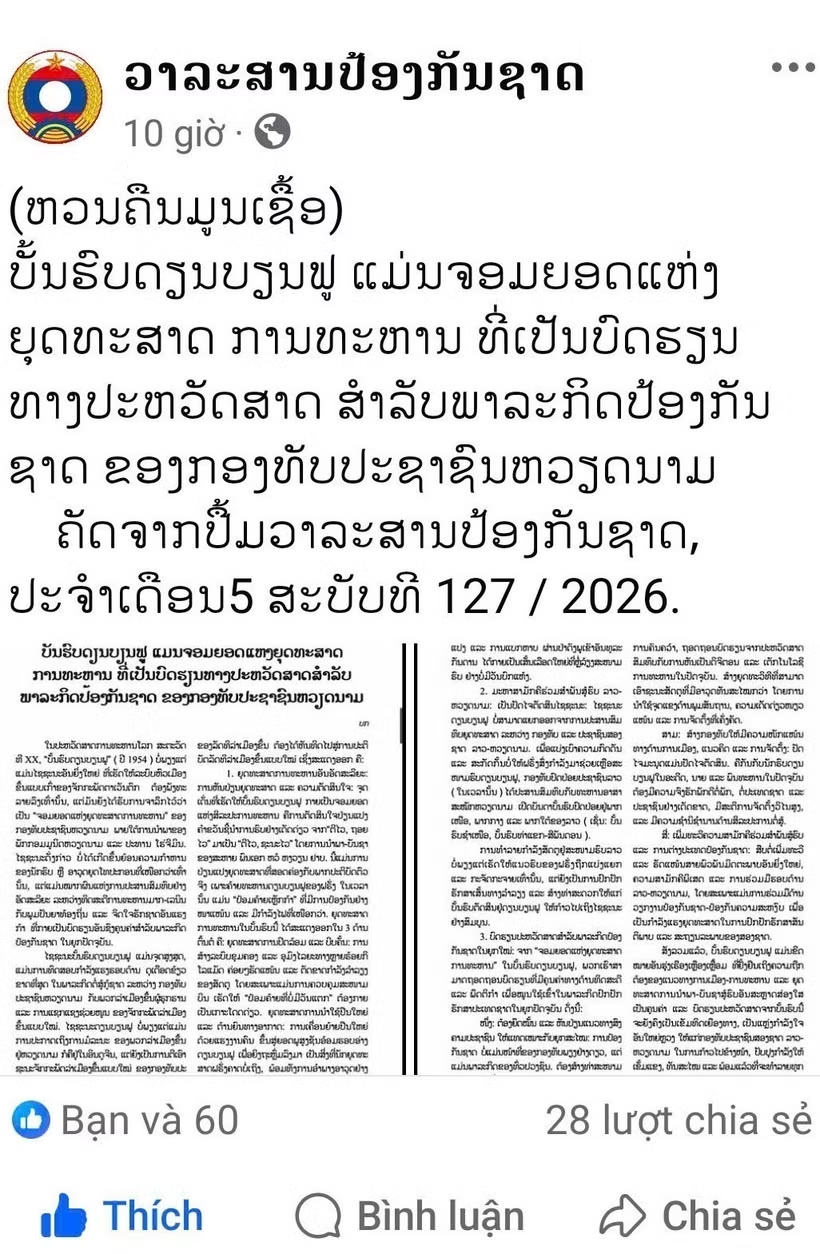
Vientiane (VNA) – Laos’ national defence magazine (Valasan Pongkanxard) has recently published an editorial describing Vietnam's Dien Bien Phu Campaign as the pinnacle of military strategy and a lasting lesson for the safeguarding of national sovereignty.
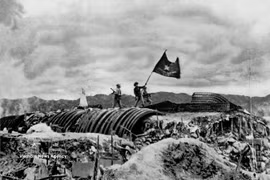
The article states that the 1954 Dien Bien Phu victory stands as one of the defining military achievements of the 20th century. It not only brought about the collapse of old-style colonialism in Vietnam and across Indochina but also secured a place in world military history as the high point of the Vietnam People's Army’s strategic thinking under the leadership of the Communist Party of Vietnam and President Ho Chi Minh.
The magazine said the victory was achieved not through superior weaponry alone, but through an exceptional combination of Marxist-Leninist military theory, indigenous strategic thinking and the Vietnamese people's unwavering patriotism. It says these lessons remain highly relevant to national defence in the modern era.
The editorial describes the campaign as the most comprehensive and demanding test faced by the Vietnam People's Army during its struggle against French colonial rule and external intervention. It says the victory marked the first time a colonised nation had defeated an old-style colonial power, reshaping the nature of colonial domination worldwide.
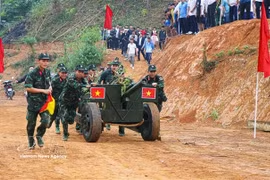
The article identifies the campaign’s decisive turning point as the strategic shift from the doctrine of “rapid attack, rapid victory” to “steady attack, steady advance”, ordered by General Vo Nguyen Giap. It says the decision reflected an accurate assessment of battlefield realities, as the French stronghold at Dien Bien Phu was regarded at the time as an unprecedented “steel fortress” with overwhelming firepower.
The editorial also highlights the Vietnam–Laos combat alliance as a decisive factor behind the victory. It notes that, to ease pressure on the Dien Bien Phu battlefield and prevent French reinforcements from reaching the front, the Lao People's Liberation Army, together with Vietnamese volunteer forces, launched coordinated offensives in northern, central and southern Laos, including the Sam Neua and Thakhek–Siphandone campaigns.
According to the article, these operations disrupted French defensive positions, stretched enemy forces and secured transport routes that proved vital to the success of the decisive campaign at Dien Bien Phu.
Turning to contemporary relevance, the editorial says the campaign offers valuable theoretical and practical lessons for national defence today.
First, it stresses the need to uphold and adapt the strategy of people's war to suit new conditions, emphasising that safeguarding the nation is the responsibility of the entire population rather than the armed forces alone. Building a strong all-people national defence posture alongside a robust people's security posture and strengthening public trust remain essential.
Second, it calls for the continued development of modern military science and military art by combining historical experience with digital transformation and advanced defence technologies, enabling armed forces to overcome better-equipped adversaries through effective organisation, resilience and the intelligent use of terrain.
Third, it underlines the importance of building armed forces that are politically steadfast, ideologically committed and organisationally strong. As with the soldiers who fought at Dien Bien Phu, today's officers and troops must demonstrate absolute loyalty to the Party, the nation and the people, while maintaining strict discipline and professional military competence.
Fourth, it highlights the importance of strengthening the Laos–Vietnam combat alliance and defence diplomacy. The editorial calls for further deepening the two countries' great friendship, special solidarity, comprehensive cooperation and strategic cohesion, particularly in defence and security, as a strategic pillar for preserving peace and stability in both nations.
The article concludes that the Dien Bien Phu Campaign remains a shining milestone that demonstrated the soundness of Vietnam’s political and military strategy and the brilliance of its wartime leadership. It says the lessons of Dien Bien Phu will continue to inspire and guide the armed forces of both Laos and Vietnam as they strengthen their capabilities, modernise their forces, and remain ready to crush any hostile threats to safeguard each country's independence, sovereignty and territorial integrity./.

Dien Bien Phu Victory – valuable lesson for Laos’ revolutionary cause
The article published on the official Facebook page of the Commission for Propaganda and Training of the Lao People’s Revolutionary Party (LPRP) Central Committee said the valuable lessons of Vietnam's Dien Bien Phu Victory not only contributed to advancing national liberation movement and the establishment of the Lao People’s Democratic Republic, but also provided the country with important practical and theoretical lessons.