Exhibition and fair spaces - potential attractions for tourists

In the strong current of the creative economy, many countries no longer view fairs and exhibitions as mere event venues, but position them as distinctive destinations offering multi-layered value to modern cities.

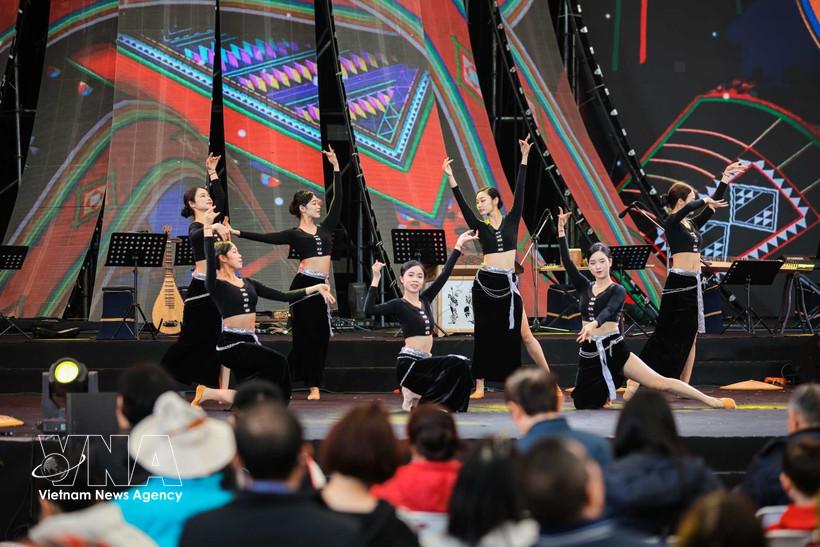
A performance at the Spring Fair held at the Vietnam Exposition Centre in Hanoi in February 2026. (Photo: VNA)

Hanoi (VNA) – Exhibition and fair spaces in Vietnam are emerging as potential attractions for tourists as experts have called for a shift in mindset to better tap their value.

In the strong current of the creative economy, many countries no longer view fairs and exhibitions as mere event venues, but position them as distinctive destinations offering multi-layered value to modern cities.

This trend is posing an urgent requirement for Vietnam to rethink how such spaces are utilised in order to create appealing tourism products.

For years, exhibition and fair centres in Vietnam have largely been designed and operated to serve one-off events, lacking continuity and remaining limited in their ability to attract visitors. Most venues have yet to be master-planned, with constraints in terms of scale and technical infrastructure, making it difficult to integrate cultural, entertainment and supporting services. As a result, visitor experiences are often confined within the scope of specific events, and economic returns depend heavily on event frequency, scale and participating businesses.

Against this backdrop, the emergence of the National Exposition Centre (VEC) in Hanoi's outlying Dong Anh commune is opening up new expectations. As one of Southeast Asia’s most modern exhibition complexes, it is seen as a potential model for a destination built around a multi-experience ecosystem.
vnanet-springfair.jpg
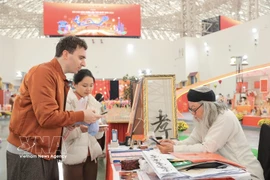
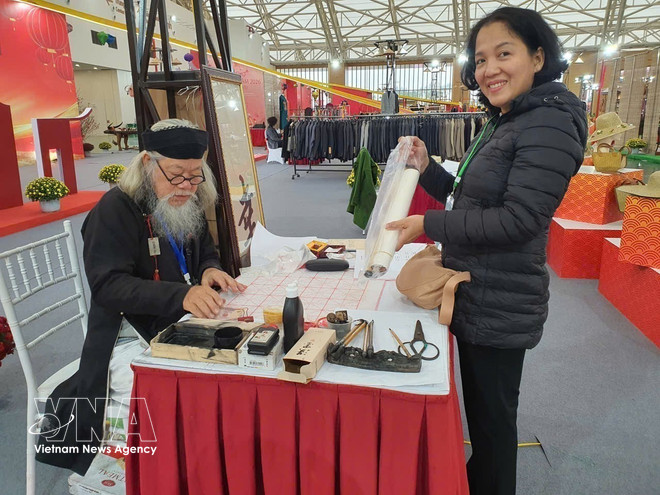
Calligraphy writing at the Spring Fair 2026. (Photo: VNA)

A series of successful events held at the venue – including the “80 Years of the Journey of Independence–Freedom–Happiness” exhibition in August 2025, Autumn Fair 2025, Spring Fair 2026, and various concerts and live shows – have demonstrated its strong appeal and potential to evolve into a cultural and entertainment hotspot.

However, experts said that while such events drew large crowds, they were not enough to fully utilise the space or its functions, as most remained time-bound and failed to create continuous experiences.

Prof. Dr. Tran Tho Dat, former Rector of the National Economics University, noted that the key lies in shifting the mindset from viewing exhibitions as event infrastructure to seeing them as platforms capable of generating integrated economic, cultural and tourism value on a continuous basis.

Globally, successful exhibition centres have moved beyond event-based leasing to integrated models, where exhibitions are only one component of a broader ecosystem. These venues are designed to operate dynamically throughout the day and year – hosting conferences and exhibitions by day, transforming into night-time economy spaces with cultural performances in the evening, and serving communities during off-peak periods.

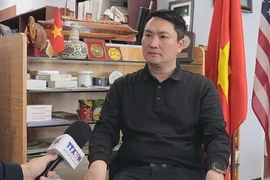
From a travel business perspective, Nguyen Van Tai, Director of Vietsense Travel, said tourists today prioritise three elements: check-in, experiences and enjoyment. To become attractive destinations, exhibition spaces must feature iconic visuals, immersive multi-sensory experiences, and high-quality shows with frequent programmes. At the same time, on-site services such as cuisine, shopping and entertainment should be developed, alongside stronger linkages with travel agencies to incorporate these venues into tour itineraries.

Experts also stressed the need for public-private partnerships and flexible operating mechanisms to mobilise resources and enhance competitiveness. This is considered a foundation for boosting MICE (Meeting -Incentives - Conferences - Exhibitions) tourism, one of the fastest-growing segments of the global tourism industry.

Drawing from the case of the VEC, Deputy Director of the Centre for Research and Development of Vietnamese Cultural Industries Dr. Le Minh Khue suggested leveraging its proximity to the Co Loa Citadel and traditional craft villages to develop unique tourism products based on heritage, creative technology and community sustainability. Proposed ideas include night shows using 3D mapping, heritage-themed parks, creative markets, and immersive VR/AR experiences showcasing Vietnam’s cultural diversity.

Such a flexible combination of event tourism, digital technology and heritage identity will be the key to attracting visitors, increasing spending, and promoting the national brand, he added./.
VNA

See more

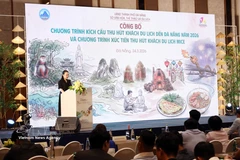
Deputy Director of Da Nang’s Department of Culture, Sports and Tourism Nguyen Thi Hoai An speaks at the event. (Photo: VNA)

Da Nang launches 2026 tourism stimulus, MICE promotion programmes

The city targets welcoming around 19.1 million visitors in 2026, including 8.7 million international arrivals. It expects that synchronised stimulus and promotion efforts will enhance visitor experience, add value, and foster sustainable tourism development

Vietnam saw a 22% rise in tourist numbers last year – and is showing no signs of wanting the growth to slow (Photo: telegraph.co.uk)

Vietnam praised as a welcoming destination for global travellers

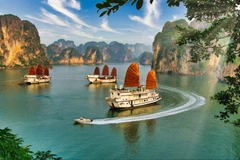
From the otherworldly Ha Long Bay with its sprinkling of column-like islands, to the delicious cacophony of Ho Chi Minh City’s food markets, Vietnam is too often overlooked in favour of its larger neighbour Thailand, despite offering more competitive prices.

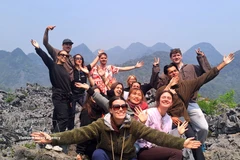
Foreign tourists excited by Ha Giang travel experiences. (Photo: VNA)

Ha Giang, Hoi An gain global spotlight in Time Out’s 2026 rankings

If Ha Giang represents the beauty of space, Hoi An embodies the beauty of time. Ha Giang evokes both geological grandeur and human stories while the ancient town stands out not only for its distinctive visual charm but also for its vibrant living environment and its rare ability to preserve a natural connection between heritage and contemporary life.

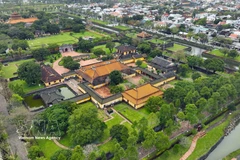
Dien Tho Palace (within the Complex of Hue Monuments) serves as the residence of the Empress Dowagers and Grand Empress Dowagers during this period. It is one of the distinctive architectural structures that has remained almost intact to the present day. (Photo: VNA)

Hue awakens heritage through community strength

The city is now shifting its development strategy to focus on the community, empowering local residents to become true guardians of heritage by preserving, creating, and directly enjoying the benefits of their cultural legacy.

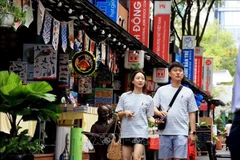
Korean tourists on Ho Chi Minh City's book street (Photo: VNA)

Vietnamese destinations attracting Korean visitors amid “micro-trip” trend

Last year, Vietnam welcomed more than 4.3 million Korean visitors out of a total of nearly 29.6 million Koreans traveling abroad. This volume significantly outpaces Korean arrivals to neighbouring competitors like Thailand, Singapore, and the Philippines, cementing Vietnam’s status as a premier regional hub for East Asian tourism.

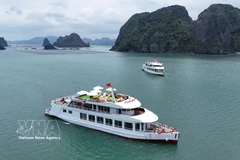
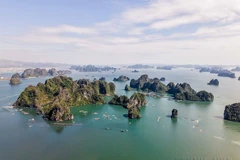
Ha Long Bay, located in northeast Vietnam, is beloved for its blue waters and spread of limestone islands - all occupied by tropical trees and wildlife. (Photo: VNA)

Vietnam named among world’s 28 most beautiful countries

In its latest list, the US-based magazine noted that while cities like Hanoi and Ho Chi Minh City attract millions of visitors each year, Vietnam’s true allure lies in its diverse natural landscapes and immersive travel experiences. The country, it said, is “a haven for outdoor enthusiasts” and anyone drawn to scenic beauty.

The enduring appeal of Hoi An's heritage lies not in static structures, but in its vibrant presence in everyday life. (Photo: VNA)

Hoi An, Da Nang Int’l Airport named among world’s best

Hoi An has been named among “The 51 most beautiful places in the world” by British magazine Time Out, while Da Nang International Airport has, for the third consecutive year, secured a place in the world’s Top 100 airports by Skytrax.

French tourists learn about Vietnamese tourism at the 49th World Travel Fair held in Paris (Photo: VNA)

Vietnam refines tourism promotion strategy to elevate national brand

At the fair, Vietnam’s pavilion drew strong interest from travel businesses, experts, and European visitors. According to organisers, Vietnam, along with Japan and Thailand, was among the Asian countries most searched for by French tourists, reflecting growing European attention to Southeast Asia and Vietnam.

International tourists visit the historical sites of the Dinh and Le Kings' temples in the ancient capital of Hoa Lu, Ninh Binh province (Photo: VNA)

Vietnam sees surge in foreign tourist arrivals, driven by safe destination image

Tourism experts attributed the strong growth to a combination of factors, including more open visa policies, diversified tourism products, and intensified promotion activities. Vietnam’s growing reputation as a safe and friendly destination has also played a significant role in attracting international travellers.

Through the lens of Travel + Leisure, Phu Quoc emerges as an open-air showcase of global architecture

US magazine calls Phu Quoc “a global showcase for architecture”

In a fresh perspective on the island, Travel + Leisure moves beyond beaches and resorts to spotlight Phu Quoc’s evolving identity. The magazine highlights how internationally inspired architectural works are increasingly shaping the destination, forming a new tourism character.

Unlocking tourism potential of Hoi An’s southern coastline

Unlocking tourism potential of Hoi An’s southern coastline

The central city of Da Nang possesses nearly 200km of coastline – the longest in Vietnam, with scenic landscapes and favourable natural conditions for tourism and service development. However, only about half of this coastline has been utilised for tourism activities, mainly concentrated in central Da Nang and Hoi An Ancient Town. Large stretches of coastline south of Hoi An remain largely untouched, holding significant potential for future development.

The Hanoi Tourism Festival 2026 at Thong Nhat Park attracts large numbers of residents and visitors for sightseeing and hands-on experiences. (Photo: VNA)

New highlights define Hanoi Tourism Festival 2026

The festival featured nearly 100 booths designed as a journey through diverse themed spaces. The space of memory highlights heritage sites, the Old Quarter, architecture, traditional craft villages and Hanoi’s cultural life through destination models, photography exhibitions and fine art displays. The connection space provides a platform for travel businesses to introduce new tours, promotional programmes and attractive discount vouchers.

Visitors experience the Ta Nang–Phan Dung trekking route. (Photo: nhandan.vn)

Vietnam taps trail tourism potential

The trend of nature exploration tourism, particularly hiking in mountainous areas, is gaining momentum across Asia, especially among young people. In Vietnam, more young travellers are choosing short weekend trips to explore forests, mountains and local ecosystems.