Fresh food demand increases on second day of Lunar New Year

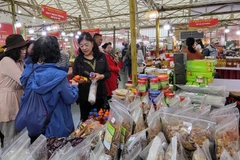
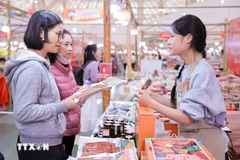
While many people continue spring outings, family visits and pagoda trips, demand for fresh food and essentials for early-year meals has risen markedly.

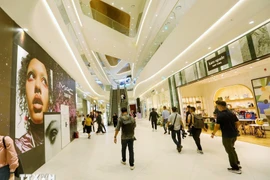
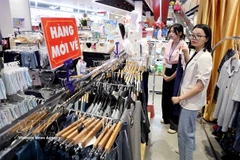
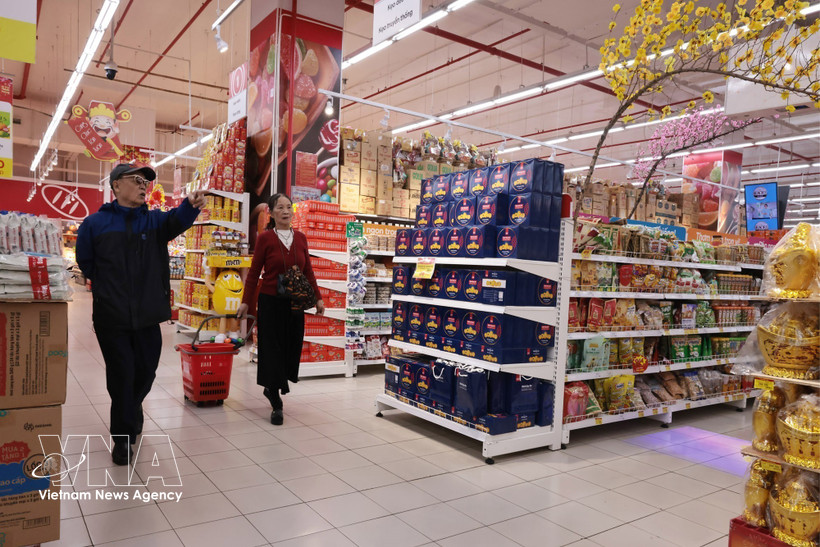
Stalls are decorated with vibrant spring colours at a Go! supermarket. (Photo: VNA)

Hanoi (VNA) – The domestic market has become more vibrant on the second day of the Lunar New Year (Tet) as shopping activity increases compared to the first day, reported the Agency for Domestic Market Surveillance and Development under the Ministry of Industry and Trade.

While many people continue spring outings, family visits and pagoda trips, demand for fresh food and essentials for early-year meals has risen markedly.

The distribution system continued to play a key role in market stabilisation. Convenience store chains such as Circle K, FamilyMart, 7-Eleven and GS25 remain open throughout the nine-day holiday, ensuring adequate supplies of essential goods.

Several major retail systems have reopened with suitable operating hours in some localities, including AEON, MM Mega Market, GO! and Saigon Co.op. AEON Mall resumed operations from 4pm on the first day of Tet (February 17) and continues serving customers on the second day.

At traditional markets, many traders have returned, mainly offering fresh food, vegetables, fruit and worship items, contributing to a more dynamic trading atmosphere.

Consumer demand focuses on fresh produce such as vegetables, seafood, pork and beef as households diversify meals after protein-rich and preserved Tet dishes. Fresh flowers and fruit for offerings maintain stable sales.

Prices remain largely unchanged from the pre-Tet period. Supermarkets are keeping listed prices stable and rolling out New Year promotions, with no reports of shortages or unreasonable price hikes.

Departments of Industry and Trade of provinces and cities reported that Tet supply plans were made early and aligned with demand forecasts. Total stockpiled goods value rose 10–15% compared to normal months, while major distributors increased essential goods stocks by 20–40%, focusing on food, processed products, confectionery, beverages and petrol.

Localities organised Tet fairs and mobile sales points in industrial parks as well as remote, border and island areas to ensure access to goods at reasonable prices. Supply – demand connectivity between Hanoi, Ho Chi Minh City and other localities was strengthened to promote regional specialties and OCOP (One Commune, One Product) items.

In the modern retail channel, systems such as Lotte Mart, WinMart and Central Retail expanded supplies, rolled out promotions and boosted online sales and home delivery services, easing pressure on traditional outlets during the peak season.

The market stabilisation programme has been implemented in all the 34 provinces and cities. In Hanoi, 19 participating units operate about 10,700 sales points while in Ho Chi Minh City, more than 89 units are involved, with goods at stabilised prices accounting for 23–43% of market share depending on product categories. All products sold under the programme are domestically produced with clear origins, and enterprises pledge to sell them 5–10% below market prices while keeping prices stable before, during and after Tet.

From late the 12th lunar month to the second day of Tet, supply and demand remained balanced. Purchasing power rose slightly year-on-year. Fresh food prices increased 4–5% from last year, pork rose 5–15%, while rice prices fell 12–15%.

The market is expected to become more active as retail systems fully reopen in the coming days, with stable prices and sufficient supplies ensured, the agency noted./.

VNA
See more

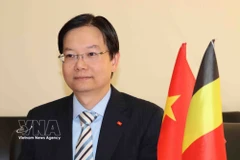
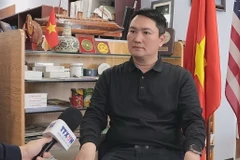
Tran Ngoc Quan, Trade Counsellor and head of the Vietnam Trade Office in Belgium and the EU (Photo: VNA)

Belgian firms suggested to expand presence in Vietnamese market

Entering 2026 – the first year of implementing the Vietnam – EU Comprehensive Strategic Partnership, the Vietnam Trade Office in Belgium and the EU views this as a pivotal time to inject new momentum into trade ties, said Trade Counsellor Tran Ngoc Quan.

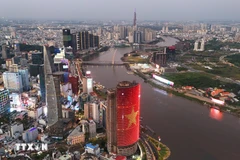
Saigon Marina IFC, an emerging landmark, reflects Ho Chi Minh City’s pioneering spirit.

Saigon Marina IFC – The light of Ho Chi Minh City’s new icon

Saigon Marina IFC, an emerging landmark, reflects Ho Chi Minh City’s pioneering spirit. Designed to become an International Financial Centre, this new architectural icon along the Saigon River is envisioned not only as a premium commercial complex, but as a central platform supporting financial institutions, international investors and cross-border capital flows in the years ahead.

Shoppers at a supermarket in Hung Yen (Photo: VNA)

Retailers see tax compliance, AI as key to survival in 2026 survey

The annual survey, conducted at the end of 2025 among retail and food and beverage (F&B) sellers nationwide, found that businesses are shifting their focus from rapid growth to operational efficiency, cost control and legal compliance amid increasingly stringent regulatory standards.

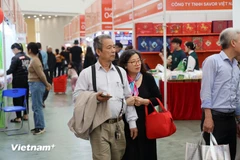
Visitors shop at Glorious Spring Fair 2026 (Photo: VNA)

Spring Fair 2026 opens broader prospects for Vietnam–UAE trade cooperation

For Vietnam, the UAE serves not only as a consumer market but also as a gateway to the Middle East and North Africa. Vietnamese agricultural products such as cashew nuts, pepper, cinnamon and rice have steadily gained market share, while aquatic products, including tra fish and tuna, are increasingly present in the UAE’s hospitality sector.

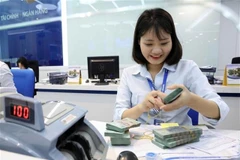
Bao Viet Bank's employee counts Vietnamese banknotes at a transaction counter in Hanoi. (Photo: VNA)

Credit quota reform, tighter capital rules may widen gap among banks

Yuanta Vietnam Securities estimates that to achieve GDP growth above 10%, credit growth would need to exceed 16%. This suggests bank credit is no longer expected to be the main growth driver, with greater reliance on fiscal policy, public investment and capital markets.

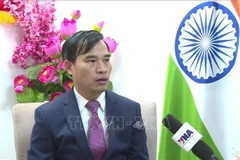
Commercial Counsellor Do Viet Phuong, Head of the Vietnam Trade Office in Cambodia. (Photo: VNA)

Spring Fair 2026 offers ample room to deepen Vietnam–Cambodia trade ties

Cambodia holds substantial potential for cooperation in agro-processing and exports, especially in key products such as rice, cashew nuts and rubber. In recent years, the country’s cultivation area and agricultural output have grown steadily, providing a stable raw material base for processing industries.

Vietnam is projected to have approximately 2.4 million SMEs, accounting for over 98% of the country’s total enterprises. (Photo: cafef.vn)

Banks offer diverse solutions to support SMEs

With an increasingly significant role in the economy, the small and medium-sized enterprise (SME) sector is becoming a key segment in the credit growth strategies of many banks and the banks have been taking diverse solutions to support the enterprises.

Workers process coconuts for export at Vina T&T Group. (Photo: nhandan.vn)

Agricultural exports reliant on securing raw material supply

According to Secretary General of the Vietnam Pepper and Spice Association Le Viet Anh, pepper remained Vietnam’s leading spice export in 2025, with shipments exceeding 247,000 tonnes, accounting for 59.3% of total spice export volume. Export revenue reached 1.66 billion USD, out of total spice exports of 2.1 billion USD.