Hanoi inaugurates 90 MW waste-to-energy plant

With a capacity to process 5,000 tonnes of waste per day and generate 90 MW of electricity, the facility has been connected to the national grid since July 2022. It is considered a long-term solution to Hanoi’s waste management challenge.

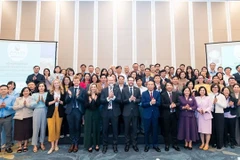
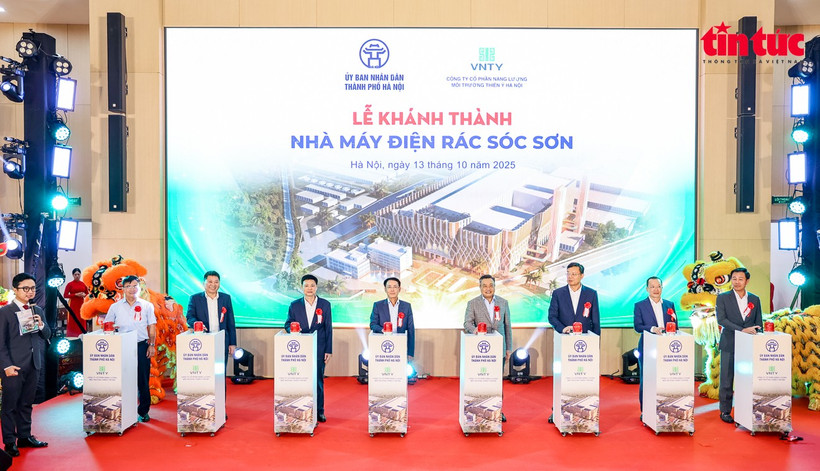
Delegates press the buttons to inaugurate the Soc Son Waste-to-Energy Plant (Photo: VNA)

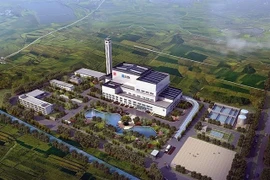
Hanoi (VNA) - The Soc Son Waste-to-Energy Plant — the largest in Vietnam and the second biggest in the world — was officially inaugurated in Trung Gia commune, Hanoi, on October 13.

With a capacity to process 5,000 tonnes of waste per day and generate 90 MW of electricity, the facility has been connected to the national grid since July 2022. It is considered a long-term solution to Hanoi’s waste management challenge.

Addressing the inauguration ceremony, Chairman of the municipal People’s Committee Tran Sy Thanh highlighted the significance of the inauguration, noting that it marks a crucial milestone, demonstrating the city’s strong commitment to modernising waste collection, transportation, and treatment.

Thanh requested that relevant agencies urgently develop a plan to treat one million cubic metres of waste buried at the Nam Son solid waste treatment complex, processing all long-accumulated landfill waste within the next five to seven years.

Invested by Hanoi Thien Y Environmental Energy JSC — a member of CNTY-EUZY Group, the project’s construction began in August 2019 with a total investment of over 320 million USD. It uses advanced Belgian mechanical grate furnace technology that meets the stringent environmental standards of both Europe and Vietnam.

According to Tao Duc Tieu, General Director of CNTY–EUZY Group, Hanoi produces about 7,500 tonnes of household waste daily, posing a growing challenge to the environment and public health. He said the plant provides a sustainable solution by converting waste into clean energy, contributing to socio-economic development and building a greener and more modern capital.

Nguyen Thi Hong Van, General Director of VNTY – the operator of HNTY, said that after more than three years of trial operation, the plant is now in regular operation, treating about 70% of Hanoi’s daily household waste and replacing traditional landfills. She expressed hope that the second phase would soon begin to process long-buried waste, thus reclaiming land areas for parks and public spaces, and preventing soil and groundwater pollution.

The Soc Son waste-to-energy plant symbolises green technology and Hanoi’s vision for sustainable urban development — turning waste into resources and the dream of a green, clean, modern capital into reality./.

VNA

See more

Each location is equipped with three bins for residents to sort waste at source. (Photo: baotayninh.vn)

Tay Ninh partners with RoK to pilot waste-sorting at source

The project, with KECO serving as a technical consultant, aims to strengthen integrated waste management, develop effective systems for classification, collection and recycling, and enhance public awareness of turning waste into resources, thus contributing to a cleaner and more sustainable Tay Ninh.

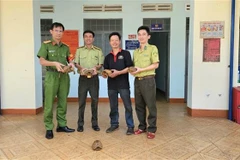
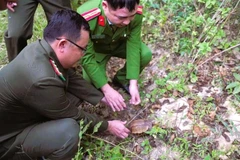
A camera trap photo of a Chinese serow (Capricornis milneedwardsii) in the Dong Chau – Khe Nuoc Trong Nature Reserve (Photo published by VNA)

Quang Tri province approves wildlife restoration project

The project has a total non-refundable grant value of 48,310 USD and will be implemented in Kim Ngan commune until December 31, 2027. This initiative aims to restore wildlife populations, enhance biodiversity, and reduce illegal hunting through patrolling and the removal of snares.

Houses in Xuan Canh commune, Dak Lak province, completely collapse. (Photo: VNA)

Typhoon Kalmaegi damages over 26,470 houses and causes extensive losses

The typhoon and its aftermath left five people dead, three missing, and 17 injured. It also damaged 3,721 ha of rice and crops, and 3,958 ha of industrial and perennial fruit trees, up by 14 ha from the previous report. For aquaculture, 54,335 cages and 18 ha of shrimp and fish farms were destroyed, along with 118 cattle and 3,593 poultry. Additionally, 21 boats were sunk and 44 others damaged.

Nguyen Thi Vang is the oldest member of the scrap-collecting cooperative group in An Dong ward in Hue city. (Photo: VNA)

Hue turns waste into resource through tech-enabled scrap collectors

Through the mGreen application, women who once earned their living by collecting recyclable waste have become “green warriors” connected to a digital recycling supply chain. The initiative is not only improving livelihoods and enhancing social status but also forming a sustainable waste circulation loop, reinforcing Hue’s image as a green city.

Vice Chairman of the Hanoi People’s Committee Nguyen Manh Quyen receives Sylvain Ouillon, Chief Representative of the French National Research Institute for Sustainable Development (IRD) in Vietnam (Photo: Hanoi Moi)

Hanoi strengthens ties with IRD to tackle air pollution

Vice Chairman of the Hanoi People’s Committee Nguyen Manh Quyen on November 6 received Sylvain Ouillon, Chief Representative of the French National Research Institute for Sustainable Development (IRD) in Vietnam, to discuss potential cooperation in air quality monitoring and pollution reduction in the capital city.

Houses inundated by storm-triggered flooding. (Photo: VNA)

Central, Central Highlands localities race to recover from Storm Kalmaegi

According to Vietnam Disaster and Dyke Management Authority (VDDMA), the storm left five people dead and six injured. As of 7 a.m. on November 7, 52 houses had collapsed and 2,593 others were damaged or unroofed, including 2,412 in Gia Lai province. Nine fishing vessels were reported sunk.

High waves in Ly Son island, Quang Ngai province due to Typhoon Kalmaegi. (Photo: VNA)

Central, Central Highlands localities respond to Typhoon Kalmaegi

As Typhoon Kalmaegi, the 13th storm to hit the East Sea this year, intensifies and heads toward Vietnam’s central coast, localities across the central and Central Highlands regions, including Dak Lak, Lam Dong, Da Nang and Quang Ngai, have activated their highest-level disaster response measures to ensure the safety of people and property.