Indonesia attracts 18.63 billion USD investment in special economic zones

Indonesia has drawn a total of 18.63 billion USD in investment into its special economic zones (SEZs) over the past five years, creating more than 187,000 jobs, according to the Coordinating Ministry for Economic Affairs.

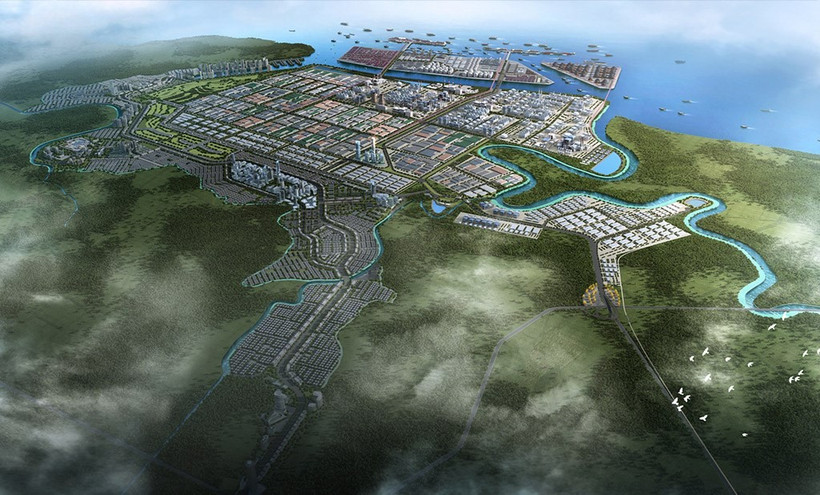
The JIIPE integrated industrial estate, seaport, and real estate complex in East Java province. (Photo: jiipe.com)

Jakarta (VNA) – Indonesia has drawn a total of 18.63 billion USD in investment into its special economic zones (SEZs) over the past five years, creating more than 187,000 jobs, according to the Coordinating Ministry for Economic Affairs.

Investment realisation in the first half of 2025 alone reached 2.56 billion USD, equivalent to 48.2% of the annual target. This growth generated 28,094 new jobs and attracted 65 businesses to operate in SEZs, Susiwijono Moegiarso, Secretary of the Ministry, said at a press briefing on September 9.

Indonesia currently has 25 SEZs, including 18 located outside Java. Of these, 13 focus on industry while 12 are service-based. Kendal, Gresik and Galang Batang are among the zones attracting the highest investment flows.

Susiwijono noted that most of the capital has been channelled into the processing and manufacturing sectors. Smaller investments have gone into education, healthcare and the digital economy, which are nevertheless expected to expand strongly in the years ahead.

SEZs are also making a growing contribution to Indonesia’s exports. Between 2021 and mid-2025, exports from SEZs reached 82 trillion IDR (5.19 billion USD), led by Galang Batang (alumina), Kendal (battery anodes) and Gresik (copper).

Rizal Edwin, Secretary-General of the National Council for Special Economic Zones, said the country’s 25 SEZs are still modest compared with those of other ASEAN countries such as Malaysia and Vietnam. He underlined the need for additional incentives to diversify sectors and attract more investors.

The Indonesian government has pledged to further develop SEZs, particularly in healthcare and digital education. These zones are expected not only to draw investment and generate employment, but also to contribute more significantly to GDP and Indonesia’s long-term goal of sustainable economic growth.

Rizal also highlighted the potential for stronger cooperation between Indonesia and Vietnam, noting that the two countries share many similar export products but are not in direct competition. Instead, he said, both sides can complement each other in developing markets, particularly through collaboration in SEZs, which could bring mutual benefits and support economic growth in both nations./.
VNA

See more

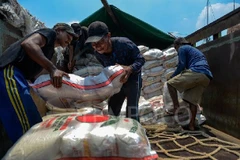
Indonesia will not import rice for either consumption or industrial use next year. (Photo: tempo.co)

Indonesia to stop rice imports next year

Indonesia's rice production in 2025 is projected to reach 34.77 million tonnes, up 13.54% year on year, driven by favourable weather and farmer support policies under President Prabowo Subianto’s administration.

Distinctive festivals across Indonesia attract international visitors. (Photo published by VNA)

Indonesia identifies 15 priority tourism markets for 2025–2026

According to data compiled by the Ministry of Tourism, the number of tourists from Malaysia reached 2.18 million in the January-October 2025 period, showing a growth of 15.91% compared to last year. Meanwhile, the number of visitors from Singapore totaled 1.19 million this year, growing by 7.66% from 2024.

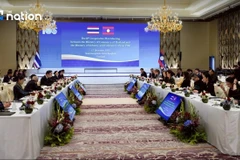
The 8th Cooperative Plan Meeting between the Ministry of Commerce of Thailand and the Ministry of Industry and Commerce of Lao PDR, December 17, Bangkok, Thailand (Photo: nationalthailan.com)

Thailand, Laos aim to boost bilateral trade

Laos is Thailand’s 7th largest trading partner in ASEAN and 18th globally. From January to October 2025, two-way trade grew by 18.65% to 8.18 billion USD, with Thai exports increasing by 16.90% to 4.81 billion USD and imports rising by 21.23% to 3.60 billion USD.

File photo of Visa and Mastercard credit cards. (Photo: AP)

Unpaid credit card balances in Singapore hit record high in 10 years

Experts attributed the worrying trend to factors like people not spending within their means, consumer culture emphasising prestige items, and easier access to credit like “buy now, pay later” services. Analysts said this can be a hint of growing financial pressures faced by Singaporeans amid rising prices.

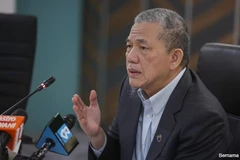
Malaysian Deputy Prime Minister Datuk Seri Fadillah Yusof (Photo: Bernama)

Malaysia accelerates clean energy transition

Delivering a speech at the Clean Energy Transition Asia (CETA) Summit 2025 in Kuala Lumpur, Fadillah, who is also the energy transition and water transformation minister, said that the Southeast Asian region now drives more than half of the global energy demand.

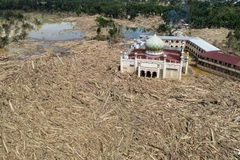
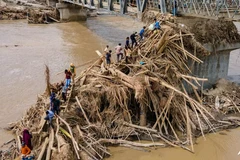
Indonesian localities extend state of emergency amid natural disasters

Indonesian localities extend state of emergency amid natural disasters

As disaster-related losses continue to rise, authorities in the affected provinces have decided to extend the state of emergency to ensure resources and legal mechanisms for response efforts. West Sumatra extended it to December 22, North Sumatra to December 24, and Aceh to December 25.

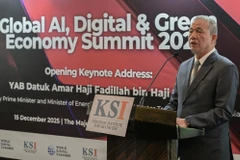
Malaysian Deputy Prime Minister Datuk Seri Fadillah Yusof delivers his opening keynote address at the Global AI, Digital and Green Economy Summit 2025 in Kuala Lumpur, December 15, 2025. (Photo: Bernama)

Malaysia eyes AI-driven energy future

Malaysia’s direction is to focus on building a modern grid, a digital economy powered by trustworthy AI, and climate finance systems that deliver real-world decarbonisation.

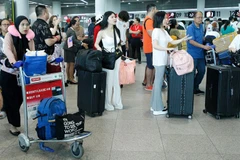
Air passengers at the departure terminal of the Phnom Penh International Airport. (Photo: khmertimeskh.com)

Air travel between Cambodia, Thailand remains operational

In a statement released on his Facebook post, Hun Sen explained that his earlier message, advising the Royal Government to consider suspending cross-border travel, referred specifically to land routes, as tensions are escalating along the entire land border, with some spillover into maritime areas.