Indonesia expands marine protected areas for green goals

Trenggono emphasised that the Indonesian government aims to increase the total coverage of MPAs to 97.5 million hectares by 2045. This initiative forms a key component of the “Golden Indonesia 2045” vision, which prioritises sustainable maritime development and environmental protection.

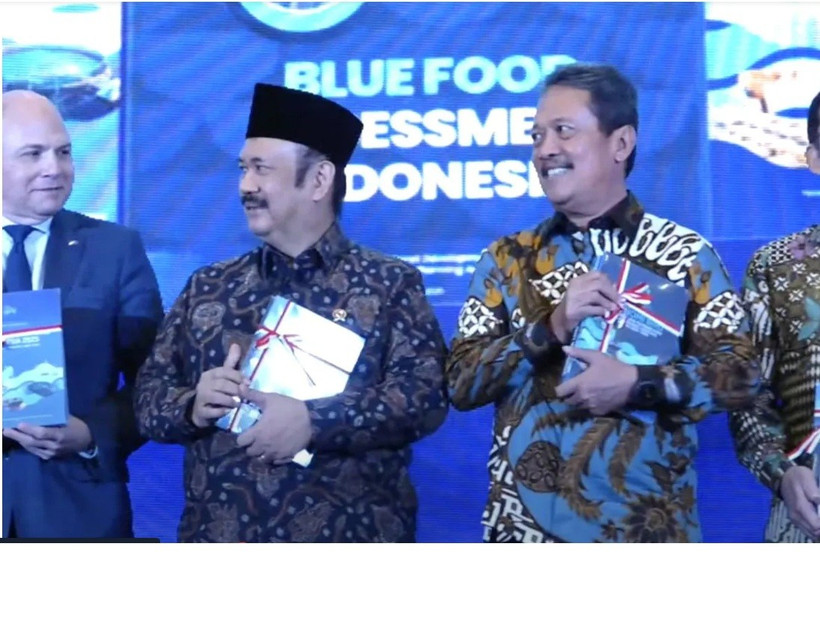
Indonesian Marine Affairs and Fisheries Minister Sakti Wahyu Trenggono (right) at the launch of Indonesia Blue Food Assessment (BFA) and Indonesia Blue Economy Index (IBEI) (Photo: Antara)

Jakarta (VNA) – Indonesia is ramping up efforts to expand its marine protected areas (MPAs) as part of its long-term strategy to build a sustainable blue economy by 2045, according to Minister of Maritime Affairs and Fisheries Sakti Wahyu Trenggono.

Trenggono emphasised that the Indonesian government aims to increase the total coverage of MPAs to 97.5 million hectares by 2045. This initiative forms a key component of the “Golden Indonesia 2045” vision, which prioritises sustainable maritime development and environmental protection.

While significant progress has been made in designating conservation zones, Trenggono expressed his concern that many protected areas remain vulnerable to encroachment, threatening critical marine ecosystems. To address this, he reiterated the ministry’s position on banning cargo, passenger, and fishing vessels from navigating through conservation zones, particularly around ecologically sensitive regions such as Bali and the Lombok Strait.

In parallel with environmental efforts, the Ministry of Maritime Affairs and Fisheries is also advancing initiatives to promote fish consumption and raise nutritional awareness in local communities. These initiatives align with the government's “Free Nutritious Meals” (MBG) programme, which aims to combat malnutrition and enhance human capital.

Indonesia is also actively participating in the Aquatic Blue Food Coalition, a global alliance focused on strengthening food and nutrition security, building climate resilience, and protecting ocean biodiversity through sustainable aquatic food systems.

Trenggono affirmed that these commitments align with Indonesia’s five priority programmes under its green economy strategy, which seek to maximise the country’s maritime and fisheries potential while supporting long-term national economic growth.

The expansion of marine protected areas not only reinforces Indonesia’s leadership in ocean conservation but also signals its intent to balance economic development with environmental stewardship in the decades ahead./.


VNA

See more

Malaysia busts massive drug syndicate

Malaysia busts massive drug syndicate

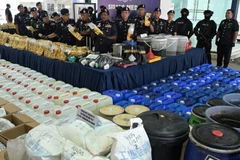
An international drug syndicate was busted after Malaysian police seized over 18 tonnes of drugs worth nearly 375 million USD in one of the country’s biggest drug busts on record.

Indonesia will not import rice for either consumption or industrial use next year. (Photo: tempo.co)

Indonesia to stop rice imports next year

Indonesia's rice production in 2025 is projected to reach 34.77 million tonnes, up 13.54% year on year, driven by favourable weather and farmer support policies under President Prabowo Subianto’s administration.

Distinctive festivals across Indonesia attract international visitors. (Photo published by VNA)

Indonesia identifies 15 priority tourism markets for 2025–2026

According to data compiled by the Ministry of Tourism, the number of tourists from Malaysia reached 2.18 million in the January-October 2025 period, showing a growth of 15.91% compared to last year. Meanwhile, the number of visitors from Singapore totaled 1.19 million this year, growing by 7.66% from 2024.

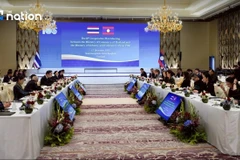
The 8th Cooperative Plan Meeting between the Ministry of Commerce of Thailand and the Ministry of Industry and Commerce of Lao PDR, December 17, Bangkok, Thailand (Photo: nationalthailan.com)

Thailand, Laos aim to boost bilateral trade

Laos is Thailand’s 7th largest trading partner in ASEAN and 18th globally. From January to October 2025, two-way trade grew by 18.65% to 8.18 billion USD, with Thai exports increasing by 16.90% to 4.81 billion USD and imports rising by 21.23% to 3.60 billion USD.

File photo of Visa and Mastercard credit cards. (Photo: AP)

Unpaid credit card balances in Singapore hit record high in 10 years

Experts attributed the worrying trend to factors like people not spending within their means, consumer culture emphasising prestige items, and easier access to credit like “buy now, pay later” services. Analysts said this can be a hint of growing financial pressures faced by Singaporeans amid rising prices.

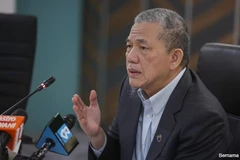
Malaysian Deputy Prime Minister Datuk Seri Fadillah Yusof (Photo: Bernama)

Malaysia accelerates clean energy transition

Delivering a speech at the Clean Energy Transition Asia (CETA) Summit 2025 in Kuala Lumpur, Fadillah, who is also the energy transition and water transformation minister, said that the Southeast Asian region now drives more than half of the global energy demand.