Hanoi (VNA) - As a strategic pillar of the economy, the industry and trade sector continues to affirm its position as one of the key growth drivers, making a significant contribution to the country's development goals of self-reliance, modernisation, green transition, digital transformation, and effective international integration.
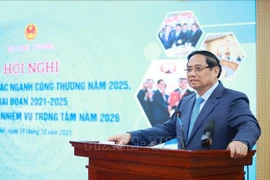
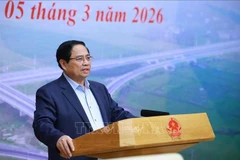
Ahead of the 14th National Party Congress, Deputy Minister of Industry and Trade Phan Thi Thang spoke with the press about the sector’s major achievements and contributions during the 2021–2025 term, its pivotal role in economic development and ensuring national energy security, and key orientations, tasks and solutions for 2026 and the years ahead.
From macro stability to growth breakthrough
Looking back at the 2021–2025 term, Thang said the sector made comprehensive and foundational contributions to Vietnam’s socio-economic development, helping maintain macroeconomic stability and drive growth amid global volatility.
The ministry advised on and refined key strategic policies to promote industry, trade and investment, removing major bottlenecks and paving the way for the Party Central Committee and the National Assembly to issue important resolutions on international integration, national energy security and breakthroughs in science, technology and digital transformation.
As a strategic pillar of the economy, the sector remained a key growth engine, supporting the country’s push for greater autonomy, modernisation, green and digital transitions and deeper international integration.
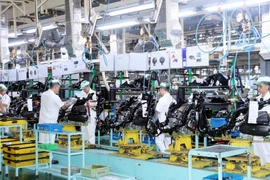
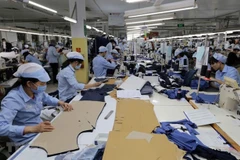
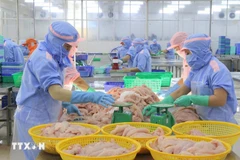
Industrial production rebounded strongly, expanding by more than 6% on average annually. Notably, processing and manufacturing, the core growth drivers, grew 6.9% per year on average, with total output nearly 1.5 times higher than at the start of the tenure. Localisation rates improved, and key industries such as electronics, textiles, footwear and agro-processing increasingly integrated into global value chains, reinforcing Vietnam’s role in international production networks.
In energy, the national energy system developed rapidly, with Vietnam’s power capacity ranking among the world’s top 20, leading Southeast Asia. Energy security was largely ensured, meeting socio-economic development requirements and people’s daily life, while the energy mix shifted toward a greener and more sustainable structure in line with global trends.
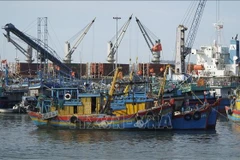
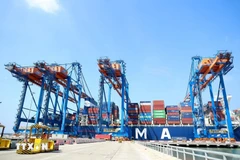
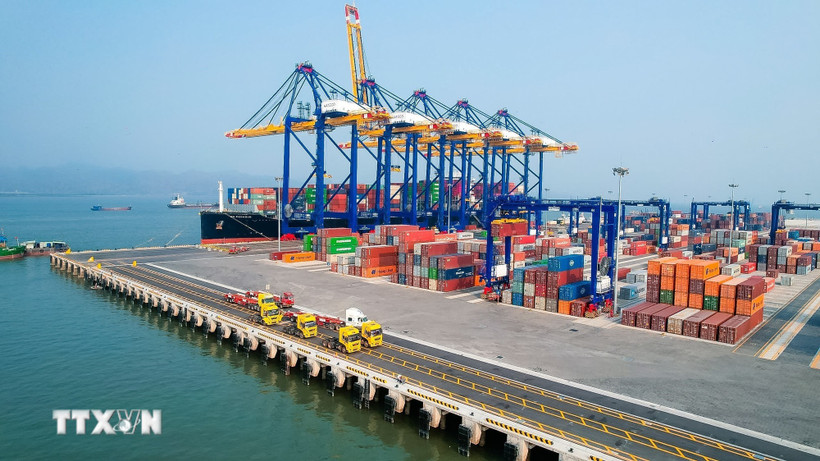
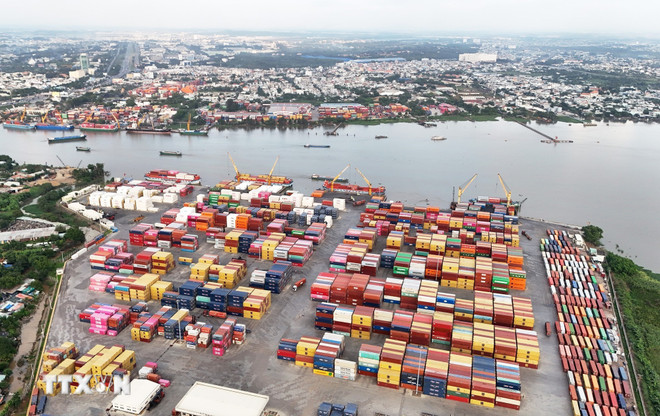
Trade was a bright spot for the economy, with imports and exports posting average annual growth of 10.9%. Total trade turnover continued to set new records, exceeding 930 billion USD in 2025, double the level at the beginning of the term, with many major export products maintaining strong positions in global markets. A robust trade surplus supported macroeconomic balances, reinforced foreign exchange reserves and strengthened market confidence
The domestic market also expanded steadily at 7.7% per year, serving as a crucial pillar of the economy, especially during the COVID-19 pandemic. E-commerce grew by more than 20% annually, placing Vietnam among the world’s 10 fastest-growing markets and providing a strong impetus for the digital economy and digital transformation.
With participation in 17 free trade agreements (FTA), Vietnam gained access to a market of nearly six billion consumers, helping diversify exports, attract foreign investment and enhance national competitiveness.
Energy security seen as foundation for future
Deputy Minister Thang stressed that national energy security remains central to macroeconomic stability and sustainable development, closely linked to national defence. The sector has pursued diversified energy sources, balancing traditional and renewable energy while promoting efficiency and new energy development.
Institutional reforms have been accelerated, including amendments to the Electricity Law and Petroleum Law to foster a competitive and transparent market and attract private investment. Key policies and plans, notably the revised Power Development Plan VIII, have been implemented alongside major transmission projects to strengthen the national grid, which now ranks among ASEAN’s largest
Amid global uncertainty and the accelerating energy transition, ensuring energy security is defined as a long-term political priority and a prerequisite for rapid and sustainable economic development. The ministry will continue to refine the legal framework, develop a phased electricity market and reform pricing mechanisms under market principles with state regulation.
Alongside institutional improvements, the industry and trade sector has focused on reforming financial mechanisms, promoting socialisation, public–private partnerships (PPP) and green finance to mobilise capital for strategic projects, while accelerating decentralisation and delegation of authority coupled with stronger inspection and oversight. It has also worked to enhance policy implementation capacity and apply digital transformation more robustly in the management and operation of the energy system in an efficient and sustainable manner.
Paving the way for breakthroughs in new era
Entering a new development era, Thang said the country is facing many major opportunities and advantages, but also confronting challenges.
She cautioned that the industry and trade sector still faces persistent shortcomings, including shallow development with low value-added, along with weak industrial foundations and core technologies. Also implicated were loose linkages between domestic firms and the FDI sector, slow green and digital transformation, lagging energy infrastructure, heavy reliance on FDI-led exports and imported inputs. Further challenges include high logistics costs, a shortage of leading enterprises and spearhead industries at the regional and global levels, and integration outcomes that have yet to match the country’s potential.
In response, the ministry will focus on restructuring industry and trade to enhance productivity, quality and competitiveness, with science, innovation, digital and green transitions and private sector development as key drivers. Strengthening the participation of domestic enterprises in global supply chains, upgrading energy, logistics and trade infrastructure, deepening international integration and promoting administrative reform and digital governance will be central to building a transparent, business-friendly environment and ensuring sustainable growth in the years ahead./.