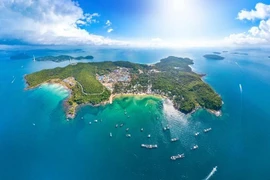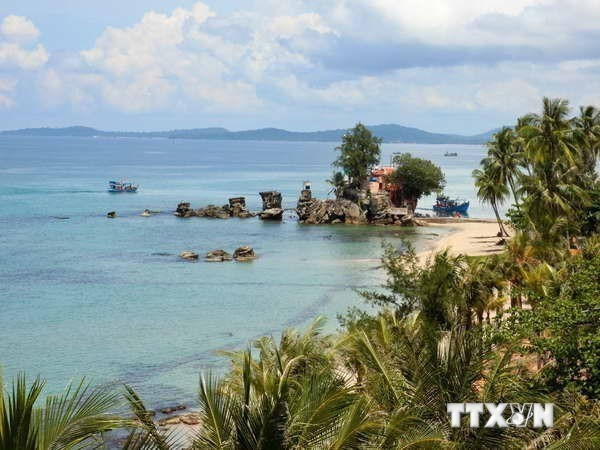
Kien Giang (VNA) - The southern province of Kien Giang is reinforcing strict management and oversight of the Phu Quoc Marine Protected Area (MPA) to safeguard marine, coastal, and island ecosystems, contributing to the sustainable development of the marine economy.
Efforts are being made to prevent environmental pollution, illegal land reclamation, and destructive fishing practices that deplete marine resources.
In early this year, the Kien Giang MPA Management Board, in coordination with relevant agencies and local authorities, carried out multiple patrols and inspections within the Phu Quoc MPA. These operations uncovered unauthorised construction activities and tourist boats docking at floating platforms operating in violation of regulations. The Management Board subsequently ordered the removal of illegal floating structures from the protected area.
To improve awareness and navigation within the MPA, over 1,130 maps outlining the area’s zoning and subzones were printed and distributed. The Management Board also partnered with tourism service businesses and environmental volunteer groups in the island city of Phu Quoc to organise the first coral reef cleanup drive of 2025, collecting 865 kg of waste entangled in coral reefs.
Additionally, the Management Board conducted monitoring of coral restoration efforts in the northwest waters of Hon May Rut Trong, part of the ecological restoration zone within the MPA. After five months of observation, coral colonies transplanted to degraded reef areas showed an 82.5% survival rate and an average growth rate of 8.15 mm/month, evidence that restoration techniques are effective and well-suited to the area’s natural conditions.
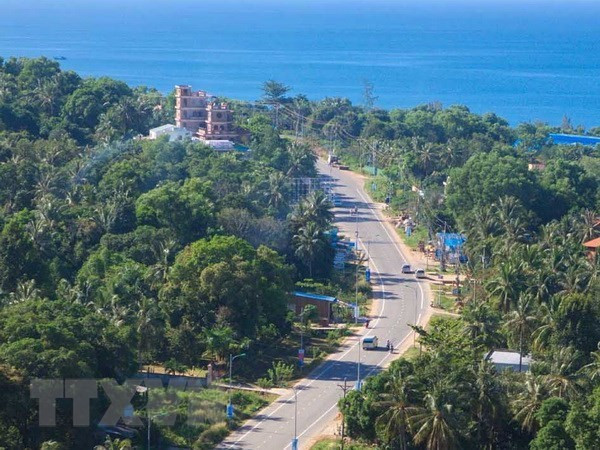
According to the local Department of Agriculture and Environment, the Phu Quoc MPA spans over 40,909 ha of water surface, encompassing coral reefs and seagrass beds. The area is home to many rare marine species listed in international conservation catalogs, including dugongs, sea turtles, and dolphins. Its extensive seagrass beds provide a vital habitat for species such as seahorses, crabs, and valuable seafood species.
Director of the Department Le Huu Toan said the Phu Quoc MPA plays a crucial role in restoring, regenerating, and sustaining marine resources, while also supporting marine economic growth. The province is implementing a comprehensive and effective strategy to simultaneously conserve the area’s biodiversity and promote eco-tourism, thereby improving livelihoods for coastal and island communities and serving scientific and environmental research efforts.
To strike a balance between conservation and development, the province has adopted several measures including monitoring and regulating fishing to prevent overexploitation and destructive practices; increasing public awareness through marine environmental education programmes; and promoting eco-tourism in ways that do not harm the ecosystem.
These efforts also include coral reef conservation, seagrass protection, vital for the survival of endangered species like the dugong, and the preservation of mangrove forests to maintain biodiversity and combat coastal erosion. Phu Quoc is being positioned as a hub for sustainable tourism with activities such as coral diving, night squid fishing, and wilderness exploration./.