Metro Line No 1 gives strong boost to HCM City’s public transport

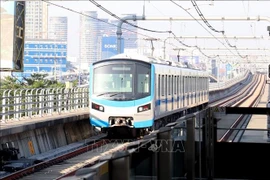
Nearly 19 million passenger trips were recorded on Metro Line No 1 linking Ben Thanh and Suoi Tien in its first year of operation, a figure that has brought joy and a significant boost to public transport in Vietnam’s most populous city.

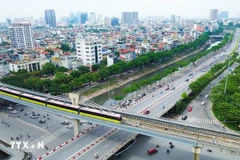
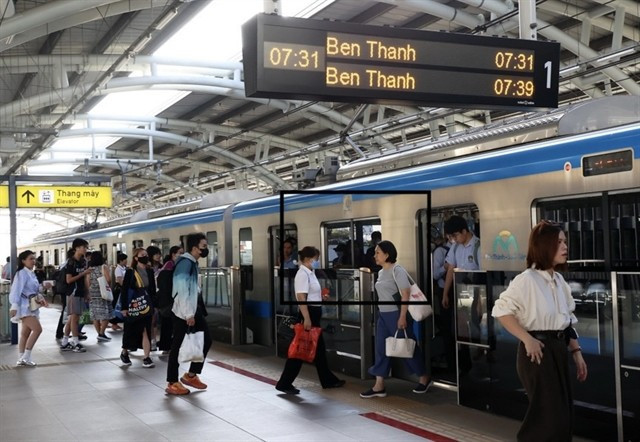
Passengers ride on HCM City’s first metro line (Photo: VNA)

HCM City (VNS/VNA) - Nearly 19 million passenger trips were recorded on Metro Line No 1 linking Ben Thanh and Suoi Tien in its first year of operation, a figure that has brought joy and a significant boost to public transport in Vietnam’s most populous city.

The number highlights growing public acceptance of mass transit, while also underlining the need for a more comprehensive transport network.

Buses alone cannot fully meet travel demand, and Metro Line No 1 by itself is not sufficient. A system that connects public transport on surface roads, elevated routes, waterways and underground lines is seen as essential to help residents choose mobility options that do not rely on private vehicles.

The success of the metro has also led to encouraging changes around stations. Motorbike parking areas near stations along Line No 1 have had to expand beyond their original capacity, yet they remain frequently full, reflecting strong demand.

Dozens of electric bus routes now connect with metro stations, while several existing bus routes have also seen higher passenger numbers thanks to the metro’s operation.

Positive impacts have been observed on the road network as well. In 2025, congestion along Vo Nguyen Giap street, a major and often busy gateway into the city centre, eased noticeably.

Throughout 12 months of operation, metro services have run consistently on weekdays and holidays, during daytime and evening hours, with three-car trains typically crowded. During peak periods such as major events, National Day and both the Lunar and Gregorian New Year holidays, all 17 trainsets were put into service to meet increased demand.

Passenger convenience has improved through the application of technology. Manual ticketing has been replaced by app-based operations, allowing passengers to tap, scan or swipe. Integrated electronic tickets for both buses and the metro have also been introduced, enabling travel using smartphones.

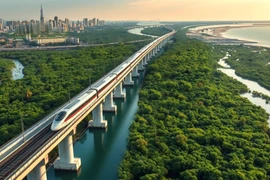
Meanwhile, Metro Line No 2 and the urban railway linking Ben Thanh with Can Gio have already broken ground, raising expectations for faster and more convenient travel across the city. With advantages such as low noise, no emissions, protection from weather and high safety standards, metro services are steadily gaining public trust.

From the first year’s success of Metro Line No 1, it is widely expected that future urban rail lines will also be welcomed and well used. Many hope that metro projects currently under development will be completed soon to build on and connect with the achievements of the city’s first metro line./.
VNA

See more

At the inauguration of the community digital library in Quang Phu ward, Da Nang city. (Photo: VNA)

RoK locality-funded digital library makes debuts in Da Nang

After more than 10 months of construction, the project has been completed and put into use, featuring all the components of a modern digital library, including over 1,000 book titles, an e-book repository, tablet and desktop computers, dedicated study areas, and spaces for digital knowledge exploration and research.

Representatives of police forces from seven southern provinces and cities sign a coordination agreement at the conference. (Photo: VNA)

Police boost inter-provincial coordination to curb IUU fishing

Police forces from Lam Dong, Ca Mau, An Giang, Can Tho, Vinh Long, Dong Thap, and Ho Chi Minh City held a joint review on January 12 in Xuan Huong - Da Lat ward, Lam Dong province, strengthening efforts to combat organisations and individuals arranging or brokering illegal border crossings for illegal fishing overseas.

Police of Lam Dong province have worked around the clock to complete the Quang Trung Campaign. (Photo published by VNA)

Lam Dong police complete Quang Trung Campaign six days ahead of schedule

Under the campaign, the force was tasked with building 27 of the 41 houses requiring reconstruction across the province, accounting for nearly 66% of the total. All 27 houses were completed, and by January 9, they had been fully handed over for use, earlier than the January 15 deadline.

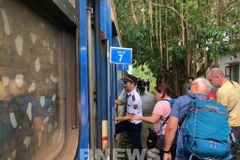
More trains added to serve Lunar New Year demand. (Illustrative photo: VNA)

More trains added to serve Lunar New Year demand

The railway sector will add more Thong Nhat (reunification) trains and regional services to meet the sharply rising travel demand of people and tourists during the 2026 Lunar New Year (Tet), Vietnam’s largest traditional festival.

The “Not Alone” campaign is rolled out widely across social media platforms nationwide. (Photo: VNA)

"Not Alone" Campaign: Over 8 million students, teachers, parents equipped with online safety skills

Implemented from October 6 to November 30, 2025, the campaign’s achievements were also reflected in its impressive outreach. On social media platforms, “Not Alone” generated more than 1.5 billion views and reached over 40 million people, with the participation of more than 1,000 key opinion leaders. Millions of creative contents using hashtags such as #khongmotminh and #NiemTinSo attracted strong community engagement.

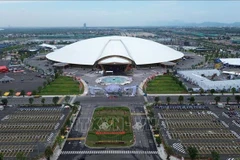
The Vietnam Exposition Centre (VEC) in Dong Anh district, Hanoi (Photo: VNA)

Spring flower fair to open in February

The fair will feature flowers, ornamental plants, bonsai, orchids, peach and apricot blossoms, kumquat trees, along with Tet decorations such as lanterns, folk paintings, ceramics, handicrafts and feng shui items.

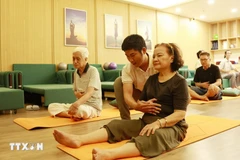
Elderly people take part in activities at a daytime care centre for senior citizens. (Photo: VNA)

Making breakthroughs via policies for older persons

The Politburo’s Resolution No. 72-NQ/TW on groundbreaking solutions to strengthen the protection, care and improvement of public health sets the target of raising average life expectancy to 75.5 years by 2030, with at least 68 years lived in good health.