Minister-level roundtable on AI governance held in Ninh Binh

Nearly 300 delegates representing government agencies, international organisations and leading enterprises convened in Ninh Binh province on October 27 for a ministerial roundtable on artificial intelligence (AI) governance.

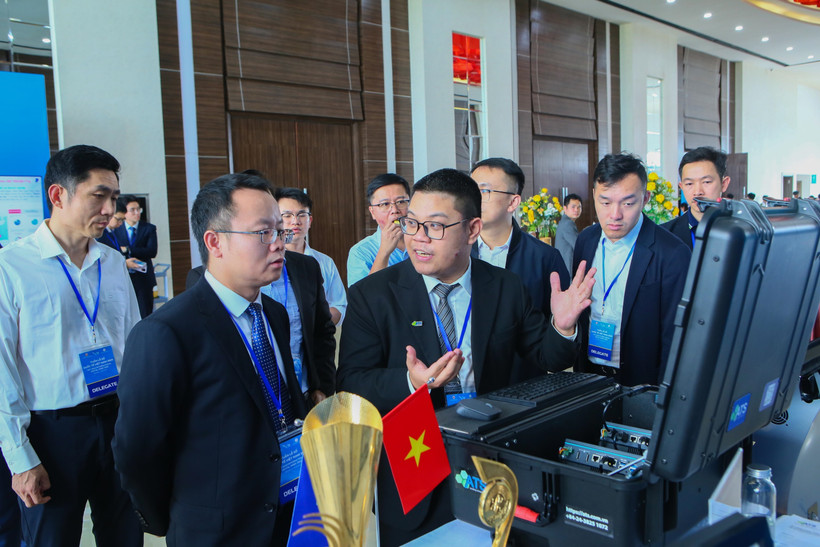
Delegates explore the exhibition space showcasing AI technological achievements. (Photo: VNA)

Ninh Binh (VNA) – Nearly 300 delegates representing government agencies, international organisations and leading enterprises convened in Ninh Binh province on October 27 for a ministerial roundtable on artificial intelligence (AI) governance.

The event, hosted by the Ministry of Science and Technology in coordination with the Ninh Binh provincial People’s Committee, formed part of activities within the framwork of the Vietnam International Digital Week 2025.

The roundtable served as a platform for participants to exchange perspectives, enhance cooperation, and strengthen partnerships between Vietnamese enterprises and global counterparts. Discussions centred on AI institutions, highlighting strategies, policies and legal frameworks to ensure AI development and governance are safe, transparent and responsible.

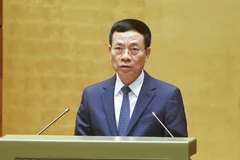
Minister of Science and Technology Nguyen Manh Hung emphasised that sustainable AI development must rest on four pillars, namely robust institutions, modern infrastructure, skilled human resources, and a strong AI culture. He noted that the event was not only a policy dialogue but also a forum for stakeholders to share experiences and initiatives in shaping regional and global AI institutions. Vietnam, he affirmed, remains committed to people-centred, open, safe, sovereign and inclusive AI development, while promoting international cooperation, knowledge sharing and open-source innovation.

Francine Inarukundo, Permanent Secretary of Burundi’s Ministry of Finance, Budget and Economic Planning, said her country is undergoing a comprehensive digital transformation, viewing telecommunications and ICT infrastructure as the backbone of economic and administrative progress. Despite challenges such as limited electricity access, high device costs and rural connectivity gaps,

Burundi continues to advance digitalisation through initiatives such as the PAFEN project and the Universal Service Fund. She highlighted the African Girls Can Code programme, implemented in collaboration with UN Women, as instrumental in promoting digital skills and gender equality by training girls in coding, emerging technologies and creative thinking.

Chairman of the Ninh Binh People’s Committee Pham Quang Ngoc said the province has been mobilising resources to implement the Politburo’s resolution on breakthroughs in science, technology and innovation. Ninh Binh has achieved strong foundational results, with fibre-optic coverage across all communes and rapid 5G deployment. Its digital government operates efficiently and transparently, meeting the needs of citizens and businesses alike.

He added that Ninh Binh is ready to adopt advanced technologies, including AI, to address local challenges, from smart heritage conservation and digital tourism to optimising transport, logistics and green agriculture. The province aims to become a centrally governed city by 2030, featuring modern industry, high-quality tourism, and sustainable urban development linked with its cultural heritage. Key priorities include promoting scientific and technological breakthroughs, developing high-quality human resources, and fostering an innovative, interconnected ecosystem to drive entrepreneurship and technology transfer.

The Vietnam International Digital Week 2025 (VIDW 2025), held from October 27–29 in Ninh Binh and Hanoi, highlights AI governance frameworks and responsible, transparent digital development.

The annual event gathers senior leaders from ASEAN and strategic partners such as the United States, the Republic of Korea and Australia, along with representatives from the United Nations, World Bank, UNESCO, European Union, ITU, APT, and leading global technology corporations.

VIDW 2025 also features outdoor technology showcases and exhibitions highlighting Vietnamese digital and AI innovations, providing opportunities for participants to experience new technologies and explore cooperation and investment prospects.

A series of forums and conferences will address six key areas, namely 5G, digital infrastructure, AI, digital transformation, digital workforce and digital enterprises, fostering stronger business linkages and new avenues for collaboration and investment./.

VNA

See more

Prof. Dr. Tran Hong Thai, President of the Vietnam Academy of Science and Technology (VAST), has a working session with leaders of Russia’s State Atomic Energy Corporation Rosatom. (Photo: VNA)

Vietnam, Russia develop quantum technology cooperation roadmap

Quantum technology is an emerging field undergoing rapid breakthroughs and requiring enormous investment resources. Learning from the experience of pioneering countries such as Russia will enable Vietnam to significantly shorten the time needed to build its workforce and develop endogenous capabilities.

Senior Vice-President of Latin America and Asia at Thales Group Guy Bonassi (L) at a meeting with Vietnamese Ambassador to France Trinh Duc Hai (Photo published by VNA)

Vietnam, France should expand cooperation in strategic fields: business leader

General Secretary of the Communist Party of Vietnam Central Committee and President To Lam’s visit to France, Guy Bonassi, Senior Vice-President of Latin America and Asia at Thales Group, said the upgrade of bilateral ties to a Comprehensive Strategic Partnership reflects their shared desire to deepen and broaden cooperation, with technological autonomy, resilience and human resources development assuming increasingly important roles.

The Vietnamese delegation led by Deputy Prime Minister Ho Quoc Dung visits the Korea Institute of Science and Technology (KIST). (Photo: VNA)

Vietnam, RoK promote strategic technological cooperation

Deputy Prime Minister Ho Quoc Dung proposed expanding joint research programmes, particularly in strategic areas where Vietnam has development needs, and KIST has strengths, including semiconductor integrated circuits, AI, batteries and energy storage, and biotechnology.

Digital transformation brings economic benefits closer to businesses

Digital transformation brings economic benefits closer to businesses

In addition to streamlining processes and reducing the time required to complete administrative procedures, digital models are creating more opportunities for businesses, household enterprises and small traders to access information, adopt new payment methods, connect with partners and expand their markets.

Images are collected and processed at a satellite image receiving station. (Photo: VNA)

Vietnam, France explore new space technology cooperation opportunities

Building on the effectiveness of VNREDSat-1, Vietnam and France are continuing to promote cooperation in the next phase, including a proposal for VNREDSat-2. The two sides have discussed technological options, resources and an implementation roadmap, with a view not only to developing a new-generation satellite but also to increasing Vietnam’s level of participation and technological capabilities.

Using AI to search and process legal information (Photo: VNA)

Legal profession reshaped in age of artificial intelligence

In Ho Chi Minh City, digital transformation in the legal profession is not simply about introducing more technology into professional practice. It must also create ways of working that ensure technology serves people, while lawyers retain control and responsibility for the quality of legal services. This is particularly important in a metropolis with a large-scale economy and diverse legal needs.

Vietnamese youths learn about AI application scenarios at the China-ASEAN AI Application Cooperation Centre in Guangxi. (Photo: VNA)

China’s Guangxi fosters AI cooperation with Vietnamese localities

During his visit to China and Guangxi in April, General Secretary of the Communist Party of Vietnam (CPV) Central Committee and President To Lam expressed a desire to further expand cooperation between Vietnam, particularly border localities, and Guangxi in areas including AI.

Hanoi Market Surveillance officers inspect products showing signs of violations of regulations on product labelling, advertising and intellectual property. (Photo published by VNA)

Positive progress recorded in tackling intellectual property rights infringements

To raise public and business awareness while improving the effectiveness of preventing and dealing with infringements, the Ministry of Science and Technology will continue working with other ministries, sectors and localities to strengthen intellectual property protection and enforcement on a regular, continuous and sustained basis, with no prohibited areas or exceptions.