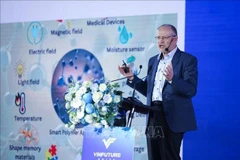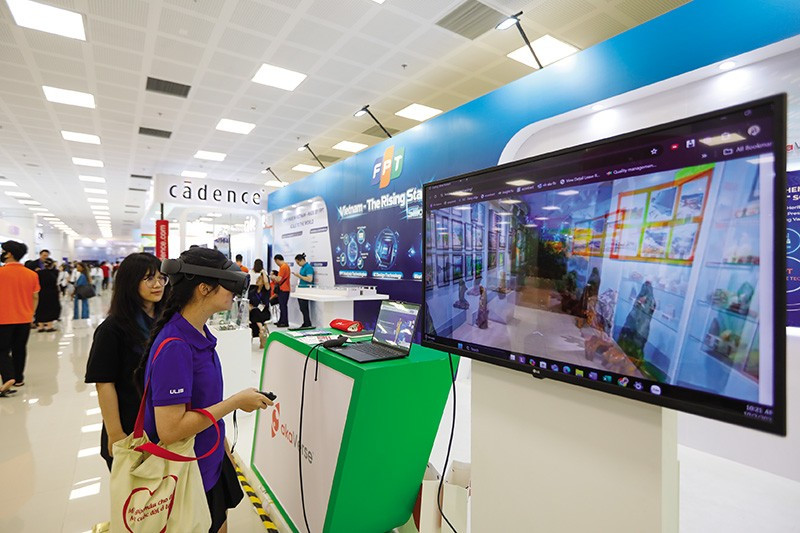
Hanoi (VNA) – As artificial intelligence (AI) is rapidly emerging as a key driver of the digital economy, to move beyond experimentation and deliver real value, experts held that Vietnam must establish a domestic AI market where businesses can develop, commercialise, and compete fairly.
Unlocking commercial value
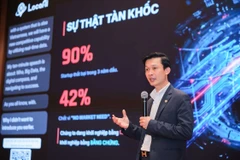
At the Vietnam AI Forum (AI360) 2025, experts described Vietnam as one of the region’s fastest-growing AI markets, projected to reach 1.52 billion USD by 2030, with annual growth of 20%.
In just one year, the share of AI-implementing businesses rose from 13% to 18%—nearly 170,000 companies. In 2024, five new enterprises adopted AI every hour, driving a 39% year-on-year increase in market growth—signalling a robust wave of investment into AI as a new engine for economic expansion.
The Vietnam AI Annual Report 2025 by the Information Technology Institute under the Vietnam National University, Hanoi, based on surveys of nearly 500 businesses and organisations, highlights AI’s potential to accelerate digital economic growth. Leading AI-supplying sectors include IT (31%), finance and banking (22%), education (17%), and health care and e-commerce (15%). Demand has been surging, particularly in education (23%), finance (26%), manufacturing (21%), transport (15%), and health care (16%).
CEO of FPT Nguyen Van Khoa noted that while 2023 was the “Year of Proof of Concepts”, 2025 marks the shift to “The Year of Business Value”. Generative AI and autonomous AI agents are completely transforming how businesses operate. AI is becoming as foundational as electricity or the Internet. For Vietnam, this is not only a trend but a golden opportunity to accelerate development.
Vietnam is among leading Southeast Asian countries in AI adoption, but to convert potential into measurable returns, it must close the gap between cutting-edge technology innovation and large-scale application with clear return on investment, said Khoa, adding that the focus now must be on transitioning from experimentation to value creation.
AI-related investment is accelerating. Funding for dometic AI firms rose from 10 million USD in 2023 to 80 million USD in 2024 – an eightfold increase. The Ministry of Science and Technology is revising the National AI Strategy to 2030 and preparing a draft AI law to ensure safe, transparent, and responsible AI development.
To foster AI growth, the Government will increase public spending while the National Technology Innovation Fund (NATIF) allocates substantial support for AI adoption. A new procurement framework will prioritise domestic digital solutions.
It is necessary to turn the domestic market into a launch pad for AI businesses of Vietnam to stretch their reach to the region and the world, stressed Director of the ministry's Department of Information Technology Industry Nguyen Khac Lich.
In countries such as the Republic of Korea, Singapore, and the UAE, governments catalyse R&D and market creation by commissioning AI solutions.
Huynh Quang Liem, CEO of the Vietnam Posts and Telecommunications Group (VNPT), proposed the Government allow enterprises to engage in major AI-driven projects such as operating national GPU infrastructure, developing Vietnamese large language models (LLMs), and building AI platforms supporting public administration.
Forbes forecasts the global AI services market will reach 243 billion USD in 2025, and 826.7 billion USD by 2030, growing 28% annually.
Vietnam's national GPU infrastructure – built through a state-invested and enterprise-operated model – will provide the computational capacity needed for AI development, a model already in use by advanced economies. A Vietnamese LLM would serve as a core foundation for competitive AI applications tailored to local language and culture.
Meanwhile, VNPT has successfully piloted an AI-powered administrative support system in Ho Chi Minh City’s Digital Transformation Centre, which is now being scaled nationwide.
Turning strategy into action
Nguyen Trung Chinh, Chairman of CMC Corporation, called for clear policies, contracts, and mechanisms to enable businesses to mobilise resources and make plans effectively. He also recommended expanding R&D commissioning to stimulate open innovation ecosystems and investment in core technologies.
Kubo Yoshitomo, Deputy Chief Representative of JICA Vietnam, endorsed Vietnam’s strategy to enter the global digital economy through AI. However, he stressed the need for more practical support, including financing for startups and young AI research teams, technology infrastructure investment, open data development, and market access facilitation.
At the first Government Party Congress, Minister of Science and Technology Nguyen Manh Hung announced the State will allocate 3–4% of the national budget over five years to science – technology, innovation, and digital transformation, amining to attract 10–15 billion USD in total investment and contributing at least 5% of GDP.
Hung emphasised a shift in the science and technology sector—from control to enablement, from administrative control to market-making, and from funding allocation to resource mobilisation. Policy will focus on impactful research, effective commercialisation, and investment prioritisation for the activities.
The ministry also proposed three key policy groups – supporting the commercialisation of applied research via public procurement and sci-tech funds, providing innovation vouchers for tech upgrades and new product trials, and assigning enterprises to develop national shared digital platforms, Hung said./.
See more
Ward- and commune-level comprehensive digital transformation ecosystem launched
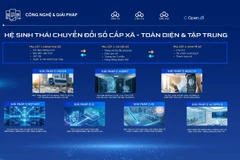
The ecosystem aims to build unified operational capacity at the grassroots level, reduce information delays and improve public service quality. It is structured around three key pillars.
Resolution No. 57: Digital transformation largely benefits people, businesses
The Law on Digital Transformation lays an important legal basis for implementing the Politburo’s Resolution No. 57-NQ/TW on breakthroughs in science – technology development, innovation, and national digital transformation.
AI hackathon connects Vietnamese tech engineers in Japan
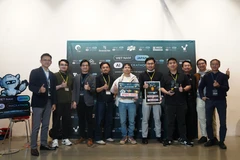
A total of 32 teams registered for Vietnam–Japan AI Hackathon 2025 and competed through three rounds, with the eight strongest advancing to the final held on December 13.
Vietnam to become attractive destination for tech talent, innovative startups: PM
TechFest Vietnam 2025, held from December 12 to 14, is expected to attract more than 60,000 participants both in person and online, with the participation of over 20 corporations, 50 investment funds, more than 100 supporting organisations and incubators, and delegates from Southeast Asia, Northeast Asia, Central Asia, the Middle East, North America, and Europe.
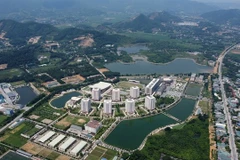
Hanoi eyes turning Hoa Lac into Vietnam’s Silicon Valley
The ambition reflects the city’s vision to nurture world-class research, high-tech manufacturing and a thriving startup ecosystem capable of powering long-term growth.
Vietnam emerges as attractive destination for technology capital in Southeast Asia
The report notes that after more than a decade of development, Vietnam’s startup ecosystem has entered a phase of deeper growth and stronger international integration. The country is now home to more than 4,000 startups, two unicorns, and dozens of companies approaching unicorn status.
Vietnam, Japan enhance cooperation in intellectual property protection
Tran Huu Linh, Director of the Agency for Domestic Market Surveillance and Development, said IP infringements have recently become more sophisticated, particularly in fast-moving consumer goods, fashion, cosmetics and electronic components.
Applying the Internet of Things in smart transport
The project aims to build a unified, safe and efficient IoT platform to support the management, operation and exploitation of smart transport systems under the Ministry of Construction, with data shared across ministries and localities.
Viettel secures three prestigious international awards
Viettel has won honours in the “People & Culture” and “Best Operator in a Growth Market” categories at the 2025 World Communication Awards (WCA), alongside the “Best Digital Transformation Project” at the 2025 Global Telecoms Awards (Glotel).
Green-tech push for Can Gio
Vietnam has the capacity, ambition and technological foundation to join the group of leading sustainable coastal urban nations in the coming decade, experts said at a dialogue on "advancing to the sea with ESG++ megacities: breakthroughs through green technology", held on December 9 in Hanoi by the Vietnam Institute for Real Estate Studies (VIRES).
Vietnam turns intellectual property into bankable assets in new law
About AI-generated content, the law draws a clear line: purely autonomous AI creations are not eligible for copyright or patent protection. Those who provide substantial creative input, such as ideas, curation, editing, or selection, qualify as authors or inventors.
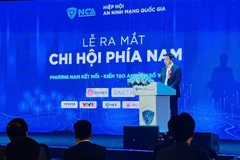
National Cybersecurity Association opens branch in HCM City
The southern branch aims to become a coordinating body for cybersecurity tasks, workforce development, awareness-raising and the strengthening of digital defence capabilities across the region, contributing to the safe and sustainable growth of Vietnam’s digital economy.
Viettel exceeds target of 20,000 new 5G stations by more than three weeks
Viettel plans to continue scaling up its network from now until the end of 2025, with an additional 23,500 stations scheduled for installation, nearly quadruple the number rolled out in 2024. Once completed, Viettel will operate Vietnam’s largest 5G network, with 30,000 stations covering 90% of outdoor areas and 70% of indoor spaces nationwide, from major cities to rural regions.
Vietnam Academy of Social Sciences affirms role in Asia's research community
The VASS delegation joined the plenary session and seven specialised discussions of the the 26th Biennial Conference of the Association of Asian Social Science Research Councils (AASSREC), focusing on social science research in the Indo-Pacific for a sustainable future.
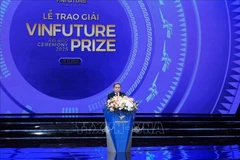
VinFuture 2025 Grand Prize honours scientists for discoveries, development of HPV vaccines
The 2025 VinFuture Grand Prize valued at 3 million USD has been awarded to four scientists for their discoveries and development of HPV vaccines for prevention of tumors caused by human papillomaviruses.
Vietnam emerges as new hub for data centres
Data centres have surged to become the second most preferred alternative asset class in the region. Vietnam is no exception to this trend as the demand for infrastructure supporting AI, cloud computing, and digital services has risen at an unprecedented level.
VinFuture Prize helps consolidate trust in power of science, technology: NA Chairman
VinFuture Prize has not only honoured outstanding scientific achievements but also created valuable dialogues and forums connecting scientists, businesses, and policymakers. These exchanges have sparked new ideas, fresh approaches, and innovative cooperation models that continue to spread widely.
Vietnam has advantages to develop versatile humanoid robots: experts
At the symposium, international and Vietnamese experts also discussed the latest trends in robotics, from socially interactive humanoids and collaborative service robots to medical and rehabilitation systems, and examined major challenges surrounding AI safety and ethics to ensure that robotics evolves in a responsible, human-centred and sustainable manner.
Ho Chi Minh City hosts Asia’s top statistical computing conference
The three-day gathering, one of Vietnam’s flagship international academic events in 2025, is seen as a landmark for the country’s growing data science ecosystem as it is pushing digital transformation, innovation in AI, and data-driven policymaking.
Breakthrough under Resolution 57: Vietnam to finalise licensing for satellite-based Internet trials
Two foreign technology giants - SpaceX’s Starlink and Amazon’s Kuiper- have formally sought approval to pilot LEO satellite-based Internet services in Vietnam.