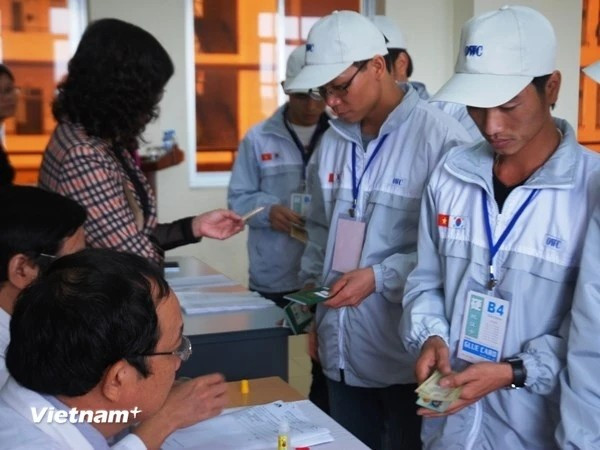
The Department of Overseas Labour Management (Ministry of Home Affairs) has just announced RoK’s new policy, which includes provisions that will open up better job opportunities for Vietnamese workers in the country.
E9 and E10 visa holders may stay long-term in RoK
According to the Department of Overseas Labour Management, the Ministry of Justice of the RoK has recently introduced the 2025 Region specific visa pilot project to attract foreign workers to areas with declining populations. This initiative will be rolled out this year and run through 2026. It mainly involves expanding the scope of eligible regions and easing the requirements for obtaining this type of visa.
The new policy will expand the number of applicable regions from 89 to 107, adding 18 more areas identified as at risk of population decline (see full list here). Local governments will also be allowed to actively design their own policies to attract foreign nationals, tailored to their specific regional needs.
In addition, the plan now includes workers eligible for the E7-4R regional skilled labour visa. This applies to foreign workers currently holding general labour visas like E9 (EPS workers in sectors such as manufacturing, construction, agriculture, and fisheries) and E10 (maritime workers, primarily in fishing and marine-related jobs).
Previously, E9 and E10 visa holders were not eligible to convert to the E7-4R visa. This is a new opportunity for such workers to transition into skilled labour, providing favourable conditions for long-term settlement in depopulated areas.
To convert to the E7-4R visa, foreign workers must have resided in RoK for at least two years under an E9 or E10 visa and must meet the requirements of the K-Point skilled worker evaluation system. These include salary level, contract duration, Korean language proficiency or completion of a social integration course, and age.
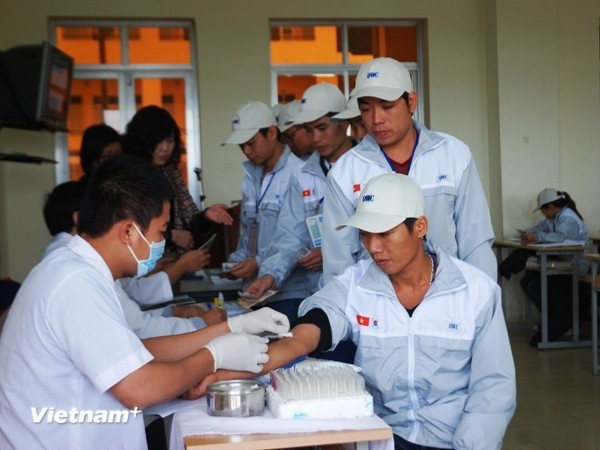
Those holding an E7-4R visa and residing in depopulated areas for at least three years may become eligible to upgrade to the F2-R regional exceptional skilled worker visa. This visa permits long-term residence and employment in RoK, supports transition to permanent residency under the F5 visa, and allows family reunification (sponsoring parents, spouses, and children to join them).
Family members of E7-4R visa holders will also be permitted to work in unskilled jobs in depopulated areas -similar to the rights granted to family members of F2-R visa holders.
According to the Department of Overseas Labour Management, the plan also revises the F2-R visa language requirement, increasing the minimum Korean proficiency from TOPIK Level 3 to Level 4.
F2-R visa holders will be free to seek and change jobs across any company within depopulated areas. The cap on foreign workers in these companies will be raised from 20% to 50% of the total domestic workforce enrolled in employment insurance.
With these new regulations, Vietnamese workers - especially general workers under the EPS program (E9) and maritime workers (E10) - will have greater opportunities when working in RoK. This includes chances to upgrade their skills, improve their income, and build a stable, long-term life in the country. This is seen as a major opportunity for Vietnamese workers to access a professional working environment, enjoy better benefits, and bring family members to live with them in RoK.
Increased quota for Vietnamese workers
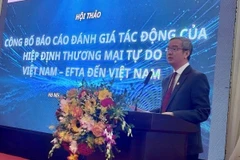
Deputy Director of the Department of Overseas Labour Management (Ministry of Home Affairs) Pham Viet Huong stated that the RoK will continue to accept various categories of Vietnamese workers this year, including those under the EPS (E9), coastal fishing crew (E10), technical labour (E7), and seasonal workers (C-4 and E8).
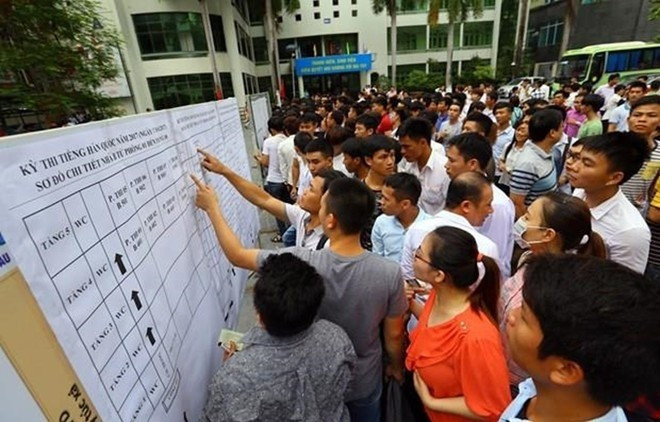
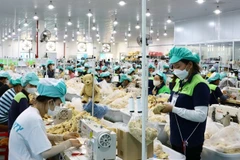
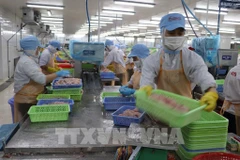
In 2025, the RoK has announced a labour quota of 8,400 for Vietnamese workers under the E9 visa. These workers mainly engage in the following sectors: manufacturing (assembly, measurement, and welding); construction (infrastructure development); agriculture (animal husbandry and crop production); and fisheries (aquaculture and seafood harvesting).
Regarding job opportunities for Vietnamese workers in the RoK, Mr. Pham Viet Huong noted that the country has recently broadened its foreign labour policies - expanding quotas and widening the range of sectors covered under the EPS (E9) programme. This includes adding shipbuilding and services; technical labour in shipbuilding (E7); seasonal workers (E8); and is also reviewing labour demand in service industries and power transmission.
Those interested in working in the RoK under the EPS can apply via local Departments of Home Affairs, provincial Employment Service Centres, or the website of the Centre for Overseas Labour.
For positions in shipbuilding and service industries (E9), technical jobs (E7), and coastal fishing (E10), several licensed recruitment agencies are publicly listed on the Department’s website. Workers can also contact the Department or their local offices directly for details and to avoid fraud./.