Net-zero commitment: Vietnam accelerates carbon pricing, green market development

As part of its drive to fulfil its net zero emissions commitment by 2050, Vietnam is fast-tracking the development of a legal corridor to launch a pilot carbon market by the end of 2025, according to the Department of Climate Change.

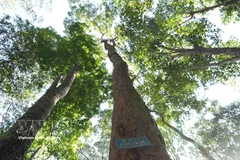
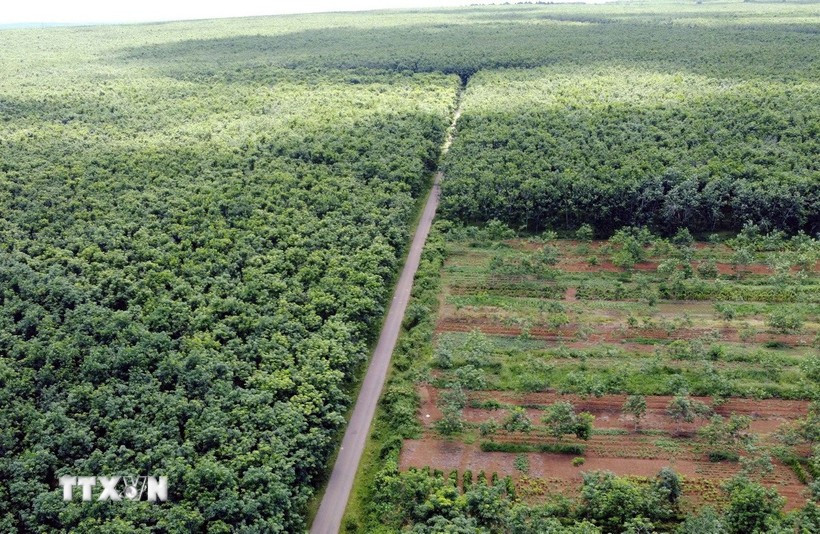
Forest and ecosystem development helps enhance carbon absorption. (Illustrative photo – Source: VNA)

Hanoi (VNA) – Experts from the Ministry of Agriculture and Environment have stressed that Vietnam will require substantial financial resources to meet its net zero targets. Green finance tools will therefore play a critical role, not only to secure funding for emissions reduction but also to create economic opportunities for businesses, organisations, and individuals.

Among these tools, carbon pricing and the establishment of a domestic carbon market are expected to serve as vital levers for Vietnam’s green transition in the years ahead.

Five groups of key solutions

Nguyen Tuan Quang, Deputy Director of the Department of Climate Change under the Ministry of Agriculture and Environment, warned that climate change will continue to have severe consequences unless timely and decisive action is taken.

Following Vietnam’s commitment to net zero emissions by 2050, made at the UN Climate Change Conference in Glasgow (COP26), Prime Minister Pham Minh Chinh issued an implementation plan that outlines five key solution groups.

First, energy transition remains the core solution. It involves scaling up clean and renewable energy while reducing reliance on fossil fuels. Quang acknowledged the challenge of renewable energy’s intermittency and stressed the need to invest in energy storage systems to ensure stable operation.

The second group of solutions focuses on efficient energy use, coupled with the promotion of green and circular economy models.

The third covers carbon absorption through the development of forests and ecosystems, particularly marine and coastal ones.

The fourth involves carbon capture and storage, Quang noted, elaborating that Vietnam can repurpose depleted coal and gas fields for underground carbon storage. Though currently costly, it is expected to become more viable as technology advances.

Last but not least, the solution of carbon pricing and carbon market development is listed. He said over 80 countries have so far implemented the carbon pricing mechanism, primarily through carbon taxes and emissions trading systems.

Racing to launch pilot operations of carbon market

Vietnam’s roadmap for carbon market development is already in motion. On January 24, 2025, the Prime Minister approved a master plan for the establishment of a carbon market. The pilot phase of this market is slated for 2025 – 2028, while the full-scale implementation and integration with international carbon markets is scheduled for 2029 onwards.

Ministries and sectors are currently working at pace to finalise the legal framework needed to begin trial operations by late 2025.

In terms of the legal basis, Quang said the Government issued Decree No. 06, dated January 7, 2022, on greenhouse gas emission mitigation and ozone layer protection, as well as Decree No. 119/2025/ND-CP, dated June 9, 2025, to amended certain provisions of Decree No. 06.

He added that the Ministry of Finance has already submitted a draft decree on a carbon trading platform to the Prime Minister for review. Meanwhile, the Ministry of Agriculture and Environment is drafting a decree governing the international exchange of the results of emission reductions and carbon credits.

Nguyen Dinh Tho, Deputy Director of the Institute of Strategy and Policy on Agriculture and Environment, stressed that Vietnam is well-positioned to build a robust carbon market, with key strengths including extensive forest coverage, rapid growth in renewable energy projects, and the potential of high emission reduction in agriculture and waste management.

Betty Pallard, CEO of ESG Climate Consulting, echoed this view. With the country’s strong agricultural base, she predicted carbon credits could become Vietnam’s game to lead. She also noted that Vietnamese people’s high aptitude for mathematics will enable them to master carbon accounting tools, Pallard opined./.

VNA

See more

Official heritage plaque i sinstalled on the 12 recognised Shan Tuyet tea trees in Dong Phuc commune. (Photo: VNA)

Thai Nguyen: 12 ancient Shan Tuyet tea trees win national heritage status

The recognition honours the biological, cultural and historical values of these centuries-old Shan Tuyet tea trees – natural treasures deeply woven into the livelihoods, traditions and identity of local ethnic communities. The title affirms the community’s commitment to preserving and promoting the value of this iconic local tea variety.

Sarus cranes at Tram Chim National Park (Photo: VNA)

Return of sarus cranes: Hope takes wing in Dong Thap wetland

Beneath the wide Mekong Delta sky, Tram Chim National Park is racing against time, pouring heart and science into a decade-long (2022–2032) plan to rescue the Eastern sarus crane – an elegant, scarlet-headed bird listed as endangered on the International Union for the Conservation of Nature (IUCN) Red List and a living emblem of both the park and all of Dong Thap province

French Ambassador Olivier Brochet speaks at the press conference in Hanoi on December 11 to mark the 10th anniversary of the Paris Agreement on climate change and highlighting the COP30 outcomes. (Photo: VNA)

International community ready to support Vietnam in energy transition, climate response

In a video message to the press conference, UN Resident Coordinator in Vietnam Pauline Tamesis said the UN is ready to support Vietnam in building a pipeline of projects capable of absorbing financing mobilised under the Political Declaration on establishing the Just Energy Transition Partnership (JETP), as well as from global climate finance sources, including the Green Climate Fund and the Loss and Damage Fund.

Forest rangers in Son La province apply technological devices and software to forest management, monitoring, and protection. (Photo: nhandan.vn)

Digital technology application enhances forest management, protection

With a total forest area of over 14 million hectares, including more than 10 million hectares of natural forests, forests exist in all 34 provinces and cities across the country. Given the large area and limited workforce, applying digital solutions in forest management and protection has become a top priority for the forestry sector.

Sunda pangolins (Manis javanica), also known as the Javan pangolin, are listed in Group IB – critically endangered and strictly protected from all commercial exploitation (Photo: VNA)

Quang Ngai releases rare pangolin back into nature

Initial verification showed that the animal weighed 3.7kg and measured over 60cm. It was identified as a Sunda pangolin (Manis javanica), also known as the Javan pangolin, listed in Group IB – critically endangered and strictly protected from all commercial exploitation.

Residents of Tuyen Quang province take part in the One Billion Trees Programme. (Photo: VNA)

Tree-planting programme exceeds one-billion-tree goal

The total comprises 573.9 million scattered trees and 865.2 million trees grown in concentrated plantations, equivalent to 429,125 hectares of forest. Provinces posting the strongest results include Phu Tho with 177.9 million trees, Lao Cai with 108.8 million, and An Giang with 98.5 million.

Construction activity is one of the causes of air pollution in Hanoi. (Photo: VNA)

Hanoi takes urgent measures to curb air pollution

The city requires the enhanced application of advanced technologies and remote monitoring systems, including satellite remote sensing, drones, and AI-integrated traffic cameras, to monitor, detect, and strictly address the illegal burning of garbage, straw, and agricultural by-products.