Hanoi (VNA) - On World Humanitarian Day, Pio Smith, UNFPA Regional Director for Asia and the Pacific, warns that global funding cuts and escalating attacks on healthcare are colliding at the worst possible time for the world’s most disaster-prone region. Urgent investment, local solutions, and protection of health services are critical to support those most at risk – women, girls, and frontline responders.
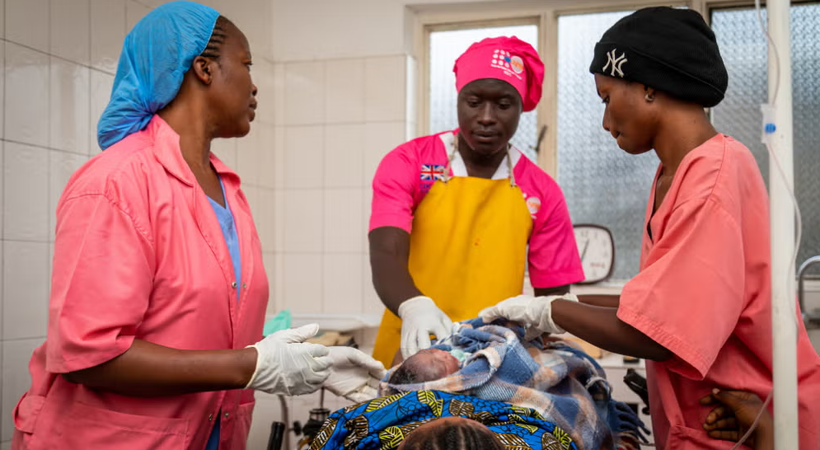
From flood-hit villages in Nepal to conflict-affected areas in Myanmar, midwives, doctors and community responders save lives. These humanitarians are the first to arrive and the last to leave when crisis strikes. They work in conflict zones, climate disaster areas and displacement camps, often with scarce resources and under constant threat of violence.
In Myanmar alone, millions of women and girls remain displaced, both within the country and in neighbouring states. This year marks eight years since the tragic mass exodus of the Rohingya from Myanmar to Cox’s Bazar, Bangladesh, now the world’s largest refugee settlement, where humanitarians continue working tirelessly to protect their rights and dignity.
 |
Six months since the devastating global funding cuts to UNFPA, we are seeing the far-reaching impact on the lives of those we serve: maternal health clinics have closed, mobile health teams have been suspended, and delivery of essential reproductive health supplies is delayed, leaving millions without critical services that for some, mean the difference between life and death.
At the same time, attacks on healthcare are rising. Last year was the deadliest on record for aid workers – the vast majority of those killed were national staff. Globally, more than 1,600 attacks on health care workers were recorded, including in Iran, Myanmar and Pakistan, killing over 900 patients and health workers and injuring hundreds more. This is not just a human tragedy. It is a violation of international humanitarian law. Attacks on health facilities, workers, and patients are prohibited, yet impunity persists. Leaders must act: protect healthcare as a core humanitarian principle, integrate it in national legislation and military rules of engagement and hold perpetrators accountable.
When healthcare services are targeted or disrupted, women and girls suffer the most. Pregnant women are left without access to lifesaving obstetric care, turning childbirth into a life-threatening emergency. Survivors of gender-based violence lose access to emergency contraception, post-rape treatment, psychosocial support and referral services. In many conflicts, sexual violence is weaponized, compounding the trauma and risks women and girls face. Women’s health and protection facilities have become battlegrounds, with deadly consequences.
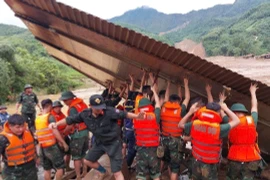
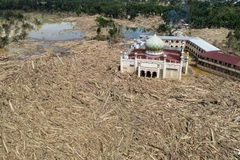
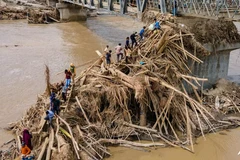
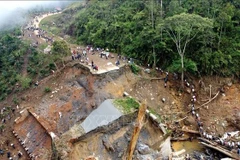
Each year, millions are displaced in Asia and the Pacific by floods, earthquakes, and conflict. Climate change is also intensifying both the frequency and severity of emergencies. Entire communities are uprooted, homes destroyed, and women and girls bear the greatest brunt. We are seeing a silent crisis of mental health, trauma, and a loss of dignity.
In a flood-hit rural province of Lao PDR, I met Soudaly, a midwife who had waded through waist-deep water to reach a temporary shelter for displaced families. She carried a backpack of clean delivery kits, knowing at least three pregnant women were due within days. “If we wait for the water to recede,” she told me, “it will be too late for some mothers.” Her determination reflects the quiet heroism of thousands of local responders who act first and fastest when disaster strikes.
UNFPA is proud to stand with local health workers, volunteers and community responders. In 2024, we supported 46 emergencies in 16 countries in Asia and the Pacific, reaching millions of women and girls. UNFPA partners with national and women-led organisations to strengthen locally led, inclusive responses and shift the power to those who understand its realities best. But localisation without resourcing is an empty promise. Predictable, multi-year funding is essential to build resilient health systems, support midwives and other frontline workers, pre-position life-saving supplies, and protect health workers from harm. It is the smartest investment in stability, dignity and the prevention of future crises.
The scale of today’s emergencies demands a new paradigm of humanitarian action that protects health workers and facilities, upholds international humanitarian law and invests in local solutions. Attacks on healthcare must stop. Governments and donors must provide the resources needed to meet rising needs. We must speak up, and loudly do so, when the very fabric of humanitarian principles – the innocent civilians and frontline workers – is under attack.
On this World Humanitarian Day, let us stand with the midwife wading through floodwaters to reach expectant mothers, the health worker delivering care amid conflict, and the youth volunteer delivering supplies to remote communities. Let us match the courage of Soudaly and all those on the frontlines of humanitarian crises with the political will, protection and sustained funding they need to save lives./.