Philippines bans cattle imports from France, Italy

The import restriction will remain in effect until further notice, depending on developments in disease prevention and control efforts in affected countries, according to the Philippine Department of Agriculture.

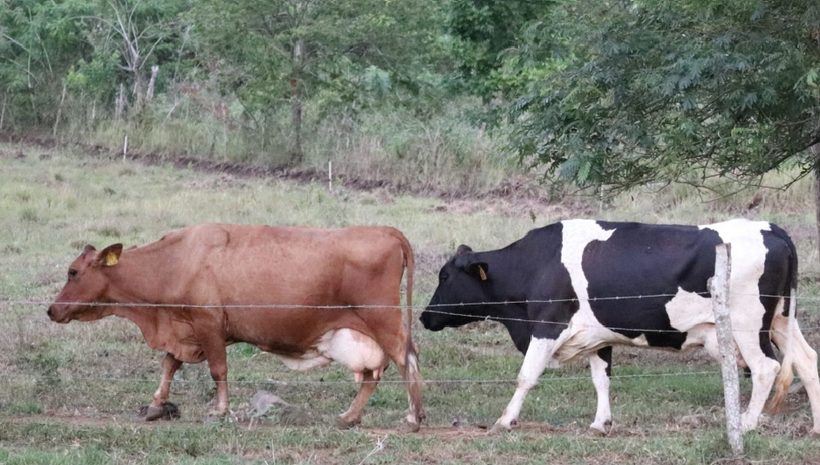
Illustrative photo (Photo: da.gov.ph)

Hanoi (VNA) – The Philippines has imposed a temporary ban on the importation of live cattle and buffalo and their by-products from France and Italy to prevent the entry of the lumpy skin disease (LSD) virus into the country, its Department of Agriculture (DA) announced on August 11.

The DA said that the ban is necessary to protect the Philippines' cattle and water buffalo populations. The restrictions cover live bovines and water buffaloes, including semen and embryos.

However, skeletal muscle meat, casings, gelatin and collagen, tallow, hooves, and horns are considered “safe commodities“ and, therefore, excluded from the temporary ban, but subject to the country's import terms and conditions.

Certain products are allowed, but also with conditions. For example, milk and milk products should have attestation in their international veterinary certificates confirming it has undergone pasteurisation or a similar process.

According to the DA, the import restriction will remain in effect until further notice, depending on developments in disease prevention and control efforts in affected countries.

The ban followed official confirmation of LSD outbreaks from the respective chief veterinary officers and delegates of Italy and France to the World Organisation for Animal Health (WOAH).

On June 23, French authorities reported an LSD outbreak. Italian officials reported a similar outbreak on July 18./.


VNA

See more

Malaysia busts massive drug syndicate

Malaysia busts massive drug syndicate

An international drug syndicate was busted after Malaysian police seized over 18 tonnes of drugs worth nearly 375 million USD in one of the country’s biggest drug busts on record.

Indonesia will not import rice for either consumption or industrial use next year. (Photo: tempo.co)

Indonesia to stop rice imports next year

Indonesia's rice production in 2025 is projected to reach 34.77 million tonnes, up 13.54% year on year, driven by favourable weather and farmer support policies under President Prabowo Subianto’s administration.

Distinctive festivals across Indonesia attract international visitors. (Photo published by VNA)

Indonesia identifies 15 priority tourism markets for 2025–2026

According to data compiled by the Ministry of Tourism, the number of tourists from Malaysia reached 2.18 million in the January-October 2025 period, showing a growth of 15.91% compared to last year. Meanwhile, the number of visitors from Singapore totaled 1.19 million this year, growing by 7.66% from 2024.

The 8th Cooperative Plan Meeting between the Ministry of Commerce of Thailand and the Ministry of Industry and Commerce of Lao PDR, December 17, Bangkok, Thailand (Photo: nationalthailan.com)

Thailand, Laos aim to boost bilateral trade

Laos is Thailand’s 7th largest trading partner in ASEAN and 18th globally. From January to October 2025, two-way trade grew by 18.65% to 8.18 billion USD, with Thai exports increasing by 16.90% to 4.81 billion USD and imports rising by 21.23% to 3.60 billion USD.

File photo of Visa and Mastercard credit cards. (Photo: AP)

Unpaid credit card balances in Singapore hit record high in 10 years

Experts attributed the worrying trend to factors like people not spending within their means, consumer culture emphasising prestige items, and easier access to credit like “buy now, pay later” services. Analysts said this can be a hint of growing financial pressures faced by Singaporeans amid rising prices.

Malaysian Deputy Prime Minister Datuk Seri Fadillah Yusof (Photo: Bernama)

Malaysia accelerates clean energy transition

Delivering a speech at the Clean Energy Transition Asia (CETA) Summit 2025 in Kuala Lumpur, Fadillah, who is also the energy transition and water transformation minister, said that the Southeast Asian region now drives more than half of the global energy demand.