Plans to raise per capita GDP to 8,500 USD by 2030

The target is set under Resolution No. 306/NQ-CP recently issued by the Government on adjustments to the national master plan for the 2021–2030 period with a vision towards 2050.

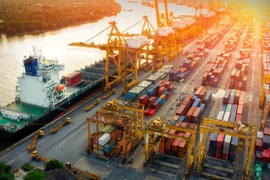
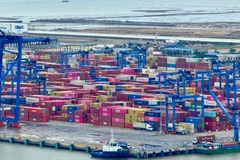
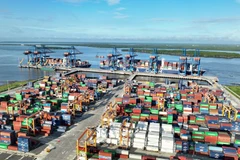
A view of Tien Sa port in Da Nang city. (Photo: VNA)

Hanoi (VNS/VNA) - The Government has set national development goals for the decade ahead, aiming to raise per capita GDP to around 8,500 USD by 2030.

The target is set under Resolution No. 306/NQ-CP recently issued by the Government on adjustments to the national master plan for the 2021-2030 period, with a vision towards 2050.

Under the plan, the services sector is expected to account for over 50% of GDP, industry and construction for more than 40%, while agriculture, forestry and fisheries for under 10%.

Average annual labour productivity growth is targeted at about 7% for 2021-30, rising to over 8.5% between 2026 and 2030.

Total factor productivity (TFP) is projected to contribute more than 55% to overall growth.

The resolution calls for the rapid development of digital and data infrastructure to underpin national digital transformation, build a digital government, digital economy and digital society, with the digital economy expected to account for around 30% of GDP.

Social targets

By 2030, Vietnam aims to maintain a replacement-level fertility rate of 2.1 children per woman and a population of about 105 million.

The Human Development Index (HDI) is expected to reach 0.78 and average life expectancy around 75.5 years.

The proportion of agricultural labour will fall below 20% of the workforce, while job quality and employment stability are to be improved.

Education is to reach an advanced regional standard, with Vietnam striving to be among the top 10 Asian countries for higher education systems.

At least eight universities are expected to rank among Asia’s top 200, and at least one institution among the world’s top 100 in specific disciplines, according to reputable international rankings.

Healthcare services are to be upgraded to regional advanced standards, with a comprehensive national healthcare network ensuring equitable, high-quality and efficient services.

The plan also stresses building a vibrant cultural environment, preserving and promoting national identity, and developing cultural industries.

Every province and centrally governed city is to have at least three key cultural institutions of a cultural or cultural-arts centre, a museum and a library.

National growth hubs

The resolution sets out a framework for socio-economic spatial development, including regional planning, inter-regional linkages, and the creation of national growth poles and economic corridors.

The northern growth region will centre on Hanoi and areas along Ring Roads 4 and 5, National Highways 5 and 18, and expressways CT01, CT04, CT05, CT07 and CT09, encompassing localities of Hai Phong, Bac Ninh, Thai Nguyen, Phu Tho, Ninh Binh, Hung Yen and Quang Ninh.

Hanoi will serve as the growth pole.

The northern growth region will lead the way in high-quality human resources, science and technology, innovation, and the digital economy as well as functioning as the national centre for economy, culture, education, healthcare and innovation.

The southern growth region will encompass areas along National Highways 22, 13, 1 and 51, the western North-South Expressway and Ring Road 4, running through Ho Chi Minh City, Dong Nai province and Tây Ninh province.

HCM City will act as the growth pole.

The southern growth region will steer the region and the nation in economy, finance, trade, services, healthcare, education and technology.

The Government plans to develop a regional innovation ecosystem, promote digital transformation, and establish an international financial centre in HCM City to position Vietnam within the global financial network.

The central growth region will include coastal areas of localities of Thua Thien–Hue, Da Nang, Quang Ngai and Gia Lai, with Da Nang as the growth pole.

The focus will be on developing coastal urban centres, marine tourism hubs, petrochemical and energy industries, automotive manufacturing and supporting industries, and expanding seaports, airports and logistics services.

The Mekong Delta growth region will revolve around Can Tho city and the provinces of An Giang, Vinh Long and Dong Thap, connected by key expressways such as Can Tho - Vinh Long, An Huu - Cao Lanh, Cao Lanh-Rach Soi, and Chau Doc - Can Tho - Soc Trang, Ha Tien - Rach Gia - Bac Lieu as well as Phu Quoc Special Zone.

Can Tho will serve as the growth pole.

The region aims to become a hub for services, tourism, logistics and agro-industry, and a national centre for agricultural science, technology and innovation.

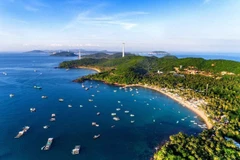
Phu Quoc Island is to be developed into an international eco-tourism and services centre, linking Vietnam with major regional and global economic hubs.

The North-Central growth region will cover areas along the eastern North-South Expressway, National Highway 1 and the coastal route, connected with major urban and coastal economic zones of Thanh Hoa, Nghe An and Ha Tinh.

The region will become a national centre for petrochemical refining, metallurgy, mechanical engineering and automobile manufacturing, while also fostering emerging industries such as electronics, semiconductors, artificial intelligence and digital technology to drive regional socio-economic development.

The Government will also gradually establish growth areas in the south central coast and Central Highlands regions, focusing on Khanh Hoa, Lam Dong and neighbouring provinces./.

VNA
See more

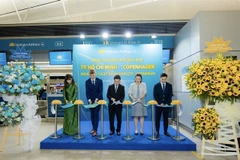
A dancing performance at the opening ceremony of the 2025 K–Vietnam Pop-up Festa in Dalat on November 8 (Photo: VNA)

K-Market Vietnam 2025 held in Lam Dong

The event features a series of cultural and trade exchange activities between Vietnam and the Republic of Korea (RoK), with more than 100 Lam Dong and Korean enterprises showcasing typical products from both sides.

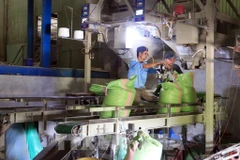
Workers handle the preliminary processing of sea grapes before production. (Photo: VNA)

Company brings Vietnamese sea grapes to the world

The Tri Tin Seaweed Company, founded by Le Ben, has pioneered a new path for the province’s aquaculture sector by establishing a fully integrated production chain, applying high-tech processes, and adhering strictly to international standards.

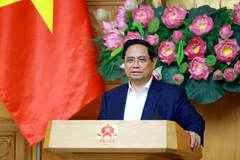
Prime Minister Pham Minh Chinh addresses the 21st meeting of the State steering committee for national key projects in the transport sector. (Photo: VNA)

Entire Cao Bang - Ca Mau expressway must be inaugurated on December 19: PM

PM Chinh, who is head of the steering committee, asked all parties involved to strive hard to achieve the goal of putting 3,000 kilometres of expressways and approximately 1,700 kilometres of coastal roads into operation in 2025, thus creating momentum to welcome the 14th National Party Congress and meeting the travel needs of the people during New Year 2026 and the Lunar New Year Festival.

Prime Minister Pham Minh Chinh (C) presides over the 21st meeting of the State steering committee for national key projects in the transport sector. (Photo: VNA)

Government leader presides over meeting on national key transport projects

Noting that there are less than two months left until December 19 - the date set for the simultaneous ground-breaking and inauguration ceremonies of major projects, the PM emphasised that this is a crucial period to accelerate progress and make breakthroughs in the implementation of key projects and works.

Harvesting cage-farmed tilapia (Photo: VNA)

Vietnam exports first shipment of tilapia to Brazil

This shipment is one of 32 containers, totalling 700 tonnes of tilapia, ordered and imported by JBS Group from Vietnam. The products will first be distributed through HORECA supermarket and distribution network, and showcased in JBS's product display centre in Brazil.

Road leading to VSIP Can Tho at the intersection with National Highway 80 (Photo: VNA)

Green industry lures more FDI to Mekong Delta

The Mekong Delta region, having earned the monikers of the rice bowl, fruit and seafood basket of the country, and following the restructuring of administrative units, is now standing at the threshold of becoming a modern, sustainable industrial centre.

The codification of Resolution 42 into the law, effective from mid this month, is an important step, marking a key milestone in completing Vietnam’s NPL resolution process. (Photo: thoibaonganhang.vn)

Bad debt settlement fully benefits from new policy from H2 2026

Resolution 42, enacted in 2017 to pilot bad debt settlement for credit institutions, was introduced in response to a sharp rise in non-performing loans (NPLs). It empowered credit institutions to seize and liquidate collateral assets, expediting debt recovery. After more than six years of implementation, the resolution delivered certain results but expired last year.

The total retail sales of goods and consumer service revenue were estimated at 5.7 quadrillion VND for the first 10 months of the year. (Photo: VNA)

Retail sales growth remains stable over 10 months

With the current recovery momentum, the trade and services sector is expected to continue being a bright spot in Q4, driving GDP growth and ensuring a balance between domestic consumption and exports amid ongoing global economic fluctuations.

Delegates at the event (Photo: Ministry of Finance)

ASEAN meeting to drive regional cooperation, growth by removing barriers

Running from November 5–11, CCS 111 focuses on advancing service liberalisation and facilitation in ASEAN by removing barriers, enhancing transparency, reducing policy risks, and simplifying administrative procedures to enable businesses and service providers to operate more efficiently.

Goods at Hai Phong Port in northern port city of Hai Phong. (Photo: VNA)

Vietnam determined to build transparent global trade system

The Government of Vietnam on November 6 updated the World Trade Organisation (WTO)’s Committee on Rules of Origin (CRO) on adjustments to the agencies and organisations authorised to issue certificates of origin (C/O), as well as on the application of QR codes in the C/O issuance process.

SemiExpo Vietnam 2025, themed “Powering Vietnam’s Semiconductor Ambition,” brings together around 5,000 delegates and feature 200 booths from major global technology corporations (Photo: VNA)

Vietnam opens largest int’l semiconductor exhibition

SemiExpo Vietnam 2025, themed “Powering Vietnam’s Semiconductor Ambition,” brings together around 5,000 delegates and feature 200 booths from major global technology corporations such as Lam Research, Coherent, Qorvo, Amkor, GlobalFoundries, Micron, Tokyo Electron, KLA, STMicroelectronics, Soitec, and Siemens.