Provincial merger – restarting conservation, promoting green growth

The merger of Ha Nam, Nam Dinh and Ninh Binh into Ninh Binh province will unlock tremendous potential for the sustainable development of natural conservation zones.

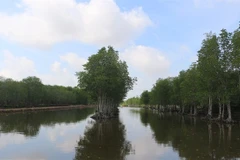
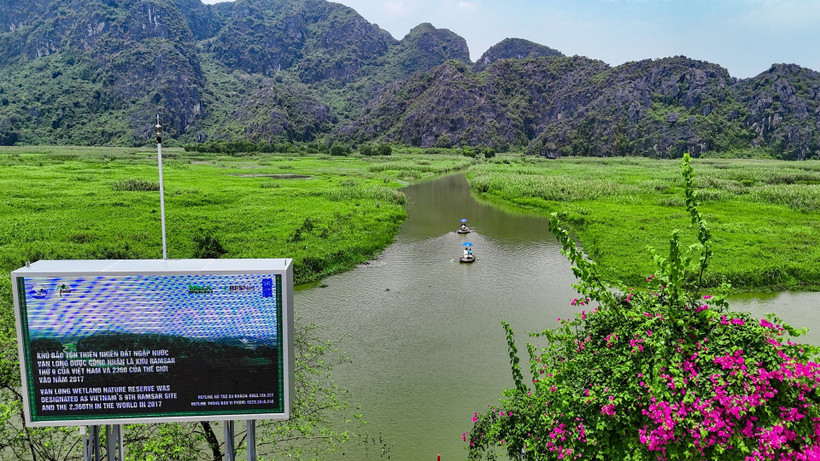
Van Long – an internationally recognised nature reserve in Vietnam (Photo: VietnamPlus)

Hanoi (VNA) – Amidst Vietnam’s new era of development, with the merger of provinces and cities and the two-level local administration model, authorities believe that expanding inter-regional conservation spaces will contribute significantly to fostering green growth for the country.

This is also a vital mandate to protect the precious forests and sea that ancestors sacrificed and gave their lives, preserving them for future generations.

This natural treasure of limestone mountains and rare, endemic animal and plant species is being negatively impacted by stone mining and cement production activities. Tang Xuan Hoa, Deputy Head of the Agriculture and Forest Protection Sub-department under the Department of Agriculture and Environment of Ninh Binh province emphasised that the department supports expanding conservation to achieve sustainable green development.

The merger of Ha Nam, Nam Dinh and Ninh Binh into Ninh Binh province will unlock tremendous potential for the sustainable development of natural conservation zones, Hoa said.

Expanding the Van Long Wetland Nature Reserve into the Kim Bang forest area will create favourable conditions for wildlife, especially endemic primate species. This includes the Delacour’s langur – a rare primate species discovered in Ha Nam in 2016. The expansion provides them larger and safer habitats, while also reducing habitat fragmentation, which is a major cause of species decline.

ninh-binh-2.jpg
ninh-binh-3.jpg
ninh-binh-4.jpg
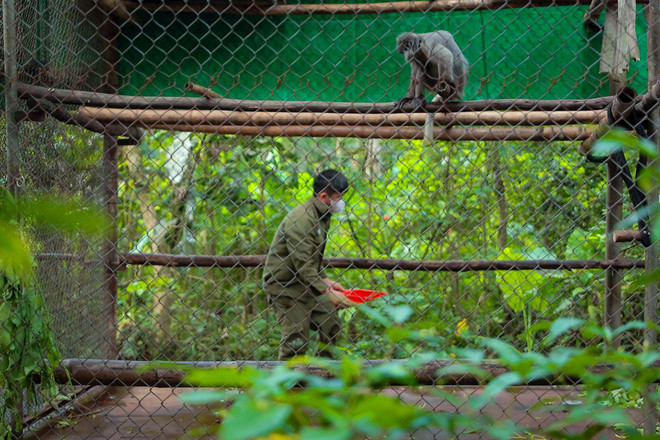
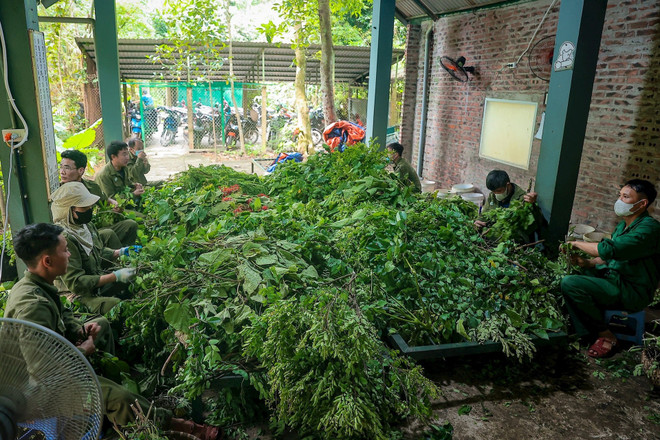
Preparing food for animals at the Wildlife Conservation Centre in Cuc Phuong National Park. (Photo: VietnamPlus)

In addition, the administrative merger presents a significant opportunity for the new province to sustainably develop an integrated eco-cultural-spiritual tourism chain linking Tam Chuc, Trang An, Cuc Phuong, Van Long, and Kim Son, he said. If well-managed, these conservation areas can not only protect nature but also attract tourists, thereby creating livelihoods for local communities while generating resources for conservation efforts.

According to the Vietnam National Authority of Tourism, the merger not only aligns with the country’s inevitable development trend, but also presents an opportunity for localities to restructure and create a strong boost for sustainable tourism development.

The opportunity for sustainable green tourism can only truly become a driving force if provinces and cities demonstrate strong commitment. They need to act in a coordinated manner, and implement clear strategies, placing people at the centre, leveraging local resources as the foundation, and using regional connectivity as a catalyst for growth, the agency noted.

Nguyen Van Thai, Director of Save Vietnam’s Wildlife, highlighted challenges in the country’s wildlife rescue efforts, noting that while Vietnam has many rescue centers, most are small and lack the capacity to receive, care for, and treat rare species, resulting in wasted genetic resources.

The merger of provinces and cities and new administrative systems mean the State needs to unify investment and management in a systematic manner. This can be done by establishing regional rescue, conservation, and breeding centres funded by the central budget. These centres should be managed at the ministerial level, following the highly effective model in Thailand.

Le Tran Nguyen Hung, Deputy Director of the Department of Fisheries and Fishery Surveillance under the Ministry of Agriculture and Environment, remarked that the reduction from 63 to 34 provinces and centrally-run cities will certainly create a broader conservation space and enable more effective management.

For example, marine ecosystems in localities, after the mergers, will form a wide biological corridor allowing for a more comprehensive approach. This is also an opportunity to make breakthroughs in green development, enhancing the value of the sea, thereby not only promoting tourism but also strengthening sustainable livelihoods for the community, Hung emphasised./.


VNA

See more

Air pollution in Hanoi. (Photo: VNA)

Hanoi to launch 5,000 public electric bicycles

In a move to reduce air pollution and promote green mobility, Hanoi has approved a plan to deploy 5,000 public electric bicycles, alongside restrictions on petrol- and diesel-powered vehicles in the city’s central area.

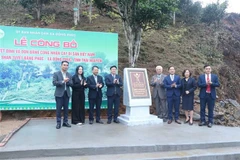
Official heritage plaque i sinstalled on the 12 recognised Shan Tuyet tea trees in Dong Phuc commune. (Photo: VNA)

Thai Nguyen: 12 ancient Shan Tuyet tea trees win national heritage status

The recognition honours the biological, cultural and historical values of these centuries-old Shan Tuyet tea trees – natural treasures deeply woven into the livelihoods, traditions and identity of local ethnic communities. The title affirms the community’s commitment to preserving and promoting the value of this iconic local tea variety.

Sarus cranes at Tram Chim National Park (Photo: VNA)

Return of sarus cranes: Hope takes wing in Dong Thap wetland

Beneath the wide Mekong Delta sky, Tram Chim National Park is racing against time, pouring heart and science into a decade-long (2022–2032) plan to rescue the Eastern sarus crane – an elegant, scarlet-headed bird listed as endangered on the International Union for the Conservation of Nature (IUCN) Red List and a living emblem of both the park and all of Dong Thap province

French Ambassador Olivier Brochet speaks at the press conference in Hanoi on December 11 to mark the 10th anniversary of the Paris Agreement on climate change and highlighting the COP30 outcomes. (Photo: VNA)

International community ready to support Vietnam in energy transition, climate response

In a video message to the press conference, UN Resident Coordinator in Vietnam Pauline Tamesis said the UN is ready to support Vietnam in building a pipeline of projects capable of absorbing financing mobilised under the Political Declaration on establishing the Just Energy Transition Partnership (JETP), as well as from global climate finance sources, including the Green Climate Fund and the Loss and Damage Fund.

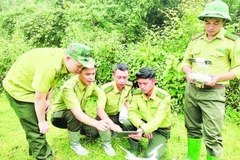
Forest rangers in Son La province apply technological devices and software to forest management, monitoring, and protection. (Photo: nhandan.vn)

Digital technology application enhances forest management, protection

With a total forest area of over 14 million hectares, including more than 10 million hectares of natural forests, forests exist in all 34 provinces and cities across the country. Given the large area and limited workforce, applying digital solutions in forest management and protection has become a top priority for the forestry sector.

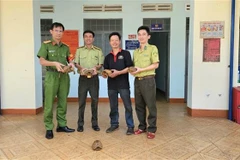
Sunda pangolins (Manis javanica), also known as the Javan pangolin, are listed in Group IB – critically endangered and strictly protected from all commercial exploitation (Photo: VNA)

Quang Ngai releases rare pangolin back into nature

Initial verification showed that the animal weighed 3.7kg and measured over 60cm. It was identified as a Sunda pangolin (Manis javanica), also known as the Javan pangolin, listed in Group IB – critically endangered and strictly protected from all commercial exploitation.

Residents of Tuyen Quang province take part in the One Billion Trees Programme. (Photo: VNA)

Tree-planting programme exceeds one-billion-tree goal

The total comprises 573.9 million scattered trees and 865.2 million trees grown in concentrated plantations, equivalent to 429,125 hectares of forest. Provinces posting the strongest results include Phu Tho with 177.9 million trees, Lao Cai with 108.8 million, and An Giang with 98.5 million.

Construction activity is one of the causes of air pollution in Hanoi. (Photo: VNA)

Hanoi takes urgent measures to curb air pollution

The city requires the enhanced application of advanced technologies and remote monitoring systems, including satellite remote sensing, drones, and AI-integrated traffic cameras, to monitor, detect, and strictly address the illegal burning of garbage, straw, and agricultural by-products.