Hanoi (VNA) – The revised National Master Plan for the 2021–2030 period, with a vision to 2050, aims to support double-digit economic growth by reorganising the country's development space, unlocking new growth drivers and improving resource allocation for strategic investment.
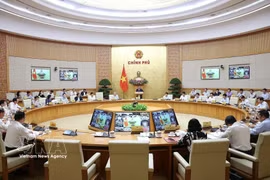
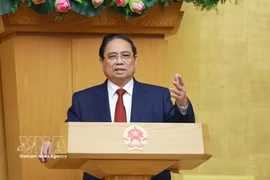
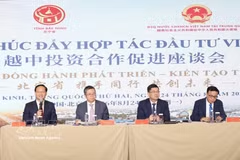
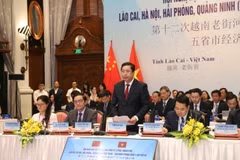
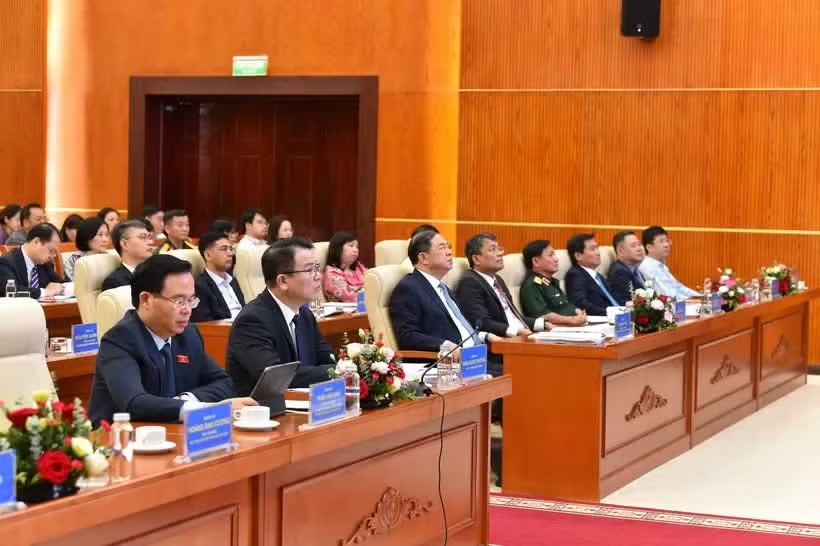
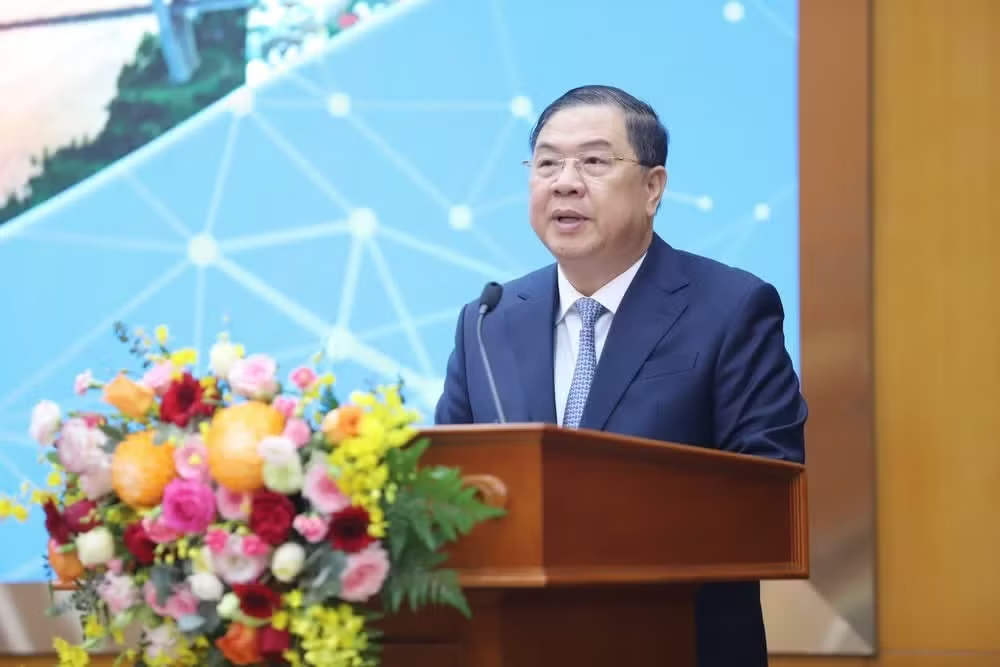
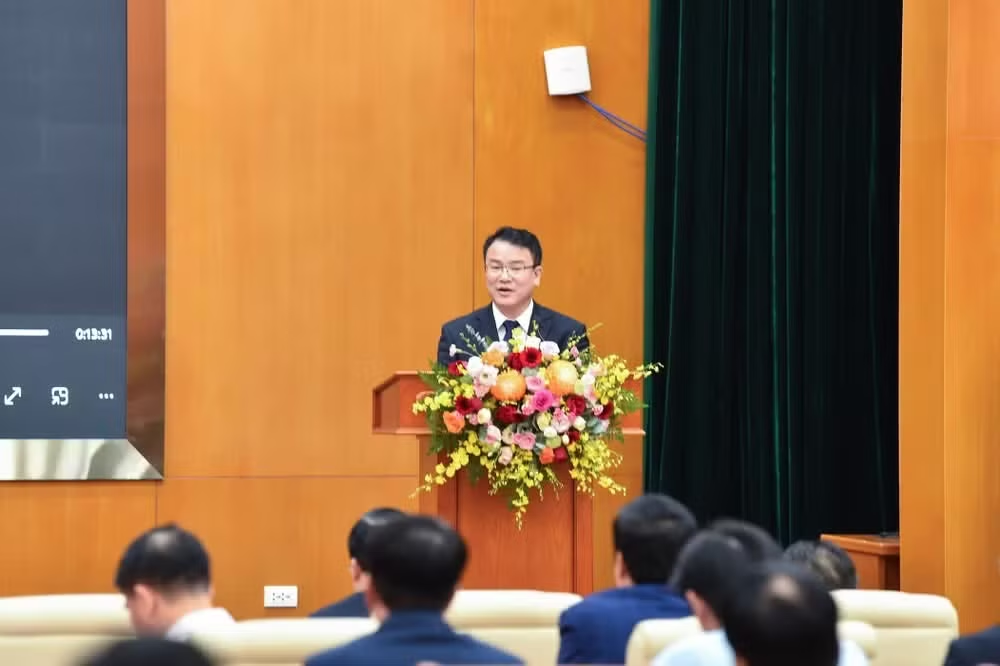
Speaking at a conference to announce the revised plan on May 6, Permanent Deputy Prime Minister Pham Gia Tuc said the adjustments come as Vietnam enters a new stage of development following the 14th National Party Congress, amid an increasingly uncertain global environment and mounting requirements for a new growth model.
He described planning as a vital tool for translating the country’s development strategies into concrete spatial planning while enhancing national competitiveness and long-term development.
The Ministry of Finance said the revised National Master Plan aims for Vietnam to become a developing country with modern industry and upper-middle income by 2030. It also outlines a new growth model driven by science, technology, innovation and digital transformation, with dynamic regions, economic corridors and growth poles serving as engines to promote national competitiveness and socio-economic development.
It sets an average annual GDP growth target of at least 10% during 2026–2030, with GDP per capita reaching about 8,500 USD by 2030. Labour productivity is expected to grow by more than 8.5% annually, while total factor productivity (TFP) is projected to contribute over 55% of economic growth.
The plan also updates growth drivers aligned with the development orientation of key sectors and industries. It aims to build an internationally competitive industrial base capable of deeper integration into global production networks and value chains, while strengthening the economy's self-reliance to achieve the goal of becoming a developing country with modern industry by 2030.
Tuc said the revised master plan provides the highest-level framework for adjusting national land-use planning, and sectoral, regional and provincial planning. It will also allocate public investment, attract private and foreign direct investment (FDI), and implementing projects identified in the Resolution of the 14th National Party Congress.
A key feature of the revision is the reorganisation of the country's development space in a more scientific manner.
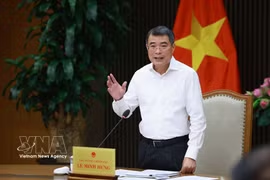
Deputy Minister of Finance Tran Quoc Phuong said the plan institutionalises a new regional framework aligned with administrative restructuring and the two-tier local administration model. It expands four existing national growth regions and adds the North Central region as a new growth pole to better harness regional strengths and improve development linkages.
The Southeast and Red River Delta regions continue to be identified as the country's two largest growth poles, playing a pivotal role in international integration and global competitiveness.
The plan also envisions the development of financial centres and special administrative-economic zones with breakthrough institutions capable of competing with major regional hubs. Alongside the national growth regions, priority will be given to the synchronous development of economic corridors. The North–South corridor and key East–West corridors, including Lao Cai–Hanoi–Hai Phong–Quang Ninh and Moc Bai–Ho Chi Minh City–Vung Tau, are envisioned as the country's main transport and economic arteries.
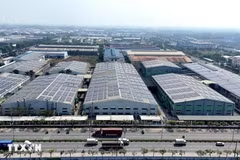
Notably, industrial, urban and service belts linked to ring roads around Hanoi and Ho Chi Minh City are expected to ease pressure on core urban areas while creating new and modern production hubs.
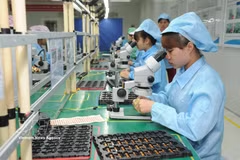
Phuong said modern industry and high-quality services will form the backbone of the economy. Vietnam aims to move beyond contract manufacturing to master technologies in emerging fields such as semiconductors, artificial intelligence (AI), renewable energy and the low-altitude economy.
By 2030, the country targets average annual labour productivity growth of more than 8.5%, with total factor productivity (TFP) contributing over 55% of economic growth. The targets underscore Vietnam's determination to shift its growth model from extensive to intensive development, with science and technology serving as a main driver.
To ensure implementation, Tuc called for institutional reforms, particularly amendments to land-related legislation and other laws to ensure consistency with the 2025 Planning Law. He stressed that removing institutional bottlenecks is seen as the key to unlocking social resources, particularly private investment and high-quality FDI.
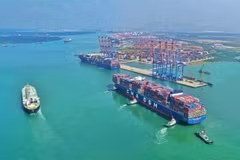
Public investment, he said, should play a leading role by prioritising strategic infrastructure projects, including high-speed railways, international seaports and national data centres, while localities should accelerate long-delayed projects to avoid wasting resources.
The revised plan also emphasises high-quality human resources, environmental protection and inclusive development, alongside stronger links between economic growth, national defence and security to support sustainable national development./.