Singapore charts path to safeguard economic future

Singapore is stepping up efforts to secure its economic future as global challenges intensify, Singaporean Deputy Prime Minister and Minister for Trade and Industry Gan Kim Yong said at the Parliament on September 22.

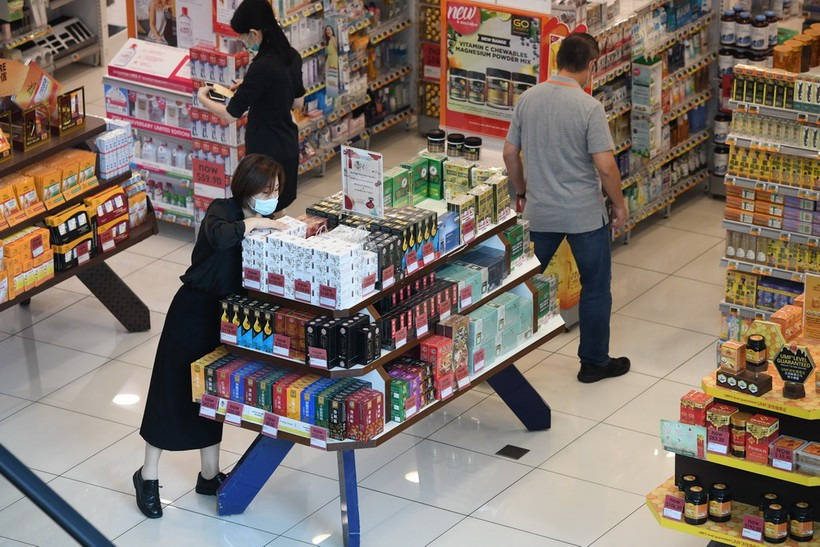
People shop at a supermarket in Singapore. (Photo: AFP/VNA)

Singapore (VNA) – Singapore is stepping up efforts to secure its economic future as global challenges intensify, Singaporean Deputy Prime Minister and Minister for Trade and Industry Gan Kim Yong said at the Parliament on September 22.

According to him, the recent surge in protectionism, trade tensions and tariff measures is not a passing storm, but a sign of a changed world that is more fragmented and competitive.

To adapt, the government has formed the Singapore Economic Resilience Taskforce (SERT) to help firms and workers respond to global uncertainties, while preparing a refreshed Economic Strategy Review (ESR) to be released early next year.

Gan outlined a three-pronged approach that will anchor Singapore’s new blueprint. First, the country will strengthen its position in existing growth areas such as advanced manufacturing, aerospace and financial services, while moving early into new sectors including artificial intelligence, precision medicine, green technologies and autonomous vehicles.

Second, Singapore aims to reinforce its role as a hub for global firms, supporting multinational corporations as well as local champions to expand high value-added activities. Third, more targeted support will be given to startups and entrepreneurs, including better access to capital, infrastructure and international partnerships.

Besides, Singapore aims to strengthen the fundamentals to maintain competitiveness, such as the ability to deploy and disseminate new technologies, ensure a skilled workforce, and strengthen its role as a global hub with prudent, long-term plans, such as an infrastructure upgrade strategy, and an efficient energy transition with emerging low-carbon alternatives such as hydrogen and nuclear power.

Expanding cooperation both inside and outside the region to increase the resilience of the economy as well as solve emerging problems is also the goal of the Singapore government.

To secure its future in a changed world, Singapore must stay globally competitive, by building strong industries, grow its enterprises, strengthening its capacity to embrace technology, investing in its workforce and finding ways to overcome the country’s resource constraints.

Singapore must also continue to expand its international economic space, by strengthening its networks of trade and investment, reinforcing a rules-based global trading system, and positioning Singapore as a trusted hub in a more uncertain and turbulent world, he said./.
VNA

See more

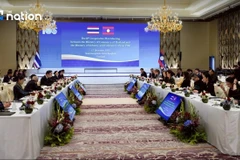
The 8th Cooperative Plan Meeting between the Ministry of Commerce of Thailand and the Ministry of Industry and Commerce of Lao PDR, December 17, Bangkok, Thailand (Photo: nationalthailan.com)

Thailand, Laos aim to boost bilateral trade

Laos is Thailand’s 7th largest trading partner in ASEAN and 18th globally. From January to October 2025, two-way trade grew by 18.65% to 8.18 billion USD, with Thai exports increasing by 16.90% to 4.81 billion USD and imports rising by 21.23% to 3.60 billion USD.

File photo of Visa and Mastercard credit cards. (Photo: AP)

Unpaid credit card balances in Singapore hit record high in 10 years

Experts attributed the worrying trend to factors like people not spending within their means, consumer culture emphasising prestige items, and easier access to credit like “buy now, pay later” services. Analysts said this can be a hint of growing financial pressures faced by Singaporeans amid rising prices.

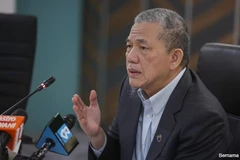
Malaysian Deputy Prime Minister Datuk Seri Fadillah Yusof (Photo: Bernama)

Malaysia accelerates clean energy transition

Delivering a speech at the Clean Energy Transition Asia (CETA) Summit 2025 in Kuala Lumpur, Fadillah, who is also the energy transition and water transformation minister, said that the Southeast Asian region now drives more than half of the global energy demand.

Indonesian localities extend state of emergency amid natural disasters

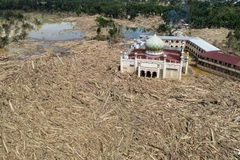
Indonesian localities extend state of emergency amid natural disasters

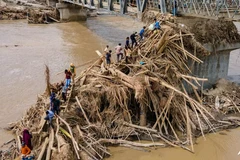
As disaster-related losses continue to rise, authorities in the affected provinces have decided to extend the state of emergency to ensure resources and legal mechanisms for response efforts. West Sumatra extended it to December 22, North Sumatra to December 24, and Aceh to December 25.

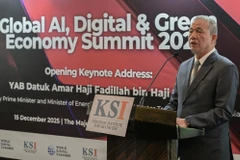
Malaysian Deputy Prime Minister Datuk Seri Fadillah Yusof delivers his opening keynote address at the Global AI, Digital and Green Economy Summit 2025 in Kuala Lumpur, December 15, 2025. (Photo: Bernama)

Malaysia eyes AI-driven energy future

Malaysia’s direction is to focus on building a modern grid, a digital economy powered by trustworthy AI, and climate finance systems that deliver real-world decarbonisation.

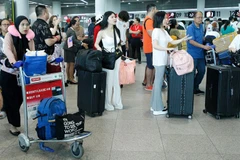
Air passengers at the departure terminal of the Phnom Penh International Airport. (Photo: khmertimeskh.com)

Air travel between Cambodia, Thailand remains operational

In a statement released on his Facebook post, Hun Sen explained that his earlier message, advising the Royal Government to consider suspending cross-border travel, referred specifically to land routes, as tensions are escalating along the entire land border, with some spillover into maritime areas.

Thailand, Myanmar boost anti-drug cooperation

Thailand, Myanmar boost anti-drug cooperation

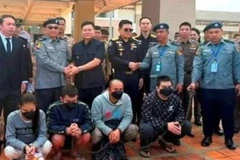
Myanmar authorities have handed over three drug-related fugitives wanted by Thailand and one Thai national who was residing illegally in Myanmar to Thai authorities, according to the Myanmar Police Force.