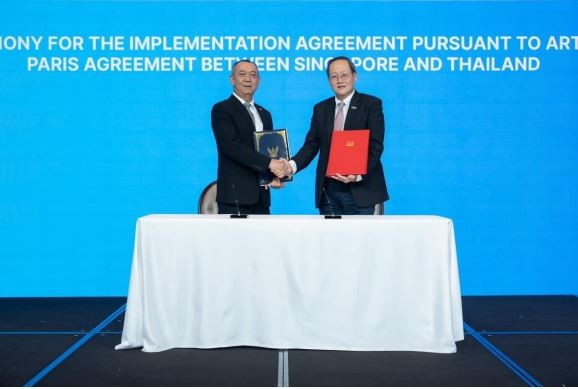
Singapore (VNA) – Singapore and Thailand on August 19 signed an Implementation Agreement on carbon credits collaboration under Article 6 of the Paris Agreement on the sidelines of the 9th Singapore Regional Business Forum (SRBF) in Bangkok, marking Singapore’s first deal with an ASEAN country.
The agreement establishes a framework for the generation and transfer of carbon credits from carbon mitigation projects aligned with Article 6 of the Paris Agreement. Project developers can leverage this framework to develop high-quality carbon credit projects that are aligned with the Article 6 rulebook. Information on the process for authorisation of these carbon credits projects and eligible carbon crediting methodologies under the Implementation Agreement will be published in due course.
Correspondingly adjusted carbon credits authorised under this agreement may be used to offset up to 5% of a company’s taxable emissions under Singapore’s International Carbon Credits (ICC) framework from January 1, 2024, subject to eligibility; or to comply with binding mandates such as Nationally Determined Contributions (NDCs) and other international mitigation purposes such as the requirements under the Carbon Offsetting and Reduction Scheme for International Aviation (CORSIA).
Singapore has committed to channelling the value equivalent to 5% share of proceeds from authorised carbon credits towards climate adaptation measures in Thailand, including sustainable forest management, flood resilience projects and water resources management.
As a contribution towards a net reduction of global emissions, Singapore is committed to having 2% of the correspondingly adjusted carbon credits authorised under this Implementation Agreement cancelled at first issuance. These carbon credits that are cancelled cannot be sold, traded, or counted towards any country’s emission targets.
The agreement between Singapore and Thailand is expected to advance both countries’ climate ambitions by directing financing towards unlocking additional mitigation potential in Thailand. The carbon mitigation projects authorised under this agreement will promote sustainable development and deliver tangible benefits to local communities, such as creation of jobs, improved waste management, enhanced energy efficiency, and reduction of environmental pollution./.