Thailand diversifies payment methods to boost tourism

Under the new regulations, foreign tourists wishing to convert digital assets into the Thai baht for spending must open an account with a digital asset business and an e-money provider, both of which are regulated by the SEC and the Bank of Thailand (BOT) respectively.

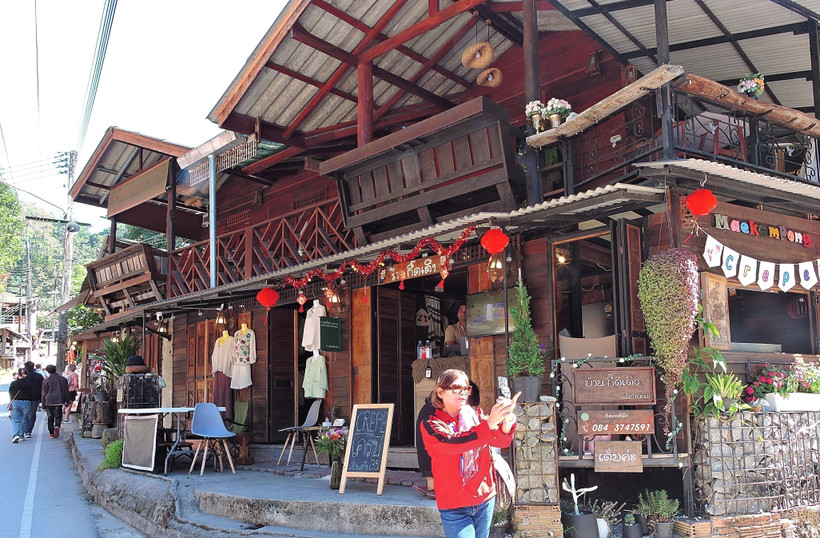
The mountainous city of Chiang Mai attracts large numbers of Thai and international tourists. (Photo: VNA)

Bangkok (VNA) – The Thai government plans to launch the “TouristDigiPay” programme to stimulate tourism by allowing foreign visitors to convert digital currencies into the Thai baht for payments.

The initiative comes as Thailand’s tourism sector faces a notable downturn this year, driven largely by a decline in arrivals from China, The Nation reported.

Under the new regulations, foreign tourists wishing to convert digital assets into the Thai baht for spending must open an account with a digital asset business and an e-money provider, both of which are regulated by the SEC and the Bank of Thailand (BOT) respectively.

The scheme will operate within a regulatory 'sandbox' to ensure proper oversight and risk management, particularly to prevent the direct use of digital assets as a means of payment. Only foreign tourists temporarily staying in Thailand will be eligible to use the service.

Participants must undergo stringent Know Your Customer (KYC) and customer due diligence (CDD) checks, in line with the Anti-Money Laundering Office (AMLO)’s criteria. The service will enable tourists to exchange their digital assets for the baht and make electronic payments, such as through QR code scanning.

This service will facilitate QR code payments, particularly for tourists from countries without existing cross-border QR payment agreements. The Tourist Wallet will initially function as an e-money system for currency conversion, with future plans to link it directly to foreign debit and credit cards.

To mitigate the risk of financial crime, such as money laundering, transaction limits will be in place. For merchants with card terminals, the monthly spending limit will be 500,000 THB (15,400 USD) per account.

For small, general merchants, the limit will be 50,000 THB per month. Transactions will be prohibited at businesses deemed high-risk for money laundering under AMLO guidelines. Furthermore, tourists will only be able to withdraw money upon closing their accounts, and not as cash based on their top-up balance./.


VNA

See more

Malaysia busts massive drug syndicate

Malaysia busts massive drug syndicate

An international drug syndicate was busted after Malaysian police seized over 18 tonnes of drugs worth nearly 375 million USD in one of the country’s biggest drug busts on record.

Indonesia will not import rice for either consumption or industrial use next year. (Photo: tempo.co)

Indonesia to stop rice imports next year

Indonesia's rice production in 2025 is projected to reach 34.77 million tonnes, up 13.54% year on year, driven by favourable weather and farmer support policies under President Prabowo Subianto’s administration.

Distinctive festivals across Indonesia attract international visitors. (Photo published by VNA)

Indonesia identifies 15 priority tourism markets for 2025–2026

According to data compiled by the Ministry of Tourism, the number of tourists from Malaysia reached 2.18 million in the January-October 2025 period, showing a growth of 15.91% compared to last year. Meanwhile, the number of visitors from Singapore totaled 1.19 million this year, growing by 7.66% from 2024.

The 8th Cooperative Plan Meeting between the Ministry of Commerce of Thailand and the Ministry of Industry and Commerce of Lao PDR, December 17, Bangkok, Thailand (Photo: nationalthailan.com)

Thailand, Laos aim to boost bilateral trade

Laos is Thailand’s 7th largest trading partner in ASEAN and 18th globally. From January to October 2025, two-way trade grew by 18.65% to 8.18 billion USD, with Thai exports increasing by 16.90% to 4.81 billion USD and imports rising by 21.23% to 3.60 billion USD.

File photo of Visa and Mastercard credit cards. (Photo: AP)

Unpaid credit card balances in Singapore hit record high in 10 years

Experts attributed the worrying trend to factors like people not spending within their means, consumer culture emphasising prestige items, and easier access to credit like “buy now, pay later” services. Analysts said this can be a hint of growing financial pressures faced by Singaporeans amid rising prices.

Malaysian Deputy Prime Minister Datuk Seri Fadillah Yusof (Photo: Bernama)

Malaysia accelerates clean energy transition

Delivering a speech at the Clean Energy Transition Asia (CETA) Summit 2025 in Kuala Lumpur, Fadillah, who is also the energy transition and water transformation minister, said that the Southeast Asian region now drives more than half of the global energy demand.

Indonesian localities extend state of emergency amid natural disasters

Indonesian localities extend state of emergency amid natural disasters

As disaster-related losses continue to rise, authorities in the affected provinces have decided to extend the state of emergency to ensure resources and legal mechanisms for response efforts. West Sumatra extended it to December 22, North Sumatra to December 24, and Aceh to December 25.