Thailand struggles to revive tourism amid sharp drop in Chinese visitors

Thailand is making concerted efforts to revitalise its tourism sector, which accounts for around 20% of the country’s gross domestic product (GDP).

Tourists visit Wat Pho Temple in Bangkok, Thailand. (Photo: Xinhua/VNA)

Bangkok (VNA) – Thailand’s tourism industry, a key pillar of the national economy, is facing a turbulent year in 2025 as international arrivals are projected to fall by 5% as a result of a sharp decline in Chinese tourists and mounting competition from other Asian destinations.

From January 1 to July 5, 2025, the country welcomed 16.8 million international visitors, compared to the 17.7 million recorded during the same period last year. Tourists from nearby countries fell by 12.2%, with East Asia seeing a sharp fall of 24.8%. This drop is primarily attributed to fewer Chinese travellers, whose number decreased by 34.2% compared to pre-pandemic levels in 2019.

Other markets such as India, Japan, Singapore, Australia and the US have shown growth, particularly among long-haul travellers who tend to spend more. Yet, their smaller volume, making up only 28% of total arrivals, means they cannot fully offset the Chinese tourism shortfall.

Historically, China was Thailand’s top source of international tourists, contributing nearly 28% of all arrivals with about 11.1 million visitors in 2019. In stark contrast, Chinese tourists now make up only 13.6% of arrivals, with projections estimating that the total Chinese visitor number will decrease to below 5 million in 2025 for the first time in over a decade (excluding COVID-19 years).

Facing current challenges, Thailand is making concerted efforts to revitalise its tourism sector, which accounts for around 20% of the country’s gross domestic product (GDP).

The Thai government decided to delay the implementation of the long-planned Travel Fee for Foreign Tourists, locally referred to as the “Kha Yeap Pan Din” (literally, “stepping onto Thai soil” fee). Initially scheduled to come into effect in 2025, the fee is now expected to be introduced in mid-2026.The fee, set at 300 THB for air arrivals and 150 THB for land or sea entries, will be used to improve tourist sites and fund insurance coverage for foreign visitors.

Meanwhile, local authorities are also providing a subsidy of 350,000 THB per charter flight. New agreements recently signed with travel agents in Chongqing, Lanzhou, and Hangzhou are also hoped to bring some 150,000 Chinese tourists to Thailand.

Earlier this year, it rolled out a new digital entry system, replacing paper-based procedures with a streamlined online registration process aimed at delivering a more seamless visitor experience.

Experts remain optimistic that the full impact of these stimulus measures will become more apparent by the end of this year. They predict that, barring any unforeseen disruptions, the number of Chinese visitors to Thailand could recover to 70–80% of pre-pandemic levels by the end of 2026./.

VNA

See more

Malaysia busts massive drug syndicate

Malaysia busts massive drug syndicate

An international drug syndicate was busted after Malaysian police seized over 18 tonnes of drugs worth nearly 375 million USD in one of the country’s biggest drug busts on record.

Indonesia will not import rice for either consumption or industrial use next year. (Photo: tempo.co)

Indonesia to stop rice imports next year

Indonesia's rice production in 2025 is projected to reach 34.77 million tonnes, up 13.54% year on year, driven by favourable weather and farmer support policies under President Prabowo Subianto’s administration.

Distinctive festivals across Indonesia attract international visitors. (Photo published by VNA)

Indonesia identifies 15 priority tourism markets for 2025–2026

According to data compiled by the Ministry of Tourism, the number of tourists from Malaysia reached 2.18 million in the January-October 2025 period, showing a growth of 15.91% compared to last year. Meanwhile, the number of visitors from Singapore totaled 1.19 million this year, growing by 7.66% from 2024.

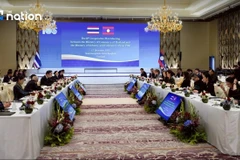
The 8th Cooperative Plan Meeting between the Ministry of Commerce of Thailand and the Ministry of Industry and Commerce of Lao PDR, December 17, Bangkok, Thailand (Photo: nationalthailan.com)

Thailand, Laos aim to boost bilateral trade

Laos is Thailand’s 7th largest trading partner in ASEAN and 18th globally. From January to October 2025, two-way trade grew by 18.65% to 8.18 billion USD, with Thai exports increasing by 16.90% to 4.81 billion USD and imports rising by 21.23% to 3.60 billion USD.

File photo of Visa and Mastercard credit cards. (Photo: AP)

Unpaid credit card balances in Singapore hit record high in 10 years

Experts attributed the worrying trend to factors like people not spending within their means, consumer culture emphasising prestige items, and easier access to credit like “buy now, pay later” services. Analysts said this can be a hint of growing financial pressures faced by Singaporeans amid rising prices.

Malaysian Deputy Prime Minister Datuk Seri Fadillah Yusof (Photo: Bernama)

Malaysia accelerates clean energy transition

Delivering a speech at the Clean Energy Transition Asia (CETA) Summit 2025 in Kuala Lumpur, Fadillah, who is also the energy transition and water transformation minister, said that the Southeast Asian region now drives more than half of the global energy demand.

Indonesian localities extend state of emergency amid natural disasters

Indonesian localities extend state of emergency amid natural disasters

As disaster-related losses continue to rise, authorities in the affected provinces have decided to extend the state of emergency to ensure resources and legal mechanisms for response efforts. West Sumatra extended it to December 22, North Sumatra to December 24, and Aceh to December 25.