Vietnam makes strides in social welfare, human rights, global integration: Argentine scholar

Professor Ezequiel Ramoneda, Coordinator of the Centre for Southeast Asian Studies (CESEA) at the Institute of International Relations of the National University of La Plata of Argentina said if Vietnam maintains the reform spirit, makes good use of cooperation opportunities and advances innovation, the country is well-positioned to achieve stronger and more sustainable development goals in decades to come.

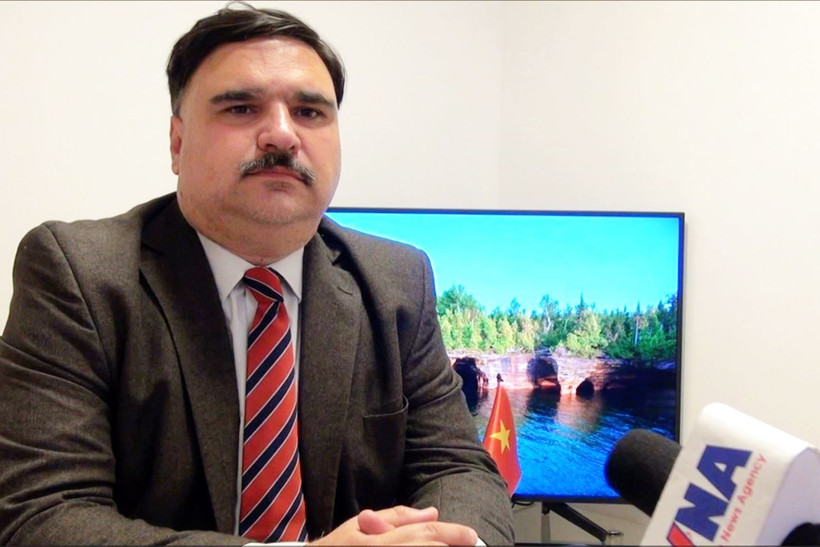
Professor Ezequiel Ramoneda, Coordinator of the Centre for Southeast Asian Studies (CESEA) at the Institute of International Relations of the National University of La Plata of Argentina. (Photo: VNA)

Buenos Aires (VNA) – Nearly four decades after launching its Doi Moi (Renewal) process, Vietnam has made remarkable progress in social welfare, human rights and international integration, according to Professor Ezequiel Ramoneda, Coordinator of the Centre for Southeast Asian Studies (CESEA) at the Institute of International Relations of the National University of La Plata of Argentina.

In an interview with Vietnam News Agency correspondents on the occasion of the 80th anniversary of Vietnam’s August Revolution (August 19, 1945 – 2025) and National Day (September 2), Ramoneda highlighted the country’s all-rounded achievements despite the heavy legacy of war.

He noted that the Southeast Asian nation has undergone profound political, economic and social transformation, while strengthening its role in the international system. The overarching goal throughout this process has been to improve people’s lives, enhance social welfare and safeguard fundamental rights, while rebuilding the nation after years of devastation.

One of the most notable results is that per capita income has increased tenfold over the past four decades, with wealth more evenly distributed. The health care system has been upgraded, mortality rates have fallen, birth rates have remained stable, and social services have expanded. Vietnam’s human development index has continued to improve, giving people greater access to education and resources of higher quality.

The Argentine scholar described such achievements in less than four decades as remarkable, attributing them to the Party’s bold reforms and the strong support of the people. This, he said, demonstrates Vietnam’s ability to turn challenges into opportunities and the sound orientation of its development policies.

He noted a key milestone is Vietnam becoming one of the first countries to meet five of the eight United Nations Millennium Development Goals (MDGs), including poverty reduction, improvements in health care and education, environmental protection, gender equality and women’s rights.

He assessed that the early fulfillment of these goals reflects its commitment not only to domestic development but also to international responsibilities. It underscores Vietnam’s open foreign policy, spirit of multilateral cooperation, and determination to work with other nations in addressing global challenges, from climate change to transboundary issues. This has consolidated its reputation as a reliable partner, ready to negotiate, cooperate and harmonise national interests with those of the international community.

However, Ramoneda also pointed out that Vietnam still faces major challenges. Issues such as poverty, climate change and gender inequality remain pressing, while rising living standards and higher costs may risk widening the wealth gap unless accompanied by fair and effective redistribution policies.

As Vice Chairman of the Argentina-Vietnam Culture Institute (ICAV), he stressed that Vietnam has proven its adaptability and creativity in development, along with its commitment to humanitarian and progressive values. If it maintains the reform spirit, makes good use of cooperation opportunities and advances innovation, the country is well-positioned to achieve stronger and more sustainable development goals in decades to come./.

VNA
See more

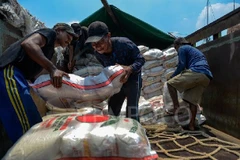
Indonesia will not import rice for either consumption or industrial use next year. (Photo: tempo.co)

Indonesia to stop rice imports next year

Indonesia's rice production in 2025 is projected to reach 34.77 million tonnes, up 13.54% year on year, driven by favourable weather and farmer support policies under President Prabowo Subianto’s administration.

Distinctive festivals across Indonesia attract international visitors. (Photo published by VNA)

Indonesia identifies 15 priority tourism markets for 2025–2026

According to data compiled by the Ministry of Tourism, the number of tourists from Malaysia reached 2.18 million in the January-October 2025 period, showing a growth of 15.91% compared to last year. Meanwhile, the number of visitors from Singapore totaled 1.19 million this year, growing by 7.66% from 2024.

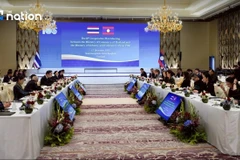
The 8th Cooperative Plan Meeting between the Ministry of Commerce of Thailand and the Ministry of Industry and Commerce of Lao PDR, December 17, Bangkok, Thailand (Photo: nationalthailan.com)

Thailand, Laos aim to boost bilateral trade

Laos is Thailand’s 7th largest trading partner in ASEAN and 18th globally. From January to October 2025, two-way trade grew by 18.65% to 8.18 billion USD, with Thai exports increasing by 16.90% to 4.81 billion USD and imports rising by 21.23% to 3.60 billion USD.

File photo of Visa and Mastercard credit cards. (Photo: AP)

Unpaid credit card balances in Singapore hit record high in 10 years

Experts attributed the worrying trend to factors like people not spending within their means, consumer culture emphasising prestige items, and easier access to credit like “buy now, pay later” services. Analysts said this can be a hint of growing financial pressures faced by Singaporeans amid rising prices.

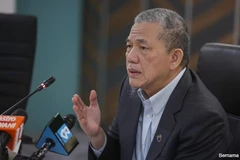
Malaysian Deputy Prime Minister Datuk Seri Fadillah Yusof (Photo: Bernama)

Malaysia accelerates clean energy transition

Delivering a speech at the Clean Energy Transition Asia (CETA) Summit 2025 in Kuala Lumpur, Fadillah, who is also the energy transition and water transformation minister, said that the Southeast Asian region now drives more than half of the global energy demand.

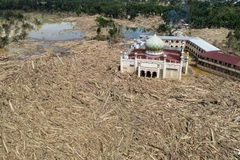
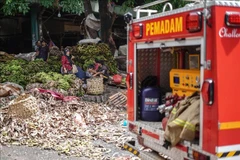
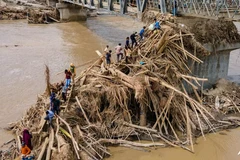
Indonesian localities extend state of emergency amid natural disasters

Indonesian localities extend state of emergency amid natural disasters

As disaster-related losses continue to rise, authorities in the affected provinces have decided to extend the state of emergency to ensure resources and legal mechanisms for response efforts. West Sumatra extended it to December 22, North Sumatra to December 24, and Aceh to December 25.

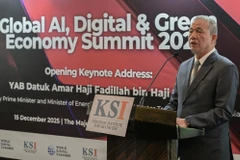
Malaysian Deputy Prime Minister Datuk Seri Fadillah Yusof delivers his opening keynote address at the Global AI, Digital and Green Economy Summit 2025 in Kuala Lumpur, December 15, 2025. (Photo: Bernama)

Malaysia eyes AI-driven energy future

Malaysia’s direction is to focus on building a modern grid, a digital economy powered by trustworthy AI, and climate finance systems that deliver real-world decarbonisation.

Air passengers at the departure terminal of the Phnom Penh International Airport. (Photo: khmertimeskh.com)

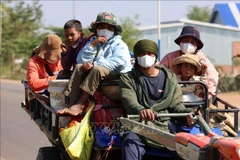
Air travel between Cambodia, Thailand remains operational

In a statement released on his Facebook post, Hun Sen explained that his earlier message, advising the Royal Government to consider suspending cross-border travel, referred specifically to land routes, as tensions are escalating along the entire land border, with some spillover into maritime areas.