Vietnam puts forward green energy vision at World Atom Week

A leader of the Vietnam Academy of Science and Technology (VAST) suggested the establishment of a multilateral research organisation on green energy that engages such partners as the International Atomic Energy Agency (IAEA), the Joint Institute for Nuclear Research (JINR), Russia’s Rosatom, and institutions worldwide like the VAST.

Professor and Academician Le Truong Giang (second from right) at the international forum World Atom Week 2025 in Moscow (Photo: VNA)

Moscow (VNA) – Vietnam has laid stress on the significance of international cooperation in the research and development of energy technologies, particularly in the emerging field of fusion energy, an optimal clean energy source that requires intensive research and funding.

Attending a panel discussion at the ongoing international forum World Atom Week 2025 in Moscow, Professor and Academician Le Truong Giang, Vice President of the Vietnam Academy of Science and Technology (VAST), underscored that collaboration must start immediately in preparation for the future.

He affirmed the close bonds between science, state, and enterprises is the key, with science providing evidence and innovation, the state issuing enabling policies, and businesses leading in application.

On the basis, he suggested the establishment of a multilateral research organisation on green energy that engages such partners as the International Atomic Energy Agency (IAEA), the Joint Institute for Nuclear Research (JINR), Russia’s Rosatom, and institutions worldwide like the VAST. The goal is to pool resources, share expertise, and train the next generation of scientists.

Giang also put forward initiatives to expand training cooperation, particularly in nuclear research and radiation safety, through university partnerships between Vietnam, Russia, and eventually institutions across the region and the globe.

His proposals received strong interest from international participants, helping affirm the country’s commitment to advancing a green, safe, and sustainable energy future in collaboration with the global community.

The VAST Vice President told the Vietnam News Agency that attending the World Atom Week is a valuable opportunity for Vietnamese scientists. Since the very first steps in nuclear energy development, Vietnam has placed safety as its top priority, seeing this a central theme in discussions with partners.

He noted that with the determination to implement the Politburo’s key resolutions on energy, the VAST considers international cooperation as indispensable for ensuring both scientific independence and the successful development of new energy solutions for the country.

The international forum World Atomic Week, running from September 25 to 28, is the largest event dedicated to the nuclear and related industries. It has brought together representatives of the leadership of countries developing nuclear programmes, leading world experts, and heads of large companies. The forum is dedicated to the 80th anniversary of the Russian nuclear industry./.

VNA
See more

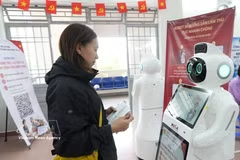
A citizen interacts with an AI-powered robot for guidance on administrative procedures at the Public Administration Service Centre of Xuan Huong–Da Lat ward, Lam Dong province. (Photo: VNA)

Vietnam taps Vietnamese talent in Canada to advance AI cooperation

As Vietnam-Canada relations enter a new phase under their strategic partnership, mobilising this resource is consistent with the orientation of Politburo Resolution No. 23-NQ/TW on overseas Vietnamese affairs, particularly the goal of harnessing knowledge, science and technology for national development.

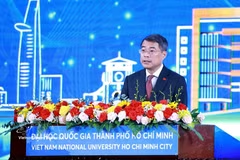
Prime Minister Le Minh Hung speaks at the ceremony (Photo: VNA)

VNU-HCM must become hub for national top talent: PM

VNU-HCM should become a leading national hub for education - training, scientific research, science -technology, innovation and digital transformation, striving to rank among Asia’s top 100 higher education establishments by 2030 and one of the region’s leading research university systems by 2045, with at least four disciplines in the global top 50.

A consumer scans a QR code to pay for OCOP products from Viet Ket Herbal Medicine Company Limited in Nhan Thang ward. Photo: Bac Ninh Newspaper.

Bac Ninh promotes cashless transactions in digital environment

With the digital economy accounting for a leading share of gross regional domestic product (GRDP) nationwide, the northern city of Bac Ninh is accelerating cashless payments in public services, online shopping and the marketing of products on digital platforms.

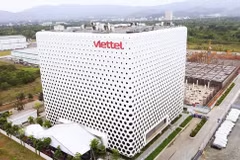
Viettel's Hoa Lac 2 Data Centre (Source: Viettel)

AI - infrastructure for next-generation digital economy

By combining its established electronics manufacturing base with growing capabilities in semiconductor design, AI research, cloud computing and data centres, Vietnam can become a strategic link in the regional AI ecosystem.

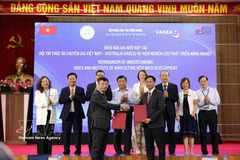
The signing of an MoU between the Department of Digital Technology and Artificial Intelligence and the Institute for Agricultural Research and Development at the forum. (Photo: VNA)

Vietnam, Australia step up digital technology, AI cooperation

An Australian diplomat said Australian businesses are keen to engage in Vietnam’s digital development, particularly in semiconductors, AI and cybersecurity. They also hope to share expertise and support Vietnamese companies in technology and investment.

A customer uses the LiveBank 24/7 service of Tien Phong Commercial Joint Stock Bank (TPBank). (Photo: TPBank)

AI adoption in banking requires strict supervision

Banks are increasingly applying AI in data analysis, personalised services, fraud detection and risk management. In August, the Joint Stock Commercial Bank for Foreign Trade of Vietnam (Vietcombank) launched its One Data Platform (ODP) project to support advanced analytics and lay the groundwork for AI and machine learning applications.

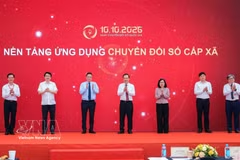
Delegates launch the commune-level digital transformation application on October 9 (Photo: VNA)

Commune-level digital transformation app launched

The app is designed to help grassroots officials, businesses, household businesses and citizens find suitable solutions, acquire relevant skills and access consultancy during their digital transformation journey.

Project to build big data database on law approved

Project to build big data database on law approved

The project is expected to help reform lawmaking and law enforcement, advance smart legal governance, promote a culture of legal compliance and make the law a national competitive advantage in the new era.

Vietnam targets modern pharmaceutical chemical industry by 2045. (Illustrative photo: baochinhphu.vn)

Vietnam targets modern pharmaceutical chemical industry by 2045

By 2030, Vietnam aims to master, acquire and transfer advanced technologies and produce selected essential and strategic pharmaceutical ingredients, prioritising active pharmaceutical ingredients (APIs), starting materials, chemical intermediates and excipients.

Martyr remains samples from the northern province of Cao Bang are handed over to the Military Institute of Forensic Medicine for DNA analysis. (Photo: VNA)

DNA testing capacity expanded to identify over 207,000 martyrs’ remains

By September 2026, Steering Committee 515 had collected samples from the remains of 207,656 martyrs, achieving 98.15% of the goal. Nearly 120,000 samples have been received and preserved. Additionally, authorities gathered 265,761 DNA samples from martyrs’ relatives, with about 100,000 analysed and around 80,000 results entered into the database.

Unmanned aerial vehicle used to inspect power lines. (Photo: VNA)

Hanoi’s power grid modernised through science, technology and data

As the national political and administrative centre and a major hub for economic, scientific, technological and innovation activities, Hanoi is seeing growing demand for energy infrastructure. Rapid urbanisation and the development of industry, services, modern transport, data centres and the digital economy require the capital’s power system to ensure not only daily consumption but also reliable electricity for production and business activities, operations of central agencies, and major political and diplomatic events.​