Hanoi (VNA) – As Vietnam's tourism sector faces mounting demands for infrastructure expansion amid limited public funding, experts are calling for stronger engagement of private capital, supported by effective policies and comprehensive long-term planning.
“Leveling the playing field” through policy
With ambitions to host 25–30 million international tourists and contribute 36 billion USD to GDP by 2030, Vietnam’s tourism industry is on the cusp of significant growth. Yet experts warn that the current infrastructure lacks the necessary quality, scale, and uniformity to meet development targets, putting Vietnam at a disadvantage compared to regional peers.
Currently ranked 59th out of 119 economies in the Travel and Tourism Development Index, Vietnam trails behind neighbours such as Thailand, Malaysia, and Indonesia. A major shortfall lies in its underdeveloped transport network, spanning roads, airports, seaports, as well as in the quality of logistics and support services.
Nguyen Quoc Ky, Chairman of Vietravel Holdings, underscored that tourism is a highly integrated sector, with infrastructure playing a pivotal role. Overloaded airports, deteriorating roads, and weak connectivity, he warned, will hinder even the most attractive destinations from reaching their potential.
According to the national tourism infrastructure development plan for 2021–2030, with a vision to 2045, the sector will require approximately 3.6 quadrillion VND (equivalent to 144 billion USD) in investment. Of this, only 3–5% is expected to come from state sources (including ODA) while private and foreign investment must cover the remaining 95–97%.
Priority areas for investment include upgrades to major international airports such as Long Thanh, Tan Son Nhat, and Noi Bai; improvement of transportation links between key destinations; development of 4-5-star accommodations and luxury resorts; construction of international cruise and cargo ports; and the enhancement of utility, telecom, and smart infrastructure at tourist sites.
Strengthening public–private partnerships (PPP)
In light of tight fiscal constraints, mobilising private sector resources through public–private partnerships (PPP) is seen as vital. However, many large-scale tourism infrastructure projects remain stalled due to legal complications and difficulties in land acquisition.
Analysts identify the lack of coordinated and consistent infrastructure planning and policy as the key bottleneck. This disjointed approach has led to delays and indefinite suspensions of numerous billion-dollar initiatives.
Vietnam’s investment targets through 2025 include 36 billion USD in public capital and 28 billion USD in FDI. This requires the private sector to inject an additional 96 billion USD into the economy, much of it in tourism. Realising this objective, however, depends on clear policy signals and cohesive master planning from the government.
Nguyen Quang Trung, Director of Corporate Planning and Development at Vietnam Airlines, recommended the formation of a joint task force involving airlines and travel firms to better align visa regulations, flight route planning, and promotional efforts.
Additionally, the government is urged to introduce supportive measures including credit packages, tax relief, and simplified investment procedures tailored for tourism infrastructure projects. Key developments like airports, seaports, and large-scale resorts should receive preferential treatment equivalent to national economic projects.
With the state taking the lead, a transparent legal framework and explicit risk-sharing mechanisms during the initial phases of projects will help enable private investors to mobilise funding, manage operations efficiently, and drive project success.
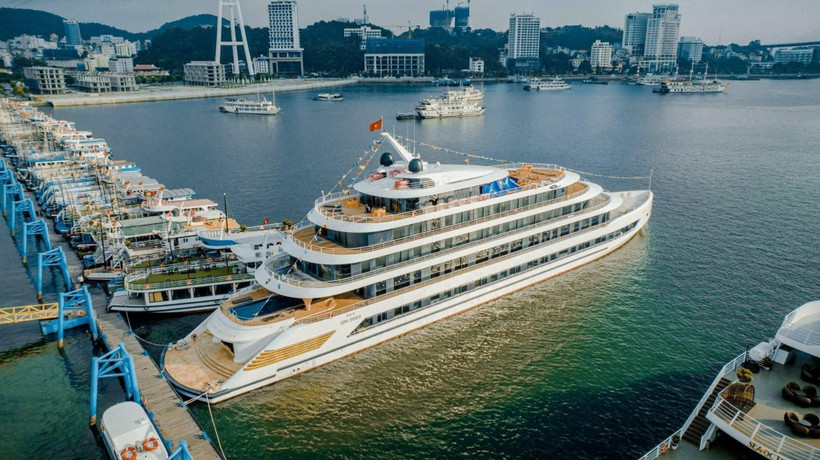
The PPP model has already shown promise in select cases, such as international-standard projects in Ha Long, the northern province of Quang Ninh, and luxury resorts in Phu Quoc, the southern province of Kien Giang. Still, successful PPP examples remain relatively limited and have yet to reflect the sector’s full potential.
To unlock a new wave of private investment in tourism infrastructure, Vietnam must push ahead with competitive and transparent bidding procedures, guarantee consistent state backing, and prioritise the development of foundational infrastructure in a planned and coordinated manner.
For investors in high-end resorts and tourism real estate, access to clear planning information and a reliable legal environment is essential. Achieving this will require closer coordination between tourism development and broader urban planning, paving the way for a greener, smarter, and more sustainable future./.