Vietnam’s first patient with systemic lupus erythematosus recovers thanks to CAR-T immune cell therapy

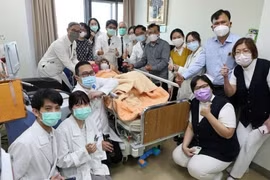
Vinmec Smart City Hospital in Hanoi announced it has successfully applied CAR-T cell therapy for the first time to treat a 28-year-old female patient suffering from systemic lupus erythematosus with severe kidney damage.

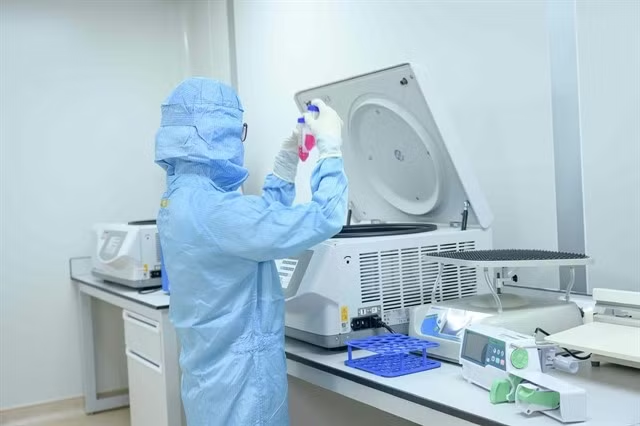
Laboratory at the Vinmec Research Institute of Stem Cell and Gene Technology (Photo courtesy of the Vinmec Research Institute of Stem Cell and Gene Technology)

Hanoi (VNS/VNA) – Vinmec Smart City Hospital in Hanoi announced it has successfully applied CAR-T cell therapy for the first time to treat a 28-year-old female patient suffering from systemic lupus erythematosus with severe kidney damage.

Systemic lupus erythematosus is a chronic autoimmune disease in which the immune system mistakenly identifies healthy tissues as harmful agents and attacks the body itself, causing inflammation and damage to multiple organs, such as the skin, joints, kidneys, heart and brain.

The female patient was diagnosed with systemic lupus erythematosus complicated by glomerulonephritis in 2023. Despite treatment with various medications, she showed a poor response. Recently, her condition worsened, presenting with generalised oedema and severe, progressive renal damage.

Following a professional clinical assessment, the patient was selected to participate in a clinical trial for treating systemic lupus erythematosus using CAR-T immune cell therapy.

The programme is conducted by the Vinmec Research Institute of Stem Cell and Gene Technology in collaboration with the Department of Haematology at Vinmec Smart City General Hospital and the Department of Immunology and Allergy at Vinmec Times City International General Hospital.

A team of experts and scientists collected immune cells (specifically T-lymphocytes) from the patient to undergo gene transfer to create new immune cells known as CAR-T cells. These cells can recognise and eliminate the cells responsible for the disease.

This method has marked a breakthrough in the treatment of various malignant haematological conditions and is currently being investigated for application to autoimmune diseases, including refractory systemic lupus erythematosus.

Following the phase of chemotherapy aimed at eliminating disease-causing cells and preparing a suitable immune environment, the patient receives an infusion of CAR-T immune cells at a dosage individualised based on body weight.

During the post-infusion monitoring period, the patient developed cytokine release syndrome (CRS), a common manifestation of CAR-T therapy. Concurrently, chemotherapy-induced leukopenia heightened the risk of infection. The patient was continuously monitored within a sterile, positive-pressure isolation unit and received comprehensive, advanced supportive care.

However, thanks to the close coordination of the multidisciplinary team, all emerging symptoms were safely and effectively managed. After two weeks of treatment, the patient was discharged in stable condition.

Initial assessment results indicate robust proliferation of CAR-T immune cells following infusion. Notably, the population of pathogenic cells dropped to undetectable levels, demonstrating a positive biological response to the therapy.

The patient is currently undergoing regular outpatient monitoring to evaluate the long-term efficacy of the treatment and immune system recovery.

Professor Dr Nguyen Thanh Liem, Director of the Vinmec Research Institute of Stem Cell and Gene Technology, said: “This initial success has placed Vietnam among the pioneering nations applying CAR-T therapy to treat systemic lupus erythematosus.”

Unlike traditional treatments that primarily manage symptoms or suppress the immune system, CAR-T therapy holds the potential to reset the immune system, thereby fundamentally addressing the root cause and restoring the patient's health.

As a pioneer approved by the Ministry of Health to conduct CAR-T clinical trials in Vietnam, Vinmec is advancing research and application of advanced cell therapies, opening new prospects for treating autoimmune diseases./.

VNA

See more

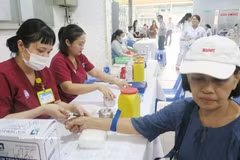
Doctors from Cho Ray Hospital conduct preventive health screenings for residents at the Cho Lon ward health station. (Photo: VNA)

Ho Chi Minh City targets completion of universal health check-ups by December 15

According to the municipal Department of Health, as of July 20, a total of 732,873 residents had undergone periodic check-ups and had electronic health records established. The figure reflects encouraging initial results from the citywide campaign launched by the department and underscores local authorities' commitment to implementing one of the largest community healthcare programmes ever undertaken in the southern metropolis.

Medical staff at Cho Ray Hospital in Ho Chi Minh City cares for and treat the victim. (Photo published by VNA)

Last survivor of Phu Quoc boat capsize shows signs of recovery

The health condition of the last patient receiving treatment following the deadly boat capsize off the Phu Quoc special one in An Giang province has shown positive signs of improvement after three more days of intensive care, Cho Ray Hospital in Ho Chi Minh City said on July 16.

The number of foreign tourists coming to Ho Chi Minh City for travel combined with medical check-ups is increasing. (Photo: VNA)

Vietnam looks to unlock medical tourism potential with national strategy

The draft strategy aims to position Vietnam as a trusted healthcare destination in Southeast Asia by 2030 and eventually among Asia's leading medical tourism hubs. The plan marks a shift from viewing medical tourism as an untapped opportunity to making it a national development priority.

Delegates at the conference. (Photo: VNA)

Vietnam to produce first homegrown next-generation vaccines from 2028

Under the agreement, Sanofi will transfer technology to VNVC to manufacture selected high-demand vaccines for children and adults at VNVC Vaccine and Bioproduct Plant. The first next-generation vaccines produced in Vietnam are expected to roll off production lines in 2028.

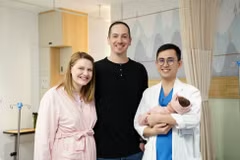
Eric and Alysha joyfully welcome their baby through Mini IVF after more than 10 years of waiting. (Photo: Hong Ngoc Phuc Truong Minh General Hospital)

Vietnam - a destination for journeys to parenthood

An increasing number of international families are choosing Vietnam for infertility treatment, embarking on journeys to parenthood that transcend geographical distance and differences in nationality.

Prime Minister Le Minh Hung delivers remarks at the inauguration ceremony for Viet Duc University Hospital's second campus in Ninh Binh province. (Photo: VNA)

PM urges modern restructuring of healthcare network

The PM stressed that throughout the country’s development process, people have consistently been regarded as the centre, the driving force, the objective and the most important resource for national development. Sustainable and rapid development requires not only a healthy, knowledgeable and skilled population but also a modern, equitable, efficient, sustainable and accessible healthcare system.

Thu Duc General Hospital, with a capacity of 1,000 beds, was inaugurated and put into operation in April 2025 (Photo: VNA)

Ho Chi Minh City moves to expand robotic surgery to gateway hospitals

According to the municipal Department of Health, developing gateway hospitals is a key pillar of the city's strategy to establish a regional specialised healthcare system. The network is designed to permanently relieve overcrowding at major downtown hospitals while strengthening strong inter-regional emergency care and treatment network.

Doctors conduct health screenings for children in Tru Van Tho commune, Ho Chi Minh City. (Photo :VNA)

Ho Chi Minh City moves closer to universal health check-ups

Achieving universal health check-ups in 2026 will lay the foundation for a new healthcare model in which every resident has an electronic health record, receives regular screenings, benefits from lifelong health management and gains access to early intervention through primary healthcare services.