Ho Chi Minh City targets completion of universal health check-ups by December 15

According to the municipal Department of Health, as of July 20, a total of 732,873 residents had undergone periodic check-ups and had electronic health records established. The figure reflects encouraging initial results from the citywide campaign launched by the department and underscores local authorities' commitment to implementing one of the largest community healthcare programmes ever undertaken in the southern metropolis.

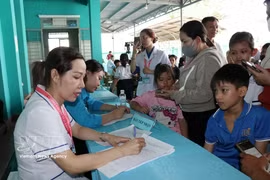
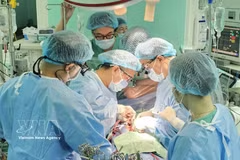
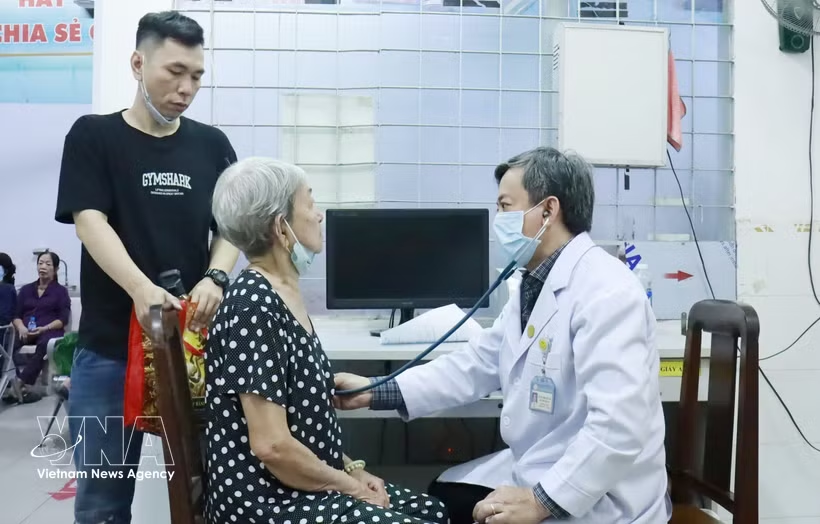
Doctors from Cho Ray Hospital conduct preventive health screenings for residents at the Cho Lon ward health station. (Photo: VNA)

Ho Chi Minh City (VNA) – Following the launch of a 150-day intensive campaign to provide health check-ups for all residents, local authorities across Ho Chi Minh City have accelerated implementation, aiming to complete health screenings for the entire population by December 15.

According to the municipal Department of Health, as of July 20, a total of 732,873 residents had undergone periodic check-ups and had electronic health records established. The figure reflects encouraging initial results from the citywide campaign launched by the department and underscores local authorities' commitment to implementing one of the largest community healthcare programmes ever undertaken in the southern metropolis.

Ba Diem commune currently leads the city with 16,508 residents having received check-ups and electronic records, followed by Long Hai commune (16,161), An Nhon Tay commune (15,093), Xuan Thoi Son commune (14,491) and Phu Hoa Dong commune (14,003).

Meanwhile, six localities have so far recorded health screening rates of less than 2% of their populations.

Assoc. Prof. Dr. Nguyen Anh Dung, Deputy Director of the municipal Department of Health, said the city would mobilise 480 healthcare facilities, including public and private hospitals, ministry-run hospitals, commune health stations and polyclinics, to participate in the programme through the end of the year. A total of 10,000 healthcare workers have been trained and are ready to take part.

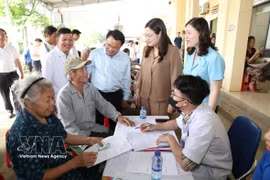
The Department of Health has assigned healthcare facilities to support local authorities in conducting health screenings. Each commune, ward and special administrative area has been linked with one or more medical facilities based on population size and local conditions. Hospitals are working closely with local administrations to organise mobile health screening teams at health stations, community screening sites and residential areas to ensure convenient access for residents.

To ensure no one is overlooked, the city has divided the rollout into specific target groups with defined timelines. Around 6 million formally employed workers, including public officials, civil servants, public employees and enterprise workers, are expected to complete their check-ups by October 31. Healthcare workers themselves are scheduled to complete screenings during July.

For more than 3.5 million pupils and students, including 2.7 million school pupils and 800,000 university and college students, health screenings will begin after the start of the new academic year and are expected to be completed by October 31.

For children not attending school, informal workers and other vulnerable groups, the city will conduct door-to-door outreach to encourage participation in the programme. Residents aged 90 and above, as well as those with mobility difficulties, will receive health check-ups at home from medical staff./.

VNA
See more

Medical staff at Cho Ray Hospital in Ho Chi Minh City cares for and treat the victim. (Photo published by VNA)

Last survivor of Phu Quoc boat capsize shows signs of recovery

The health condition of the last patient receiving treatment following the deadly boat capsize off the Phu Quoc special one in An Giang province has shown positive signs of improvement after three more days of intensive care, Cho Ray Hospital in Ho Chi Minh City said on July 16.

The number of foreign tourists coming to Ho Chi Minh City for travel combined with medical check-ups is increasing. (Photo: VNA)

Vietnam looks to unlock medical tourism potential with national strategy

The draft strategy aims to position Vietnam as a trusted healthcare destination in Southeast Asia by 2030 and eventually among Asia's leading medical tourism hubs. The plan marks a shift from viewing medical tourism as an untapped opportunity to making it a national development priority.

Delegates at the conference. (Photo: VNA)

Vietnam to produce first homegrown next-generation vaccines from 2028

Under the agreement, Sanofi will transfer technology to VNVC to manufacture selected high-demand vaccines for children and adults at VNVC Vaccine and Bioproduct Plant. The first next-generation vaccines produced in Vietnam are expected to roll off production lines in 2028.

Eric and Alysha joyfully welcome their baby through Mini IVF after more than 10 years of waiting. (Photo: Hong Ngoc Phuc Truong Minh General Hospital)

Vietnam - a destination for journeys to parenthood

An increasing number of international families are choosing Vietnam for infertility treatment, embarking on journeys to parenthood that transcend geographical distance and differences in nationality.

Prime Minister Le Minh Hung delivers remarks at the inauguration ceremony for Viet Duc University Hospital's second campus in Ninh Binh province. (Photo: VNA)

PM urges modern restructuring of healthcare network

The PM stressed that throughout the country’s development process, people have consistently been regarded as the centre, the driving force, the objective and the most important resource for national development. Sustainable and rapid development requires not only a healthy, knowledgeable and skilled population but also a modern, equitable, efficient, sustainable and accessible healthcare system.

Thu Duc General Hospital, with a capacity of 1,000 beds, was inaugurated and put into operation in April 2025 (Photo: VNA)

Ho Chi Minh City moves to expand robotic surgery to gateway hospitals

According to the municipal Department of Health, developing gateway hospitals is a key pillar of the city's strategy to establish a regional specialised healthcare system. The network is designed to permanently relieve overcrowding at major downtown hospitals while strengthening strong inter-regional emergency care and treatment network.

Illustrative photo: Internet

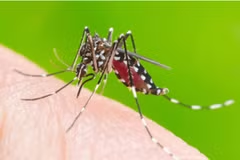
Dengue cases rise, outbreaks become more unpredictable

Vo Hai Son, Deputy Director of the ministry's Administration of Disease Prevention, said dengue fever is no longer following previous epidemiological trends. In 2025, infections remained elevated through November and December rather than declining at the end of the year as had traditionally been the case, indicating a shortening outbreak cycle.