Hanoi (VNA) - Vietnam’s water resource management is facing mounting challenges amid climate change, rising demand, and environmental pollution.
With a dense river network of more than 450 rivers and streams over 10km in length, and average annual rainfall between 1,800 mm and 2,000 mm, Vietnam possesses an abundant water resource. Surface water volume is estimated at 830–840 billion cbm per year, of which only about 40% originates domestically.
A precious resource in need of efficient utilisation
Vietnam's freshwater resources are facing growing pressure due to uneven distribution and management inefficiencies. According to the Ministry of Agriculture and Environment, more than 60% of the country's water resources come from outside its borders, making Vietnam highly dependent on transboundary water sources. Major rivers such as the Tien and Hau have seen increased salinity levels, with saltwater intrusion penetrating further inland, impacting the availability of freshwater for daily use and agricultural production.
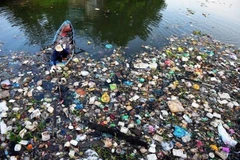
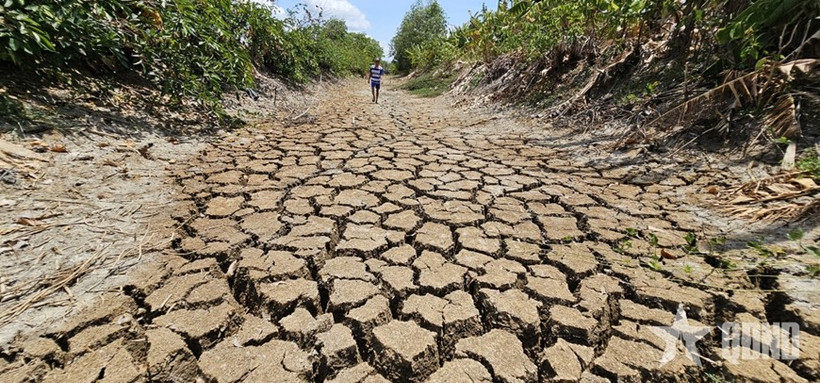
Water distribution is also regionally imbalanced. The northern mountainous areas and the Central Highlands receive heavy rainfall but lack effective water storage infrastructure, while the central coastal and southern regions frequently grapple with drought and saltwater intrusion. Water pollution from untreated domestic and industrial wastewater continues to degrade the quality of freshwater.
Chau Tran Vinh, Director General of the Department of Water Resources Management under the Ministry of Agriculture and Environment, noted that the department has submitted 10 out of 15 master plans to the Prime Minister, including a national water resource plan, eight interprovincial river basin plans, and a comprehensive plan for baseline water resource assessment. The remaining plans are expected to be completed in 2025–2026.
These plans aim to ensure water security, promote equitable and efficient water allocation, enhance storage and regulation, and support sustainable resource use for livelihoods, socio-economic development, environmental protection, national defense, and security.
From resource management to water governance
A fundamental shift is underway, from traditional water resource management to digital-based water governance. This approach treats water as a public asset managed through national databases and decision-support systems. Digital technologies will play an increasingly central role in regulating and distributing water, operating reservoirs, mitigating water-related risks such as drought, and improving overall efficiency while reducing operational costs and manpower.
Assoc. Prof. Dr. Tran Hong Ha, an expert on water environments, emphasised that Vietnam lacks effective mechanisms for water allocation and usage. Modern technology is key to minimising waste, detecting early signs of contamination, falling water tables, and subsidence caused by overexploitation of groundwater, he noted.
Therefore, it is essential to invest in a national water resource information and data system, and to adopt AI-powered, real-time tools that optimise water allocation, enhance efficiency, and increase the value of water resources.
Institutional reform and community engagement
In addition to technology, institutional reforms and public awareness are critical pillars of water governance. Dr. Nguyen Minh Quang from Can Tho University highlighted clearly defined roles between central and local authorities and integrated water planning with land, urban, agricultural, and transport planning to ensure water use aligns with regional environmental carrying capacity.
Notably, the revised Law on Water Resources, passed in November 2023, introduces several breakthroughs: a market-based but regulated water pricing mechanism, strengthened corporate accountability for water protection, and expanded public rights to monitor and report violations. This shift from command-based management to a model guided by economic tools and community participation marks significant legal progress.
Public education campaigns, water-saving initiatives in schools, and environmental competitions have helped instill a culture of conservation and environmental stewardship.
Experts also recommend the broader application of the “water footprint” assessment in agriculture and industry to track water use per unit of output, enabling more sustainable production models. New regulations should also mandate water reuse infrastructure in industrial zones, embracing the principles of a circular water economy from the design and investment stages.
As Vietnam deepens its global integration, water security is no longer a purely environmental concern but a strategic issue linked to sustainable development, political stability, national defence, and security. Greater engagement from businesses and international partners is crucial in investing in water treatment technology, transferring water-saving solutions, and supporting sustainable, circular resources use models to elevate Vietnam's water security to global standards.
In this context, the role of the armed forces, particularly units stationed in strategic areas such as the Northwest, Central Highlands, and South Central Coast, is increasingly vital. Their involvement in civil affairs, environmental protection, and national defence contributes significantly to safeguarding water resources that sustain entire communities./.